Is China a leader in LNG technology?
2026-02-16
When you hear this question, your first reaction is to grin. Leader? What exactly? In terms of import volumes - yes, there is no point in arguing here. But when it comes to the full technological cycle, from liquefaction to cryogenic equipment and final application, the picture becomes much more complex and interesting. Many people, especially in the West, still imagine China only as a huge market for Air Products or Linde technologies. This has not been the case for a long time, but there is still a distance to complete parity. Let me have a few thoughts on this matter, based on what I saw myself in the projects.
From catchers to creators: the evolution of the approach
Previously, everything was simple: they bought licenses, invited foreign engineers, and assembled them under their supervision. This is how the first base terminals were built. But the Chinese approach is always a long-term strategy. State-owned companies like CNOOC or PetroChina did not just purchase technologies, they set localization and adaptation goals from the very beginning. I remember how during one of the plant modernization projects in the mid-2000s, the main headache was not the liquefaction technology itself, but materials for heat exchangers and pumping equipment that could operate stably in our specific conditions. It all came down to metallurgy and precision engineering.
And here the real breakthrough began. Companies emerged that focused not on giant complexes, but on niche but critical solutions. For example, in small and medium-sized liquefaction plants (mid-scale LNG), floating regasification units (FSRU) or, most importantly, cryogenic equipment for transport and storage. This is an area where Chinese engineers have been able to demonstrate flexibility and responsiveness to market demands.
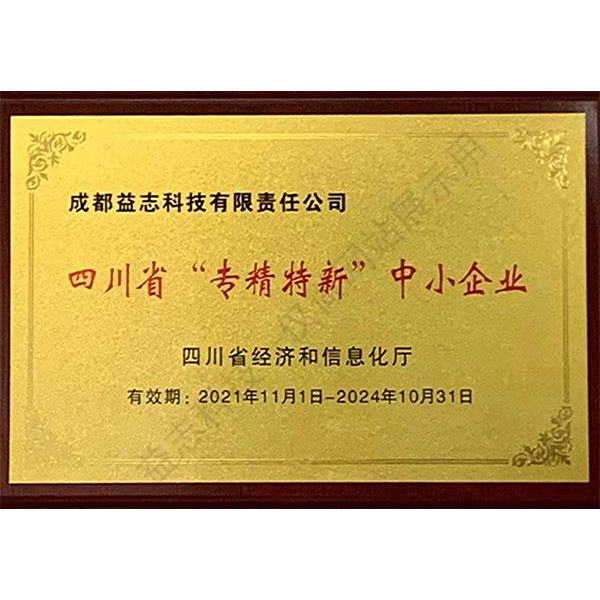
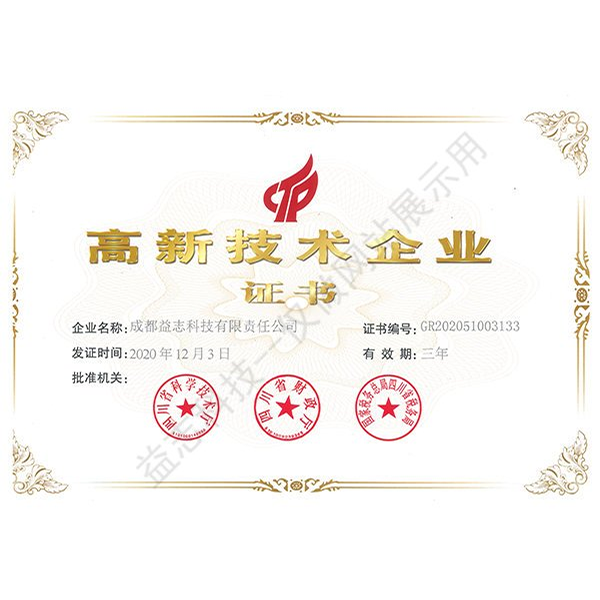
Let's take Chengdu Yizhi Technology Co. as an example. is a design institute established by Chengdu Huaxi Chemical Technology Co., Ltd. Their websitehttps://www.yzkjhx.rureflects this trend well. They are not trying to invent their own turbine for the liquefaction process from scratch. Instead, they are focused on engineering, integration of ready-made solutions and, crucially, gas purification and treatment technologies, as well as systemscryogenic storage. It's a smart tactic to enter the value chain through critical, but less "blindsighted" ones. link patents. Their experience in designing support systems for the chemical and gas industry provided an excellent foundation.
Supply chain strength and cost
Here China really shows phenomenal advantages. When you need to build ten small LNG stations to supply gas to remote areas, speed and price are critical. A completely localized supply chain, from the production of steel containers to the production of insulating materials, allows us to reduce the timeframe by several times compared to European contractors. I myself witnessed how standardcryotankfor LNG storage, it was produced and delivered to the site in a time that would have taken competitors only to approve the technical specifications.
But there is also a downside. Cost pressures sometimes lead to compromises in materials or insulation thickness on minor components. I won’t say that this is critical for safety - we are strict about this, but the durability of some components in, say, a marine climate still raises questions. This is not a flaw in the technology per se, but rather a market choice that then has to be compensated for by more frequent maintenance.
Another point is process control software. Chinese SCADA systems and automated process control systems have stepped far forward; they are reliable and functional. However, when it comes to complex modeling of liquefaction processes or optimization of the entire cycle “from well to wheels?”, Western software products are still more often used here. The gap is closing, but it is there.
Field for experimentation: innovations and their realities
China has become a huge test bed for new applications of LNG. LNG-powered river and sea vessels, trucks, even locomotives - all of this was put into commercial operation here faster than anywhere else. The scale of the domestic market allows you to quickly collect statistics and work out mistakes.
I had experience with a project usingregasification coldfor cooling warehouses. The idea is great, the energy savings are huge. But in practice, we encountered a lot of bureaucratic barriers when agreeing on inter-industry standards (gas workers and logistics operators live in different universes) and a purely technical problem - uneven gas consumption, which led to instability of the temperature regime in the storage facility. The project eventually started working, but not on the scale as planned. This is a typical story: technologically we can do everything, but success depends on infrastructure and regulatory synchronization.
It is in such application areas that companies like Chengdu Yizhi Technology Co. find their niche. Their design expertise allows them to create flexible, modular solutions that can be adapted to specific, sometimes unique customer requirements, be it the use of associated petroleum gas in a field or the creation of a mini-network of refueling stations for quarry equipment.
Global ambitions and barriers
Now Chinese contractors are confidently entering the international market, especially within the framework of the Belt and Road initiative. They offer a complete package: financing, construction, equipment. And the offer is very competitive. However, outside friendly countries they face distrust of their technologies. The reason is not the quality, but the lack of a long, 20-30 years, history of successful operation in various climatic zones, which market veterans can demonstrate.
The key challenge is recognition at the standards level. ChineseLNG standards(GB/T, etc.) are very detailed and strict, but they are not international. To sell technology to Saudi Arabia or Mexico, you need to prove its compliance with ASME, EN or other standards familiar to the customer. This is long and expensive work, but it is being done.
Another barrier is the service network abroad. Setting up a plant is half the battle. Providing prompt service and having spare parts for a specific Chinese compressor in a warehouse in another country is an order of magnitude more difficult task. They are just starting to work on this.
So is he a leader?
If you measure it by the volume and speed of infrastructure deployment, of course, yes. If you look at fundamental, breakthrough liquefaction technologies (new mixed refrigerants, revolutionary cycles) - not yet; leadership here remains with traditional players and their R&D centers.
But China's real strength is its hybrid model. The ability to quickly integrate the world’s best developments, reduce the cost and optimize them for mass use, and then create an entire ecosystem around the technology. From extraction and liquefaction to gas station and truck engine, everything can be found domestically. This is a new type of technology leadership: not about inventing one “silver bullet,” but about mastering the entire chain and scaling it at unprecedented speed.
Therefore, returning to the title, I would say this: China is not an absolute leader in the classical sense, but it has become the most powerful driver and the most demanding testing ground for LNG technologies in the world. And in this new capacity, he is already redefining the rules of the game for everyone else. And companies that, like Chengdu Yizhi Technology, are able to solve specific engineering problems in this ecosystem find themselves at the forefront of this process.