China: unique LNG liquefaction technology?
2026-02-16
When you hear about “unique Chinese technologies,” especially in the gas sector, the first reaction is skepticism. A lot of noise, marketing, but in fact - adaptation of Western or Russian solutions. But with LNG over the past five years, the picture has begun to change, and not in the capitals, but in specific projects, where every ruble and every kilowatt is counted. This is something that is rarely written about in glossy reviews.
Where do the legs of “uniqueness” come from?
It all started with a simple problem: giant liquefaction plants like AP-C3MR or DMR are good for offshore terminals, but too expensive and complex for distributed fields inland. The Chinese needed to develop their own remote reserves and small associated deposits. This is where we had to get out.
Their approach is not to invent new physics, but to radically optimize and hybridize known cycles. They take, say, a cascade cycle with nitrogen cooling, but increase the efficiency not through supermaterials, but through heat flow control algorithms. I saw their drawings - sometimes there are solutions that our designer would have given up on as “unprofitable”. And they spend ten iterations to squeeze out 0.5% efficiency on some recuperator.
Keyword -adaptability. Their modular installations for 0.5-1 million tons per year are designed not for future use, but for a specific gas composition, which can change. This means that the technological chain initially introduces variability. For us, this was often a disadvantage - we love monolithic solutions. And for them it’s a plus.
Field experience: where theory meets reality
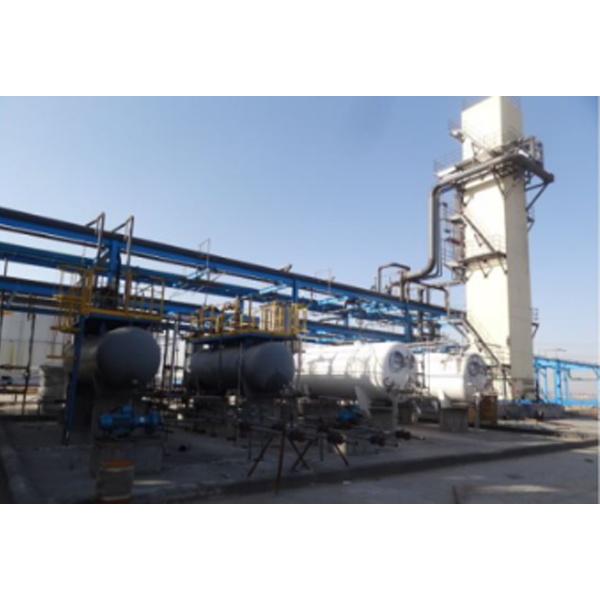
In 2019, I oversaw the launch of one installation in Sichuan. I won’t name the operator, but it was a typical case: gas with a high content of CO2 and nitrogen. Standard cryogenic cleaning was “suffocating” and required frequent stops. The Chinese used a hybrid scheme: membrane pre-separation plus a modified methanol purification process, but at low temperatures. From the outside it looked like Frankenstein from the devices.
The first year it worked intermittently. The main problem was not in the main processliquefaction, but in this very preliminary division. Membranes clogged, heat exchangers froze in places other than expected. But what amazed me was the speed of reaction. They didn’t wait a year for modernization, but literally on the fly, within three months, they introduced a system for pulsed membrane purging and changed the configuration of flows in the heat exchanger. The solution was at the level of a workshop technologist, but it worked.
This pragmatism is their strong point. There is no sacred awe before the “ideal technological scheme”. If something doesn't work right, they change it, even if it looks makeshift. As a result, that installation has now reached 92% of its designed capacity, which is an excellent result for such complex feed gas.
Lessons from failure: the story of “cold boxes”
Not everything is smooth, of course. There was a high-profile project where they tried to apply their compact liquefaction scheme based on a floating terminal gas (FLNG) turboexpander. There, the focus was on ultra-compact heat exchangers such as the Printed Circuit Heat Exchanger (PCHE). In theory, a revolution in light weight and size.
In practice, we encountered what we would also encounter: vibrations at sea and microscopic impurities in the gas led to clogging of the PCHE channels. Cleanup in the field proved impossible. The project was frozen, the installation was converted to more traditional plate-fin heat exchangers. It cost them time and money, but gave them invaluable experience. Now their new developments for the shelf are adjusted for ?dirty? gas and vibration.
The role of engineering: not only R&D, but also integration
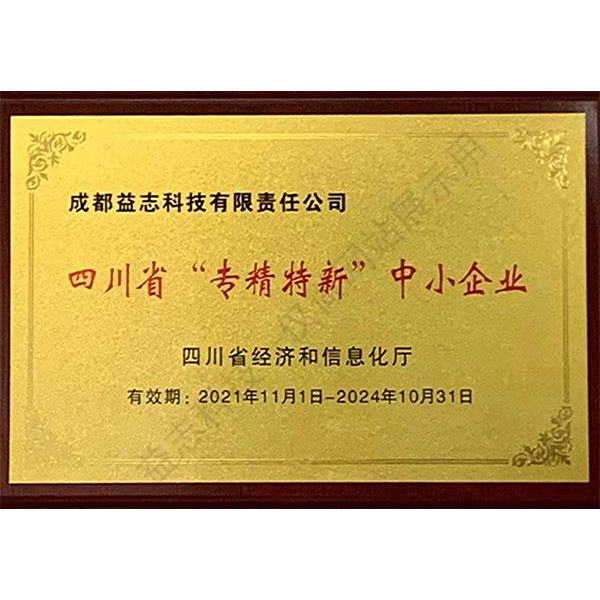
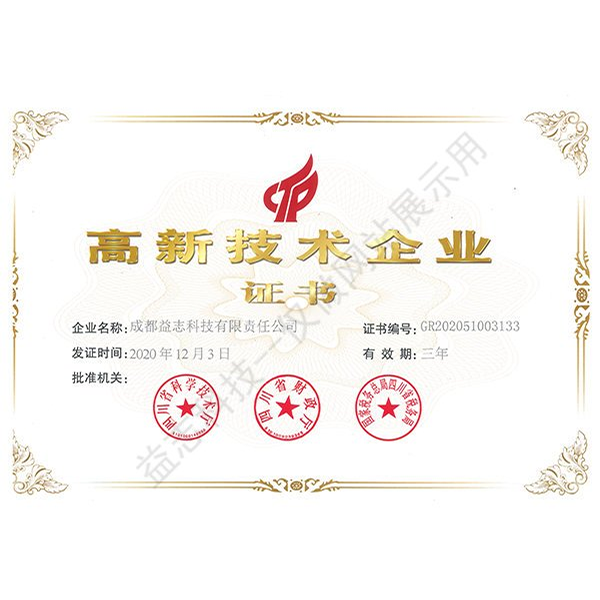
People often talk about unique technology, forgetting that this is just the tip of the iceberg. Success is in integration. Chinese companies such asChengdu Yizhi Technology Co.(a subsidiary of Huaxi Technology) demonstrate exactly this. They don’t just sell a license for the process, but offer a full engineering cycle - from modeling to installation supervision.
I went to their websiteyzkjhx.ruis not just a business card website. There are detailed case studies on optimizing energy consumption at existing installations, with numbers “up to” and ?after?. It feels like they are being written by people who themselves stood at the control panel. Their approach - a design institute with a registered capital of 120 million yuan - is not just a number. This is an opportunity to dive deeply into the details of the project and have a reserve for prototyping.
Their strength is working with “non-standard” ones. raw materials. I saw their proposal for a mini-LNG plant for associated petroleum gas with an extremely unstable composition. Instead of rigidly setting parameters, they proposed a cascade control system that adjusts cleaning modes andliquefaction. It is more expensive in automation, but cheaper in long-term operation.
What's in the bottom line? Uniqueness vs. efficiency
So is there a unique technology? If by uniqueness we mean something completely new, from scratch, then no. The physics of the process is the same. But if we talk about a unique engineering and technological package, tailored for specific, often “inconvenient”? Chinese (and not only) conditions - then, of course, yes.
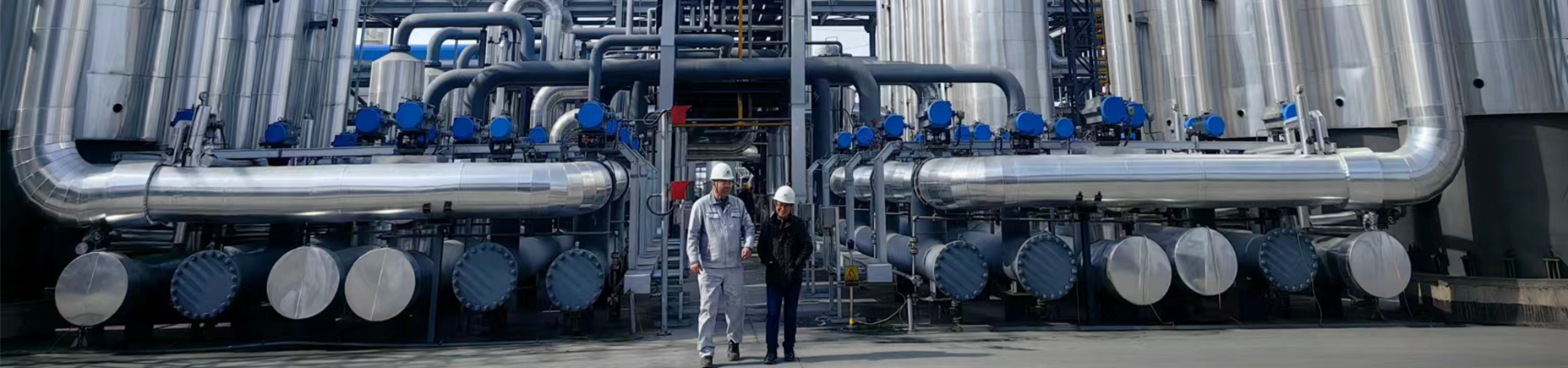
Their strength lies in their systematic approach, whereliquefaction technologyis just one of the nodes in the chain, closely connected with preliminary preparation, energy supply and control system. And this chain is designed with a huge margin of flexibility.
For us, practitioners, the main conclusion is this: we should not dismiss their development as a copy. It is worth looking at their experience in solving applied, “dirty” problems. problems. It is there, in the field, and not in the laboratory, that the same efficiency is born, which is then passed off as a “unique technology”. And companies like Chengdu Yizhi Technology Co., Ltd. is a good example of such applied, pragmatic engineering, which moves the industry forward in the conditions of real, not ideal, fields.