China: innovation in gas liquefaction?
2026-02-16
When people talk about innovation in gas liquefaction in China, many people immediately think of giant LNG plants and state-owned corporations. But the real picture, especially in technology niches and engineering, is often more complex and interesting.
Not only scale, but also technological depth
Yes, the scale is impressive: new terminals, growing volumes. However, for those inside the process, the key shift in recent years is the transition from simple borrowing to deep adaptation and creation of their own solutions. It's not just about the process itselfgas liquefaction, but also about the entire accompanying technological cycle - cleaning, pre-cooling, storage, cryogenic equipment. This is where interesting players appear.
Let's take design institutes, for example. Their role is often underestimated. It's not just ?draftsmen? schemes A good institute accumulates the experience of dozens of implemented projects and knows where the bottlenecks lie in standard technology. for specific raw materials or climatic conditions. They are often the drivers of innovation because they are forced to solve real, rather than educational, problems. I once came across a project where the classic CO2 pre-treatment scheme was getting clogged. due to the non-standard composition of associated gas. Together with technology partners, we had to revise the adsorption parameters and select the sorbent almost from scratch. It was not a revolution, but an important point modification, without which the entire project would not work.
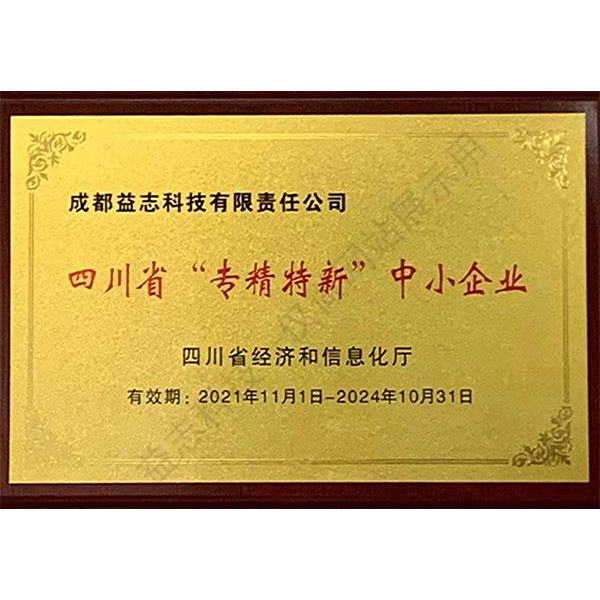
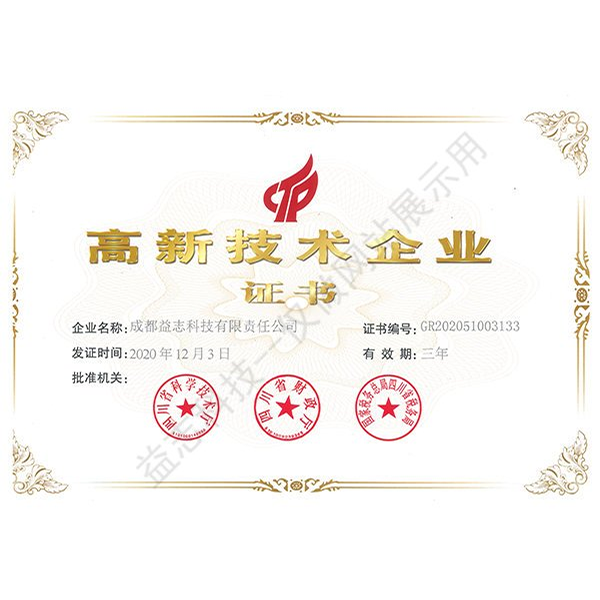
In this context, we can recall Chengdu Yizhi Technology Co. (https://www.yzkjhx.ru). This design institute created by Huaxi Technology is one of those. The registered capital of 120 million yuan is a figure that indicates serious intentions in the field of technological engineering. They don’t build factories, but their competence in designing low-temperature separation plants and cryogenic systems is exactly the “software” without which “hardware” is needed. doesn't work effectively. Their website, by the way, is quite specific; it is clear that it is designed for a professional circle, and not for the mass consumer.
Engineering as a field for experiments (and mistakes)
Innovation rarely occurs in a vacuum. More often it is a chain of trials, errors and improvements. China now has a unique opportunity - a huge number of facilities under construction and modernization. This is a testing ground for solutions. But it is important to understand: in operating production, experiments are strictly carried out. Therefore, many new approaches first go through pilot plants or digital modeling.
I remember the story of the introduction of one new type of turboexpander for small liquefaction plants. Theory and digital models showed an increase in efficiency. But on hardware? Unaccounted vibrations occurred in certain modes. Not critical, but unacceptable for long-term work. The project team, which included specialists from institutes such as the aforementioned Yizhi Technology, and equipment manufacturers, had to be urgently assembled on the site. As a result, the solution was found in a combination - the profile of the blades was slightly changed and the fastening system was modified. Now this unit is working successfully. Without readiness for such iterations, there can be no talk of any innovation.
Another point is materials. Cryogenic temperatures are a tough test. Chinese manufacturers are gradually mastering the production of special steels and aluminum alloys for heat exchangers. But trust in them takes years to develop. I often see hybrid solutions: the main technological licensed equipment is imported, and the auxiliary systems, pipelines, tanks are already locally produced, and the quality is growing noticeably from year to year.
Focus on energy efficiency and ?small forms?
While the world is eyeing mega-factories, demand for mid- and low-volume solutions is growing within China. This is the liquefaction of associated petroleum gas, the use of LNG as fuel for remote transport or isolated villages. This has its own challenges: the installation must be compact, as energy-efficient as possible and easy to manage.
Innovation here is of an applied, systemic nature. How to reduce the number of compressor stages? How to integrate cold sources, for example using a processgas liquefactionwith direct expansion, but with an optimized loop? These are the problems that engineering companies struggle with. Sometimes successful developments from such small projects are then scaled to larger objects.
In such projects, the role of the designer is critical, who can “sew” bring together equipment from different suppliers, propose a layout that will reduce heat loss and the length of pipelines. This is the same “technological depth” that I spoke about at the beginning. This is not published in journals, but it is what determines the final economics of the project.
Digitalization: from drawings to digital twins
This is no longer the future, but the present. It's not just about CAD systems for drawing. Full 3D modeling of the entire plant at the design stage allows you to avoid many collisions (when a pipe passes through a beam) even before construction begins. The next step is to create a digital twin to optimize operating modes and staff training.
I saw how at one of the new terminals operators trained to respond to emergency situations not in a real installation, but in a virtual environment. This dramatically reduces risks. For innovation in the liquefaction process itself, digital models are a sandbox. You can check how the installation behaves when the gas composition changes or when a new unit is integrated, without stopping actual production.
But there is a nuance here: for a model to be accurate, it needs correct initial data and, more importantly, proven physical and mathematical models of processes. This is an area where collaboration between academic institutions, design organizations (such as Chengdu Yizhi Technology Co.) and operators produces the most tangible results. Their experience in designing real installations is precisely the source of data for calibrating these digital models.
Challenges: not only to create, but also to implement
The main barrier to any innovation in such a conservative and capital-intensive industry as gas is mistrust. Trust in reliability and long-term performance. A new sorbent, a new control algorithm, a new material for the heat exchanger - all this must undergo many years of testing in real conditions before it becomes mainstream.
Therefore, the Chinese strategy often looks like this: partnership with recognized technology leaders, co-production, gradual localization and accumulation of experience, and then in-house development. This is a slow but sure path. And design institutes are the connecting link here. They transfer global technologies to local soil, taking into account the specifics of regulations, climate, availability of materials and services.
So, to answer the question from the title: yes, there is innovation in gas liquefaction in China. But they are not always loud. More often this is a quiet, persistent work to optimize, adapt, reduce the cost and increase the reliability of technologies. This is work in workshops, on test benches and in 3D models of design institutes. This is the way to go from ?made in China? to ?designed and optimized in China? for specific, sometimes very difficult conditions. And in this sense, the process is only gaining momentum.