Is China the new exporter of the Arctic LNG cascade?
2026-02-16
I hear this question more and more often on industry platforms. Many immediately imagine Chinese tankers plying the Northern Sea Route with shipments of liquefied gas. But reality, as usual, is more complex and interesting. The key word here is not so much “exporter”, but rather “?arctic cascade? — the technological and logistics chain, where China still has more questions than answers. I’ll try to sort it out based on what I saw and discussed with colleagues.
What is really hidden behind the “Arctic cascade”?
When talking about Arctic LNG, two things are often confused: offshore production and the actualcascade production. Russia with ?Yamal LNG? and ?Arctic LNG 2? relied on large-scale plants with gravity bases. China, as a technology partner and investor, was initially involved in the supply of modules, equipment, and financing. But this does not automatically make him an exporter of the finished product. Its role is to create value chains for such projects.
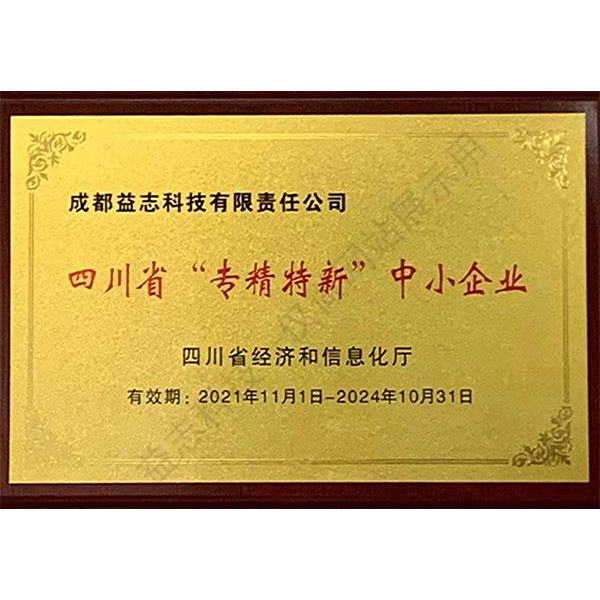
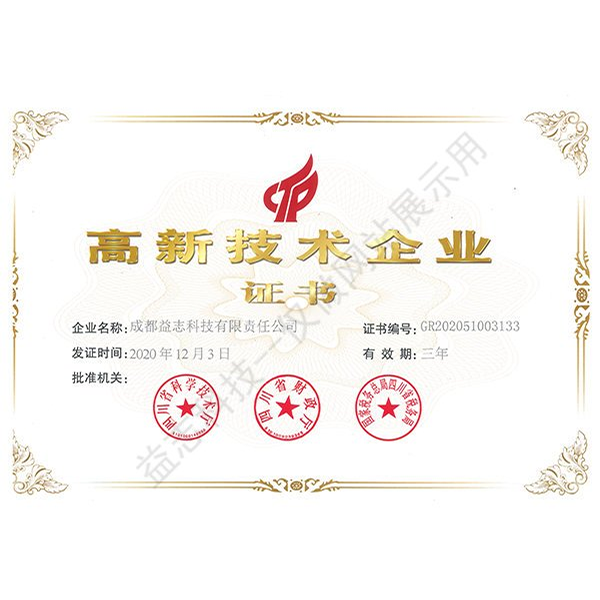
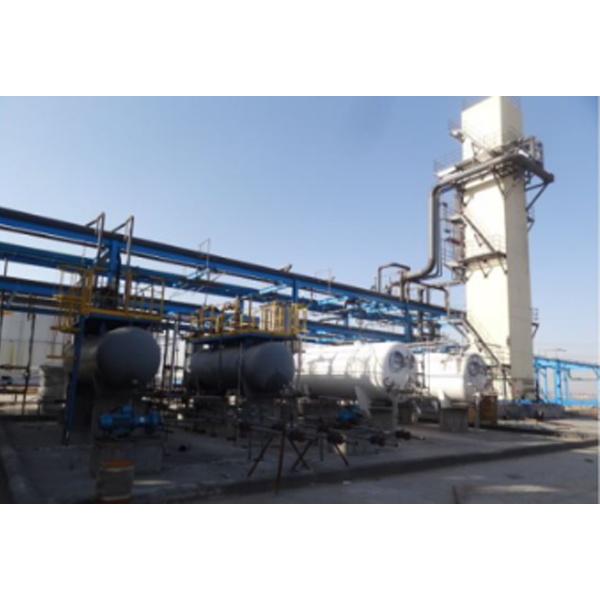
It's worth making a digression here. Many people forget that working at high latitudes requires not just adaptation, but a complete redesign of processes. Cold-resistant steels, energy supply systems that will not fail at -50°C, last-mile logistics. to the pier. Chinese engineering companies that really “sniffed gunpowder?” in the north, they understand this. Just one of these is Chengdu Yizhi Technology Co. (website:https://www.yzkjhx.ru). It is a design institute established by Chengdu Huaxi Chemical Technology Co., Ltd. back in 2013. Their profile is complex solutions for chemistry and energy, and they are exactly those who can carry out detailed design of technological lines for specific conditions, including low-temperature ones. The registered capital of 120 million yuan shows serious intentions in this sector.
So, when we talk about a “cascade?”, we mean a whole ecosystem: production, liquefaction, storage, shipping, icebreaker fleet, risk insurance. China is actively developing the latter two components, building Polar-class icebreakers and expanding its fleet of Arc7 gas carriers. But this is only part of the journey.
Yamal experience: lessons and limitations
Participation of Chinese funds (Silk Road, CNPC) in Yamal LNG? was a breakthrough. But it was, rather, a financial and resource partnership with fixed offtakes. China received LNG under long-term contracts, but did not manage the entire chain. The critical point is that all the key liquefaction technologies (for example, from TechnipFMC) and construction were non-Chinese. This showed a gap: you can be an investor and a buyer, but without your own technologies of the ?Arctic cascade? There is no talk of independent export status.
At ?Arctic LNG 2? the share of Chinese equipment is already higher. But there are nuances here too. Deliveries of modules from China faced logistical delays, and adaptation of standard equipment to Polar Class standards required additional approvals from classification societies. This is the kind of “work on the ground” that cannot be described in press releases.
Personal experience of communicating with logisticians at one of the terminals suggests: the biggest headache is not production, but ensuring uninterrupted shipment in a short navigation window. Chinese shipbuilders are learning to build Arc7 LNG carriers, but operational experience in managing such a fleet in Arctic winter conditions is a competency that takes decades to develop. For now it is concentrated in Russian and partly Scandinavian companies.
Where can China become a real "exporter"? Technology and Engineering
This is where the picture changes. If we consider the export not of gas, but of complex engineering solutions and equipment forarctic cascade, then China is already a serious player. Companies like the aforementioned Chengdu Yizhi Technology Co. work on projects that require the integration of gas purification, energy supply, and heat recovery systems into a single technological cycle that is resistant to extreme conditions.
These are not loud statements, but routine work: selection of materials, 3D modeling of pipelines taking into account vibrations from ice loads, explosion safety calculations for rooms with constant low temperatures. Such institutes often act as subcontractors for larger international engineers, gaining precisely the practical experience that is lacking.
Potentially, the next step is the export of not just modules, but licensed low- and medium-power liquefaction technologies optimized for distributed fields in the Arctic. But for this we need our own pilot projects, perhaps even in China in similar climatic zones (for example, in Heilongjiang), in order to test all the nuances “in the field”.
Logistics puzzle: NSR and more
The Northern Sea Route is an exciting prospect for delivering LNG to Europe and Asia. Chinese companies are actively exploring this route. But there is a subtlety. The majority of transportation along the NSR today is cabotage, between Russian ports. For full-fledged transit Chinese exports, it is necessary not just to navigate the route, but to create a stable, predictable and economically feasible service. This includes icebreaker support (here China depends on Russian infrastructure), port services at transshipment points, and flexible tariffs.
One of the scenarios that is being discussed on the sidelines is the use of Chinese LNG produced, say, at domestic plants, to bunker ships on the Northern Sea Route. That is, China can become an exporter not so much to Europe, but for Arctic logistics itself, creating fuel hubs. This is less global, but much more realistic in the medium term.
The problem with ice classes of ships also remains. They are expensive to build, and the load will not always be one hundred percent. The economics of a project may not work out without government subsidies or long-term contracts, which brings us back to the question of the role of national funds and political will.
Conclusions: not an exporter of gas, but an exporter of competences
So, back to the title question. Is China seen as a new exporter of the Arctic LNG cascade in the classical sense - as a country that produces, liquefies and supplies gas from its Arctic fields? No, this is unlikely in the foreseeable future. China does not have territories in the high-latitude Arctic for large-scale mining.
But if we reformulate the concept of “exporter,” the answer will be positive. China is becoming an active exporter of critical parts for everythingarctic cascade: capital, engineering services, specific equipment, modules, and in the future, possibly liquefaction technologies. He is building a fleet capable of operating in these waters. Its companies, such as Chengdu Yizhi Technology Co., have accumulated valuable practical experience in designing for extreme environments.
Therefore, the next time you hear this question, it is worth clarifying: are we talking about the export of goods or the export of opportunities? China clearly chose the latter. Its role is not to replace traditional players, but to become an indispensable system integrator and solution provider for Arctic projects around the world. And this is, perhaps, an even more strategic position than simply shipping tankers with liquefied gas.