China: leader in LNG liquefaction technologies?
2026-02-24
When you hear this question, the first reaction is often a skeptical grin. ?Leader? - a big word, especially in such a capital-intensive and traditionally conservative industry as cryogenic technologies and LNG. Many still imagine China only as the largest buyer of liquefied gas, and its technological contribution is reduced to simple copying or scaling. But after working for several years on projects to modernize and localize equipment for low-temperature processes, you begin to see the nuances. Yes, we haven't reinvented the basic liquefaction cycle, but breakthroughs aren't always about fundamental discoveries. More often, it’s about the ability to make technology profitable, adapt it to harsh conditions, build it faster and, oddly enough, more reliably. And this is where the picture gets interesting.
From import to adaptation: how the landscape has changed
I remember seven or eight years ago, the standard solution for any serious project to liquefy natural gas or, say, nitrogen, was the import of key heat exchange equipment - those same massive air-cooling units or plate-fin heat exchangers. We ordered from recognized leaders, waited for months, the cost was astronomical. The logic is simple: “it’s too complex and responsible to take risks?”. But it was precisely this risk that became the driver.
The turning point, in my opinion, was the period of active construction of small and medium-sized LNG plants (peak-shaving plants, for gasification of remote areas). Foreign technology packages were often overpriced for them. There was a request for ?good enough? and a significantly more affordable solution. This is where Chinese engineering companies, which have been in the wings of Western partners for years, began to show their teeth. They did not immediately begin to make their “main refrigeration cycles?”, but took up the periphery: gas pre-purification systems, cryogenic pumps, storage tanks, control systems. And gradually we gained a critical mass of competencies.
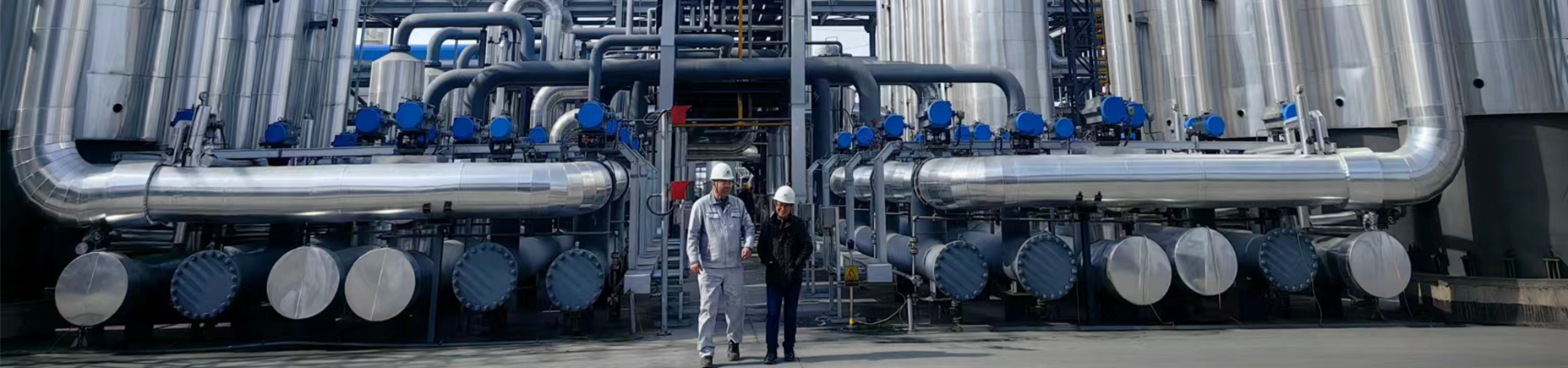
A striking example is the evolution in the production of cryogenic vessels and heat exchangers. At first these were direct copies, then adaptations to local standards and materials (for example, the use of certain grades of stainless steel, more available on the domestic market). Now, looking at the specifications of some installations, you see independent engineering solutions. For example, optimizing the design of fins for heat exchangers for specific climatic conditions of Siberia or Central Asia - taking into account dust and temperature changes. This is no longer copy-paste, this is engineering.
Weak link and growth point: materials and “long” cycles
However, if we put aside the patriotic fervor, the weaknesses are obvious. The main one is the still dependence on some critical materials and components forliquefaction technologies. We are talking about highly efficient turboexpanders for high capacities or special polymers for insulation. Yes, there are analogues, but when we are talking about a project for 20+ years, the customer will think ten times whether to install a key valve that has not been tested in the world. Here trust is earned over decades.
But there are also opposite examples. Let's take the technology of liquefying natural gas using the nitrogen cycle. It would seem that this is a well-established scheme. But Chinese engineers seem to have taken it to the extreme in the small-scale LNG segment. I have seen projects where, through cascade optimization and their own developments in the field of control, they were able to reduce energy consumption per unit of production by 8-10% compared to standard solutions ten years ago. This is a huge number for an industry where every percentage savings represents millions of dollars. And this is not a laboratory experiment, but installations operating in Mongolia and Pakistan.
Case study: when theory meets reality
I would like to give an example not from the front part. We participated as subcontractors in a project to modernize an associated petroleum gas liquefaction plant in Central Asia. The goal is to increase productivity. The key problem was the old, constantly clogged heat exchangers. They offered a standard solution - replacement with more effective ones. But the Chinese general contractor (I will not name) took a different route. They analyzed the unstable composition of the raw material and proposed not just “iron”, but a complex: an additional module for preliminary stabilization of the gas composition + new heat exchangers with a modified channel geometry, less sensitive to impurities.
The project was risky because it complicated the scheme. But the result was obvious. Not only did we reach the required power, but we also shortened the periods between routine cleaning stops. For the customer this was a direct saving. What is important here is not the equipment itself, but the systemic approach: they did not sell a heat exchanger, but a solution to the reliability problem. This is a sign of maturity of a technology company - the ability to think in terms of the life cycle of an object, and not just selling a device.
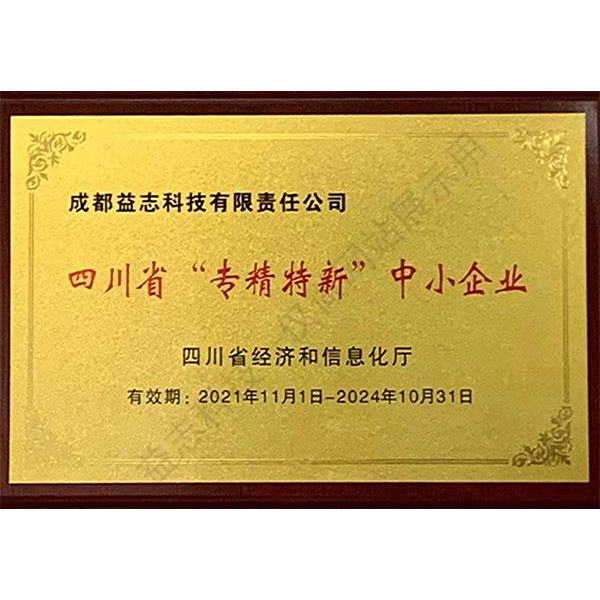
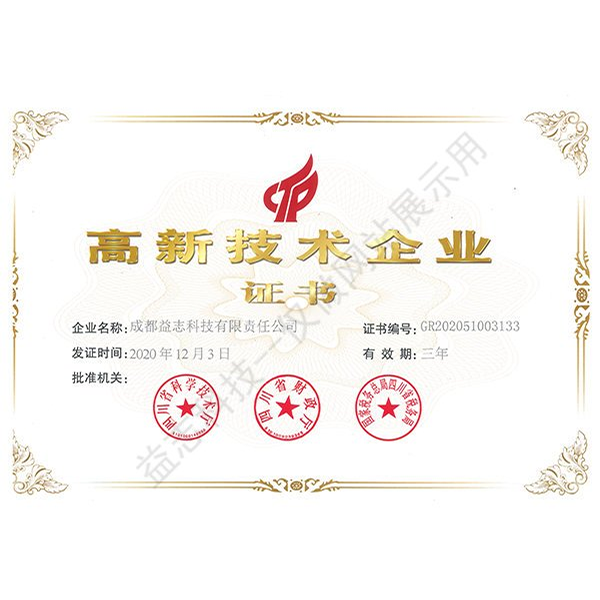
By the way, about complex solutions. Recently, players have appeared on the market who position themselves as full-cycle integrators - from design to commissioning and service. One such example isChengdu Yizhi Technology Co. (https://www.yzkjhx.ru). It is a design institute established on the basis of Chengdu Huaxi Chemical Technology Co., Ltd., with solid registered capital. Their niche is precisely the design and supply of technological lines for gas chemistry and cryogenics. The important thing is that they often act as local partners, adapting to “local” needs. conditions not only equipment, but also documentation, service logistics. For many clients in the CIS this is critically important. See their calculations or 3D models of a unit - and you understand that this is not a makeshift workshop, but a serious engineering structure with ambitions.
The future: standards, ?green? trend and new niches
Where is this all going? Leadership is not only about “more and cheaper”. It's about defining standards. And China is actively joining the game here. I see a growing number of patent applications related to the integration of LNG technologies with renewable energy sources. For example, schemes for using excess wind or solar energy to produce liquefied gas on a small scale. These are pilot projects for now, but investments are ongoing.
Another trend is miniaturization. We are talking about micro-LNG installations for refueling river and quarry transport. What is needed here is not just efficiency, but ultra-reliability and ease of maintenance. And here Chinese manufacturers, with their experience in mass production and strict cost control, feel very confident. They can literally "stamp" such modular solutions.
But the main challenge is the transition to more complex, “long” ones. liquefaction cycles for mega-projects. Same AP-X or Cascade. For now, historical players dominate here. But, watching how Chinese companies are mastering the construction of ?Arctic LNG? and similar giants as general contractors, you understand - they are learning. They gain access to the most advanced technologies not through purchasing a license, but through practice. And this is the most valuable experience.
Instead of a conclusion: leadership as a process, not a status
So China's leaderLNG liquefaction technologies? If we understand leadership as absolute superiority in all links of the chain - no, of course not. It's still early. But if you look at leadership as a dynamic process, at the speed of closing technological gaps, at the aggressive capture of new market niches (especially in the small to mid-scale segment), then the answer will be different.
They are no longer catching up, they are moving on a parallel course, often finding cheaper and more practical solutions for non-ideal, “real” ones. conditions. Their strength lies in flexibility, speed of implementation and willingness to work with risks that a conservative Western vendor will not take. To ignore this fact means to make mistakes in forecasts for the next decade. Their liquefaction technology is no longer “budget” an alternative, but an independent class of solutions that must be taken into account. And this, in essence, is the definition of a growing leader. The process is ongoing and it is irreversible.