China: leaders in the export of LNG equipment?
2026-02-24
When they talk about the export of LNG equipment from China, many people immediately think about scale and low prices. But this is where the main misconception lies - as if this is the only problem. In fact, over the past seven or eight years, the picture has become much more complex and interesting. I went through this myself, and I know that the path from “we produce” until ?we are recognized and chosen in serious projects? was not at all direct.
From ?iron? to system solutions: how the approach has changed
Previously, about ten years ago, Chinese companies were indeed often positioned simply as suppliers of individual components - heat exchangers, pumps, pressure vessels. Price was the main argument. But you won’t earn much from this, and your reputation remained shaky. I remember how in one of our first projects oncryogenic pumpsfor a small regasification station in Southeast Asia, we were faced with the fact that local engineers looked at our documentation with obvious distrust. What was missing was not so much the quality of the metal, but the depth of calculations for fatigue under cyclic loads, and detailed reports on tests in real conditions. We then installed the equipment, but realized that it was a dead end.
The turnaround began when major players like CNOOC or Sinopec began to actively invest in their own full-scale LNG projects within the country. This created an invaluable testing ground. The equipment was tested not in ideal factory conditions, but at real terminals, with real temperature differences, different gas quality, and different work intensity. It was this experience that became a key asset. Chinese engineers stopped just copying - they started adapting and improving. For example, in control systems forrefrigeration compressorsbegan to develop algorithms that work better in conditions of high humidity and dust, which is critical for many countries in Asia and Africa.
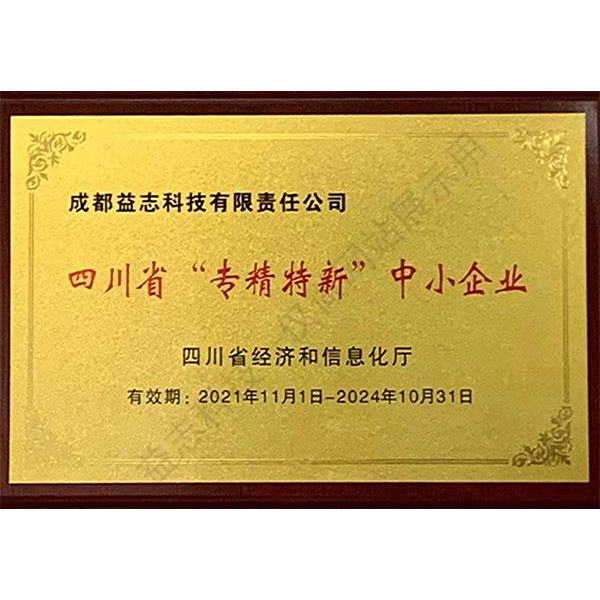
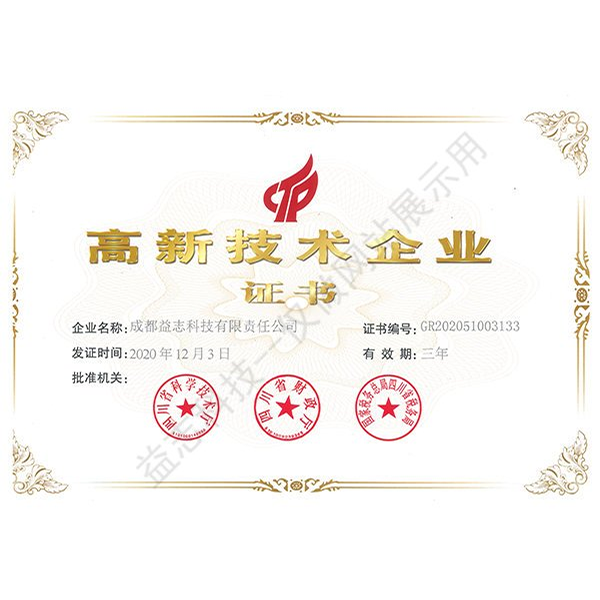
Nowadays we are rarely talking about simply selling “hardware”. Increasingly, a package is being offered: equipment + pre-design modeling + adaptation for specific raw materials + personnel training. Here, for example,Chengdu Yizhi Technology Co.(their website isyzkjhx.ru), which is a design and development institute under Huaxi Technology. They are exactly those who work in this paradigm. They have a registered capital of 120 million yuan, which indicates serious investments in R&D. They don't just sell a cryogenic valve, but can calculate the entire storage system, taking into account the nuances of local standards. This is a different level of trust.
Where are we strong, and where do we still have to catch up?
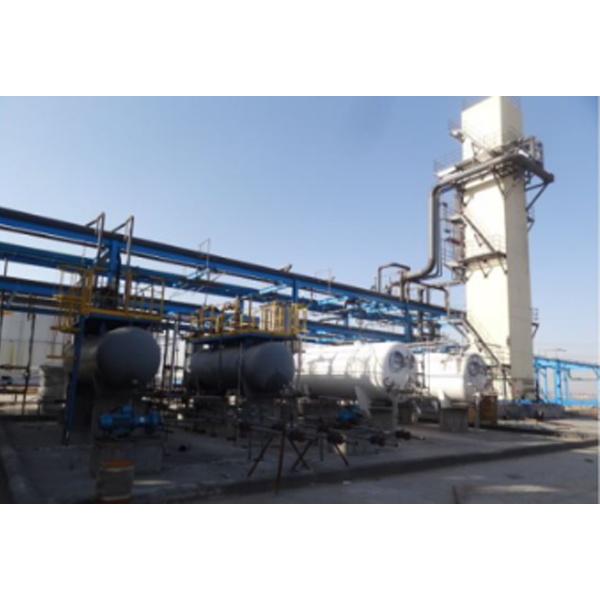
If we look at it objectively, China can boast of unconditional leadership in the segment of modular and mobileLNG equipment. Small and medium-sized liquefaction plants, container-type regasification stations - here they are unrivaled in terms of “readiness/price/terms” ratio. This is a response to the demand of markets that do not need a giant terminal costing billions of dollars and 5 years of construction. You need to start receiving gas relatively quickly and cheaply, say, for a power plant in a remote area. Chinese manufacturers have learned to make such complexes practically on a turnkey basis, with a high degree of factory readiness.
But with large-scale turboexpanders or main compressors for the base liquefaction lines of mega-projects, the story is more complicated. Traditional Western brands like GE or Siemens dominate here. China is actively investing in this area, there are breakthrough developments, but global recognition in this premium segment is a matter of a few more years. The risk for the buyer is still perceived as higher. Although, for example, in projects within the framework of the ?Belt and Road? the Chinese are already installing with all their mightcryogenic tankslarge volume - and, as far as I know, there are no more complaints about the quality of welds and insulation, and sometimes less than with some European analogues.
Another strong trump card is the supply chain. From the production of special steels (the same 9% nickel) to the finished tank. Many Chinese holdings control everything within themselves, which provides stability in terms of timing and the ability to flexibly manage cost. During a period of global logistics disruptions, this has become a huge advantage. A customer from, say, Latin America can be sure that his equipment will not freeze. somewhere in three different ports due to problems with subcontractors.
Real cases and pitfalls
I’ll tell you about one project in Central Asia, I won’t name the country. They were just selecting equipment to increase the capacity of the existing storage facility. A European company and a consortium with Chinese participation competed. The Chinese proposed not just a reservoir, but a digital dual system for monitoring temperature stresses in real time, with an interface adapted for local operators. The Europeans offered a standard, albeit very reliable, package. The Chinese won. But here is the stumbling block - after-sales service. The Chinese company brought in its specialists for installation and commissioning, but the local service network was poorly developed. When, six months later, the need arose for a scheduled inspection of one of theevaporators, I had to wait for a specialist for two weeks. This experience gives many people pause.
Another point is standards and certification. Chinese GOST standards (GB) are gradually being recognized, but not yet everywhere. Often a project requires, say, an ASME or PED certificate. Leading Chinese manufacturers received them a long time ago, but mid-level manufacturers may have delays with this. This is not a question of quality, but a question of bureaucracy and time. We have to schedule additional weeks for approvals in advance.
And of course, politics cannot be ignored. ExportLNG technologiesfrom China today - often as part of larger energy agreements or investment packages. This makes it easier to enter the market, and at the same time creates certain risks of dependence for the buyer on the general geopolitical situation. It’s just that a business decision acquires additional contexts.
What's in the bottom line? Practical view
So are they leaders? In quantitative terms of exports, of course. In terms of market coverage (Asia, Africa, Latin America, partly the CIS) - yes. In terms of innovation in the medium- and small-scale segment, definitely. But it is too early to talk about total leadership in all segments and in all parameters. China's strength now lies in flexibility, speed and comprehensive offerings. They have learned to solve the specific pain of the customer: “I need to organize gas reception here quickly and with a limited budget.” This is a huge market.
At the same time, quality has ceased to be a sore point. Key production facilities use the same equipment as in Germany or Japan, and similar control systems operate. The problem is different - heterogeneity. The gap between top companies like the ones behindChengdu Yizhi Technology Co., and hundreds of small workshops are still great. It is critically important for the buyer to conduct an audit not of “China”, but of a specific plant, to look at real cases, and not beautiful catalogs.
The future, as I see it, lies in further diversification. Already, Chinese companies are actively experimenting with equipment for bio-LNG and the use of LNG as fuel for transport. Here they can get ahead precisely because these markets are new and there are no established monopolies. So, to answer the question from the title: yes, leaders. But leaders of a special kind - not those who displace everyone, but who quickly fill those niches that traditional players have long considered secondary or too complex. And this is their main strength.