China: leader in food CO2 technology exports?
2026-01-05
This is a question that has been coming up more and more often in conversations at industry events lately. Many immediately imagine giant plants for the production of liquefied carbon dioxide or the supply of cylinders around the world. But here lies the first nuance, which is often forgotten: when we talk about export, we are talking not only about the product itself, but more about the complex - about equipment, engineering and, what is critically important, about purification and control technologies that make CO2 food grade, and not technical. And in this area the picture is no longer as clear-cut as it might seem from the outside.
From raw materials to specifications: where the real challenge lies
Let's start with the basics. China is by far the world leader in CO2 production. From fermentation plants to ammonia plants, the sources of raw materials are vast. But food grade is a different story. Limits on impurities: oxygen, sulfur, heavy hydrocarbons, oils, and even the same smell. A Russian or European standard may require an order of magnitude more stringent than the domestic Chinese GB. And this is where the work of technology companies comes in.
I remember one of our early projects for a client in the CIS. They brought a standard Chinese purification plant, which worked perfectly with local raw materials. And there is gas from ethylene oxide production, with a completely different impurity profile. As a result, we had to redo the adsorption column on the fly and change the sequence of filters. It worked, but the deadlines were delayed by a month. This was a lesson: you can’t just pick up and “put a box” down. We need an in-depth analysis of the raw gas at the site of future operation. This is what differentiates just a hardware supplier from a technology partner.
Now many Chinese players have realized this. Companies have appeared that do not just sell the installation, but offer a full cycle: from gas analysis and design to commissioning and personnel training. They have learned to adapt their solutions to specific, often “dirty” ones. sources of raw materials that are common in many emerging markets. This is their competitive advantage over expensive European systems, which are designed for more stable and clean raw materials.
Equipment vs. Know-how: what is actually exported
When people talk about technology exports, they often mean patents and licenses. In our sector, everything is a little more down to earth. The main export product is project capacity and turnkey engineering services. A client, say, in Kazakhstan or Uzbekistan, wants to build a plant for the production of food-grade CO2. He needs not just a set of drawings, but a complete package: a process diagram, equipment specifications, installation plan, operating instructions and, most importantly, a guarantee on the final parameters of the product.
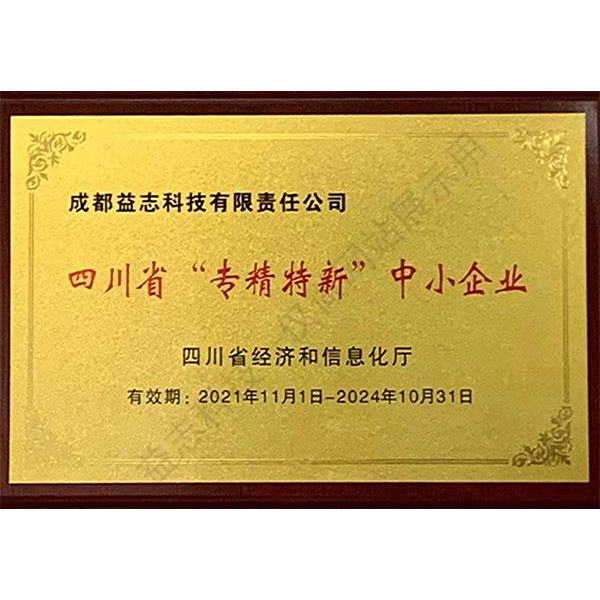
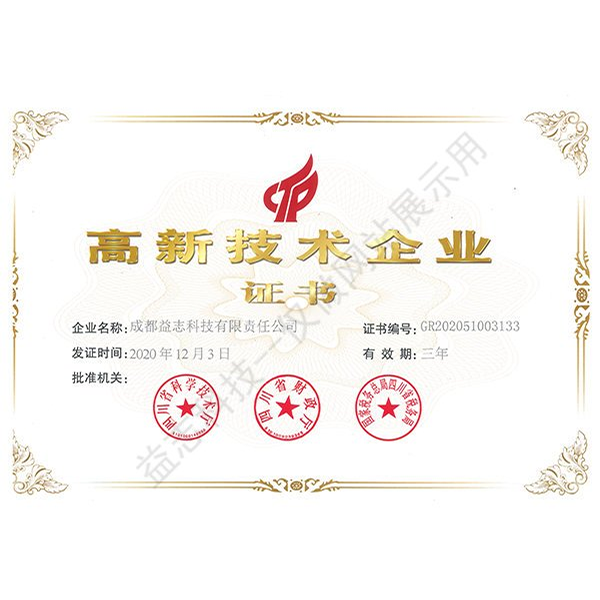
Here I can give an example of Chengdu Yizhi Technology Co. - this is exactly the same design and engineering company that I was talking about. They are not the first year in the subject, they work as an independent division in the structure of the chemical technology group. Their websiteyzkjhx.rufocused on the Russian-speaking market, which already says a lot. They offer complete solutions, from design to delivery of key equipment for purification and liquefaction. The important thing is that they grew out of practice, from the company Huaxi Technology, which itself is engaged in chemical technologies. That is, their engineers do not understand the process from textbooks, but, most likely, have encountered real problems in real production. This is felt in the details of their proposals.
But there are pitfalls here too. Adaptation of documentation is an eternal headache. Translating safety data sheets (MSDS) and installation instructions into Russian or English is not just the work of a translator. It takes an engineer who understands the concept to prevent the "tighten the sample assembly counterclockwise until it's snug" situation. Such mistakes spoil the impression and create risks at the site. Companies that pay attention to this immediately stand out from the crowd.
Battle on the periphery: CIS markets as a testing ground
Europe and North America are long-established markets dominated by giants such as Linde or Air Products. It’s difficult to break through there with technology. But the countries of the CIS, the Middle East, and Southeast Asia are a completely different story. Here, demand is growing, local production is often outdated or non-existent, and budgets are tight. An ideal environment for Chinese technology offerings “best value for money”.
In these markets, flexibility is critical. For example, automation requirements. Somewhere you need a completely manual cylinder filling station due to cheap labor, and somewhere you need a fully automated line with robotic manipulators and an RFID cylinder tracking system. Chinese suppliers have learned to offer both, and mixed options. They are ready to take their basic module as a basis and modify it to meet the specific wishes of the customer. Europeans, with their standardized catalogs, often lose out on this flexibility.
But there is also a downside. Service. Installing the equipment is half the battle. Ensuring the availability of spare parts, prompt assistance remotely, or the on-site visit of a specialist in the event of a serious breakdown - this is what determines long-term reputation. There is still room to grow here. Not everyone understands that selling technology is the start of a long relationship, not a one-time transaction. Those who establish parts warehouses in key regions or train local engineers are ahead.
Not only CO2: synergy of related technologies
An interesting trend in recent years is offer packaging. It is rare that a client only needs food grade CO2. Often this is part of a larger project: dry ice production, a beverage carbonation line, a CO2 supply system for greenhouses for agribusiness. And here technological leadership is tested by the ability to integrate different processes.
Take the same Chengdu Yizhi Technology. Judging by their activities, they position themselves precisely as a design institute. This means that their expertise is likely to cover not only CO2 separation and purification, but also related areas: cryogenics, refrigerants, storage and transportation systems. It is a huge plus for the customer to have one contractor for the entire complex, who is responsible for the interconnection of all components. Problems at the interface of systems are the most difficult to solve.
I have seen a project where the purification plant was working great, but there were constant failures in the dry ice production line due to unstable inlet pressure. It turned out that the designers of the two systems worked separately and did not agree on the parameters. If there had been one engineering integrator initially, this problem could have been avoided. It is for this synergy and integrity of approach that the struggle is now underway.
The future: digital, ecology and new niches
Where is everything going? Firstly, digitalization. Remote plant monitoring, predictive analytics for maintenance, digital twins of process lines. This is no longer fantasy. Leading Chinese suppliers are beginning to implement such solutions even in their export projects. This is a serious argument, especially for remote production.
Secondly, “green?” trend. Increasing attention to carbon footprint and CO2 recycling. Capture and utilization (CCU) technologies are the next level. It is no longer just about producing food gas from waste streams, but about more complex purification for use in other chemical processes or even synthetic fuels. Chinese research institutes and companies are actively working in this direction. And their practical experience of working with the “imperfect” raw materials could give them a head start in commercializing these technologies for emerging markets.
Finally, new niches. The pandemic has fueled demand for dry ice for vaccine logistics. The development of craft brewing and gastronomy has increased the demand for small but high-quality installations for restaurants and small industries. The ability to quickly respond to such targeted but growing requests is also a sign of the maturity of the technology sector.
So, back to the title question. Is China the clear leader in food CO2 technology exports? If we talk about mass-produced, reliable and cost-effective solutions for fast-growing markets - yes, of course. Their strength lies in practicality, flexibility and speed. If we talk about breakthrough, fundamental know-how or absolute dominance in the premium segment of developed countries, it is too early to draw conclusions. But the dynamics show that the gap is narrowing. And the key word here is “technology?” - as a complex of knowledge, experience and ability to solve specific customer problems, and not just as a set of iron and pipes.