China: prospects for PSA technology?
2026-01-05
When people talk about PSA in China, many immediately imagine huge installations for separating air into oxygen and nitrogen. This, of course, is the basis, but if you dig deeper, the picture is much more interesting and... more confusing. What is often overlooked is that the technology itselfpressure swing adsorption- this is not a monolith, but a whole set of solutions, and their applicability here strongly depends on a thousand small nuances: from the cost of electricity in a particular province to the quality of the local sorbent and even on the mentality of the operating personnel at the plant. I’ll try to sort it out based on what I saw myself.
Not just air: where PSA is already working and hits the ceiling
Yes, oxygen and nitrogen plants are the bread and butter of many engineering companies. But if you take hydrogen, for example, at a refinery, then there is often fierce competition with membrane methods. PSA wins in terms of product purity, that's a fact. But I have seen projects where, out of a desire to save on capital costs, they installed membranes, and then suffered for years with the instability of the composition of the gas at the outlet. Reverse side -PSA installationsfor hydrogen they require very high-quality preliminary purification, the slightest breakthrough of CO or sulfur compounds - and the sorbent can be thrown away. China has learned to deal with this, but the cost of such a sandwich of preliminary steps and the PSA itself sometimes scares off customers.
One of the most promising areas, in my opinion, is the purification of biogas and landfill gas to natural quality (Biomethane). Here's the technologypressure swing adsorptionpractically unrivaled in terms of balance of reliability and operating costs. But there are also plenty of pitfalls. The composition of raw materials can fluctuate wildly, especially in landfills. Standard design solutions often do not work; on-site adaptation is required. I remember a story at one project in Sichuan: engineers set up a standard adsorption cycle, and the oxygen content in the raw material turned out to be higher than calculated. As a result, we had to reprogram the controller on the fly and change the sequence of valves to avoid the risk of an explosive mixture forming inside the columns. Trifle? No, this is exactly the practice that is not in the textbooks.
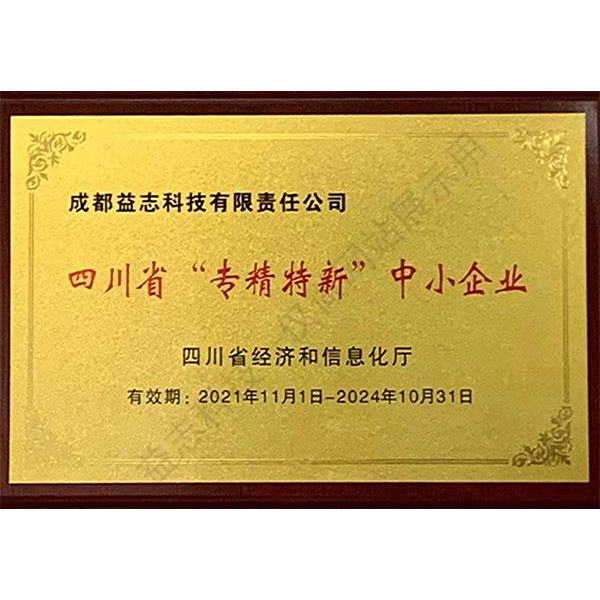
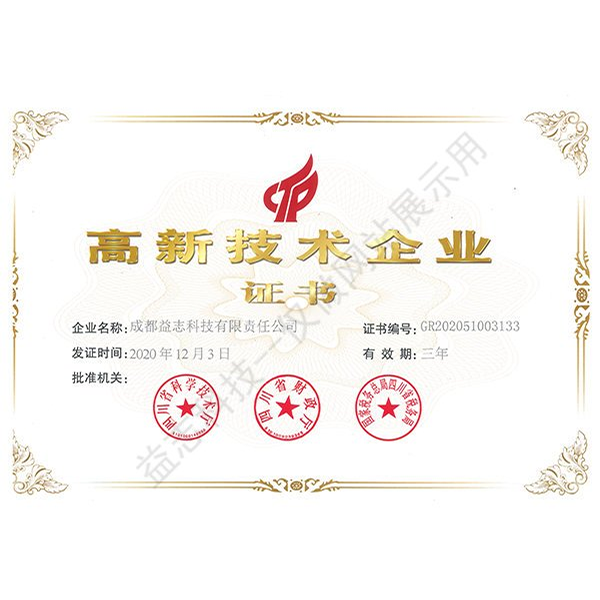
But with the capture of CO2 from flue gases (post-combustion capture), the situation is ambiguous. The energy consumption for sorbent regeneration is enormous. There are many studies and pilot projects, but when it comes to industrial scale and economics, enthusiasm often fades. So far, this is more an area of government orders and demonstration projects than a commercially viable solution. Although, Chinese companies such asChengdu Yizhi Technology Co.(this is a design institute created by Huaxi Technology) are actively conducting R&D in this direction, trying to reduce energy consumption through hybrid cycles and new materials.
Sorbents: the heart of the system and the battlefield
Everything depends on them. Previously, we were heavily dependent on imports, especially of specific grades of zeolites. Now the situation is changing. Chinese manufacturers have launched the production of quite competitive zeolites and activated carbons. But the problem is different - the stability of the parties. You bought one batch - it works perfectly. Six months later, you buy more from the same supplier - and problems begin with the moisture capacity or strength of the granules. This is a nightmare for an engineering company. You have to either tighten acceptance to the limit, or put a larger productivity margin into projects, which hits the economy.
It is interesting to see the introduction of new materials such as MOFs (metal organic frameworks). In laboratories they show fantastic results in selectivity. But when it comes to the price per kilogram and stability in the conditions of a real process flow (with water vapor, with impurities), all the fantasy evaporates somewhere. I think it will be another 5-7 years before we see them in commercial installations, not counting niche applications. For now, focusing on improving traditional zeolites is a more pragmatic path.
This is where the difference in approaches is clearly visible. Large government institutions are chasing breakthrough articles in journals. And practitioners from companies like the one mentionedChengdu Yizhi Technology, often engage in painstaking optimization of exactly those sorbents that are at hand. Sometimes a small change in the regeneration process - temperature, purge pressure - gives an increase in efficiency by several percent. This may not sound like a big deal, but for a customer whose installation operates 24/7, such savings on energy resources over the course of a year translate into huge sums.
Control and automation: where real efficiency lies
You can assemble columns from the most expensive steel and fill them with the best sorbent, but if the control system is stupid, all the efficiency is down the drain. The classic problem is working at an off-design load. Let’s say a plant was designed for 1000 nm3/h, but production requires either 800 or 1200. A rigid, non-adaptive PSA cycle will either overuse energy or underproduce product. Modern systems with predictive control algorithms and soft cycle regulation are a must have. But they cost accordingly.
In China there is now a strong trend towards digitalization and smart factories. This spurs the development of this particular segment. Local manufacturers of controllers and software are appearing, offering solutions that are cheaper than Siemens or Rockwell, but at a completely adequate level. The risk, of course, is in reliability. An experimental control system from a local vendor was installed at one of the sites in Shandong. Everything was going well until there was a power surge in the network. The controller froze and was unable to restart the valve sequence. I had to switch it to manual control, almost a day of downtime. After this, the customer demanded the return of the proven imported filling. The balance between innovation and reliability is always delicate.
Another point is remote monitoring and diagnostics. This is no longer a luxury, but a necessity for service. Seeing in real time a pressure drop in a column or a change in the composition of the product at the outlet means being able to prevent a serious accident. Many Chinese engineering companies, includingYizhi Technology, now offer such services as part of the contract. This seriously increases customer confidence.
Economics and politics: unobvious drivers
The prospects of any technology depend on money. The situation with PSA is interesting. On the one hand, this is a mature technology where it is difficult to make a breakthrough and dramatically reduce capital costs. On the other hand, operating costs are strongly tied to the price of electricity. In China, industrial tariffs vary from region to region. In some places, PSA for obtaining nitrogen may be more profitable than buying liquefied nitrogen, but in others it may not. A very detailed calculation is needed for each specific case.
Environmental policy is a powerful driver. Tightening emission standards, especially in the chemical and metallurgical industries, forces us to look for effective methods for purifying waste gases. This is where PSA, especially in combination with other methods, gets a second chance. For example, the capture of volatile organic compounds (VOCs) and their subsequent recovery. Not the most mass market, but stable and growing.
Import substitution. This trend, which has intensified in recent years, plays into the hands of local developers and equipment manufacturers. State enterprises and large private holdings are now more often considering local contractors. This gives companies with serious experience, such asChengdu Yizhi Technology Co., Ltd.(authorized capital is 120 million yuan - a figure that speaks of serious intentions), the ability to implement more complex and large-scale projects, gaining that invaluable practical experience, which then distinguishes just an equipment supplier from a real technology partner.
Looking forward: integration, hybrids and niches
I don't see a future for PSA as an isolated technology. Its potential lies in integration. Hybrid schemes: PSA + membranes, PSA + cryogenics, PSA + catalytic processes. For example, preliminary coarse separation on membranes followed by fine purification on PSA. This can provide the optimal balance of cost and efficiency. The cutting edge of engineering is now working on such solutions.
Another direction is miniaturization and modularity. Not giant plant installations, but compact skid modules for distributed gas production. Say, for the electronics industry or for small food production. The requirements for reliability and cleanliness here are prohibitive, but the price of the issue allows the use of more advanced solutions.
As a result, I see the prospects for PSA in China not in revolution, but in evolution. The technology will take deeper root in industry, but not so much through new high-profile discoveries, but through gradual, step-by-step improvements in each component: sorbents, valves, control algorithms, and - what is extremely important - through the accumulation of deep applied experience. Experience that allows us not just to sell the installation, but to integrate it into the customer’s technological chain so that it operates stably, economically and without surprises. This is precisely what the reputation of companies that will remain in this market tomorrow is built on.