China: leader in adsorbent production?
2026-01-02
The question in the title sounds almost rhetorical, but the answer to it is not as clear-cut as it might seem from the outside. Many, looking at the volumes, immediately say “yes, of course, the leader?” But leadership is not just about tonnage. These are technologies, a variety of brands, quality control from batch to batch and, what is critical, an understanding of what specific task a specific sorbent is needed for. This is where the nuances begin, which are little written about in general reports.
Volumes vs. Specifics
In terms of gross production of activated carbons, zeolites, and silica gels, China is undoubtedly in the first position in the world. Factories in the provinces of Shanxi, Ningxia, and Henan produce colossal volumes. But when we talk about highly selective adsorbents for, say, fine purification of hydrogen or separation of xylene isomers, the picture changes. European and American manufacturers dominated here for a long time. Chinese companies understood this very well and over the past 10-15 years they have been actively catching up, not just copying, but often going their own ways.
I remember how in the mid-2010s we tried to replace one German zeolite with a Chinese equivalent in a natural gas dehydration unit. According to the passport, the characteristics were close, even better in terms of moisture capacity. But in practice - higher entrained dust content and, as became clear later, instability of granules under cyclic loads. This was a typical case when laboratory data did not coincide with “field” data. conditions. The manufacturer then took a long time to figure it out, and eventually recognized the problem in the calcination mode on its line. Now the same plant produces products of a completely different level.
It is this path - from volume to quality and specialization - that determines its modern status. Now Chinese manufacturers are no longer afraid to offer not just “just zeolite,” but, for example, “zeolite type 13X with a modified surface for selective CO2 capture in conditions of high humidity.” This is a fundamentally different level of dialogue with the market.
Drivers of growth: ecology and new industries
The main impetus, of course, came from domestic environmental policy. Strict regulations on VOC emissions and wastewater treatment to remove heavy metals or organics have created huge domestic demand. This allowed factories to increase scale and develop technologies. But what’s interesting is that the export segment also developed in parallel, and not only to developing countries.
For example, in metallurgy for capturing mercury vapor or in pharmaceuticals for purifying solvents, Chinese activated carbons with special impregnations have become a very competitive offer. Price is only one factor. Often the decisive factor was the ability to quickly adapt a product to a non-standard task. For a European supplier, this would take six months of approvals and testing, while a Chinese laboratory could prepare a test batch in a month. Reaction speed is their huge trump card.
A separate story is adsorbents for lithium-ion batteries for the production of high-purity gases for electronics. This is already the major league, where competition with Japan and South Korea is at the nanotechnology level. China is actively investing here, and some companies have already reached a very respectable level, supplying, for example, highly efficient molecular sieves for drying gas lines in polysilicon production plants.
Laboratory and factory: where the gap lies
One of the main problems you encounter when working with Chinese adsorbents is the reproducibility of properties from batch to batch. You can get a great sample and the next container contains a product with a slightly different particle size distribution or strength. This directly affects the stability of the technological process for the end consumer.
This gap between what the lab can do and what the production line consistently produces is being closed slowly. What is needed here is not just modern technology, but a built-in control system at all stages: from raw materials (quality of coal, bentonite, metakaolin) to activation or synthesis conditions. Companies that have realized this and invested in automation and control are now ahead.
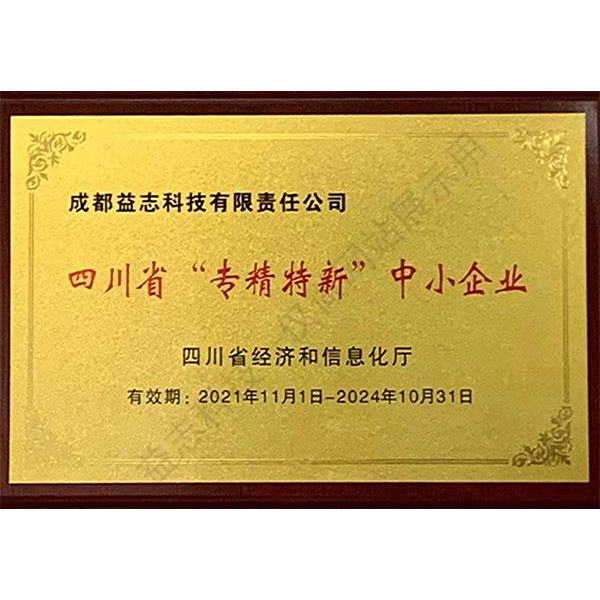
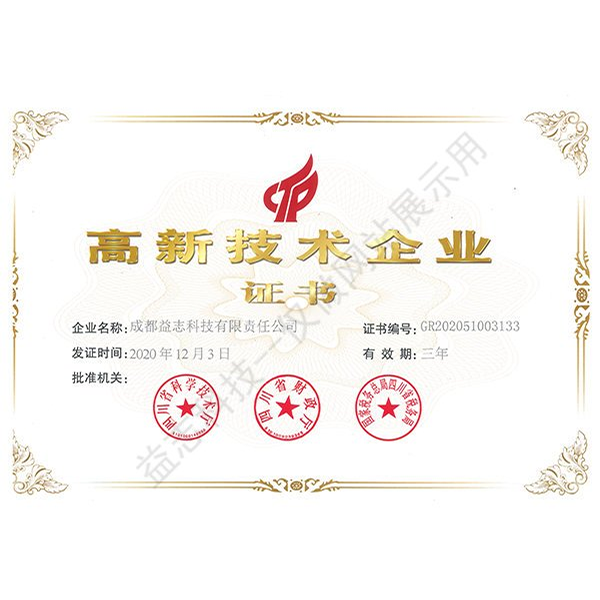
By the way, an interesting case is design institutes that have become a link between science and industry. They don’t just sell adsorbent, but design a technological scheme for it. Here, for example,Chengdu Yizhi Technology Co.(their website isyzkjhx.ru). This is just such a case. The company was established in 2013 as a design institute under the technology company Huaxi. Their approach is often task-based: they are presented with a problem (say, recovery of acetone vapor from emissions), they select or develop the optimal sorbent, and then design the entire installation. This is already the level of a system integrator, and not just a chemical seller. The registered capital of 120 million yuan is a serious bid for such comprehensive solutions.
Price, logistics and ?hidden? complexity
Yes, price is often a deciding factor. But the low price per ton from a Chinese plant can mean extra costs and headaches later. Firstly, logistics. An activated carbon container is more than just a box. Incorrect transportation conditions (humidity, shock) may degrade its properties. I know of cases when coal arrived with a high moisture content, and it had to be dried before loading into adsorbers, which led to downtime and additional costs.
Secondly, customs clearance and certification. For the food or pharmaceutical industry, appropriate certificates are required (for example, FDA). Not all Chinese manufacturers have them, and obtaining them is a slow process. Without them, the product may get stuck at the border.
Thirdly, technical support. In case of problems with the operation of the adsorber, a quick and qualified analysis is needed: is this a problem with the material itself or with the technological regime? Is the supplier ready to promptly send an engineer to analyze the spent sorbent? Large and serious players, the sameChengdu Yizhi Technology, build their reputation on such support, realizing that this is the key to long-term contracts.
Looking to the Future: Where the Industry is Heading
Now the trend is ?smart? or functionalized adsorbents. Not just a porous structure, but a “sharpened” material. for a specific molecule. Chinese scientific groups publish a huge number of articles on MOFs (metal-organic frameworks), on porous polymers, and on hybrid materials. The question is how quickly these developments will leave the walls of academic institutions and enter industrial production.
Another vector is sustainability and regeneration. More and more attention is being paid not to disposable sorbents, but to materials that can be effectively regenerated many times without serious loss of capacity. This reduces the environmental footprint and Total Cost of Ownership for the client. Chinese manufacturers are also active here.
So is China a leader? If we take the market as a whole - both the mass and high-tech segments - then yes, of course. But this leadership is not absolute. There is still a lag in some niche, highly complex areas. However, the dynamics are such that the gap is rapidly closing. Already now, for most industrial problems, you can find in China not just an alternative, but a high-quality and technological solution. The main thing is to approach your choice not only by price, but by a combination of factors: the manufacturer’s reputation, willingness to provide detailed data and technical support, the presence of successful cases. The experience of the last decade shows that those who invest in R&D and quality control will determine the rules of the game in the global market tomorrowadsorbents.