China: methane from coal - a breakthrough technology?
2026-03-07
I look at this headline and immediately dozens of presentations come to mind where this is called a “revolution?” and “salvation?”. But when you have been in the subject for years, you know that there is an abyss between a beautiful concept and a working well. Everyone talks about the potential, but I remember how in Shanxi in 2018 we struggled for three months with low reservoir permeability, and all production forecasts went to hell. So yes, the technology for extracting methane from coal seams (KSM - coalbed methane, we often saycoal bed methane) is not a discovery of yesterday. The question is different: has China become the locomotive in this matter that is not only increasing gigawatts of power, but also generating real technological breakthroughs? Or are we still caught up in the old problems: complex geology, high costs, and commercial gas yields like a lottery?
Neftyanka vs. Coal miners: different views on the same gas
The first thing you encounter on the spot is a cultural gap. Traditional oil and gas workers who came to CBM think in terms of reservoirs. They are looking for “traps”, “bottom water”. And coal is a different universe. Here the gas is adsorbed in the matrix, the yield depends not so much on porosity, but on the degree of fracturing andregional degassing. I remember that at one of the first projects in Anhui province, geologists from the oil industry insisted on drilling along a structural ridge. And the local, old-time miners, shook their heads: “The seam there is “dead”, the gas has long gone into the mined-out space of the old workings? They turned out to be right. Oil charts often lie for coal.
Hence the main, in my opinion, Chinese specificity - the hybrid approach. Western technologies (mainly Australian and American) adapt to insanely complex, often multi-layered and tectonic-disturbed geology. They don't just copy, they break. For example, standard gel-based fracturing fluid could plug micropores in local coals. I had to experiment with active water and special coarse proppants. This is not know-how in a vacuum, but an answer to a specific problem that may not even occur in Bowen.
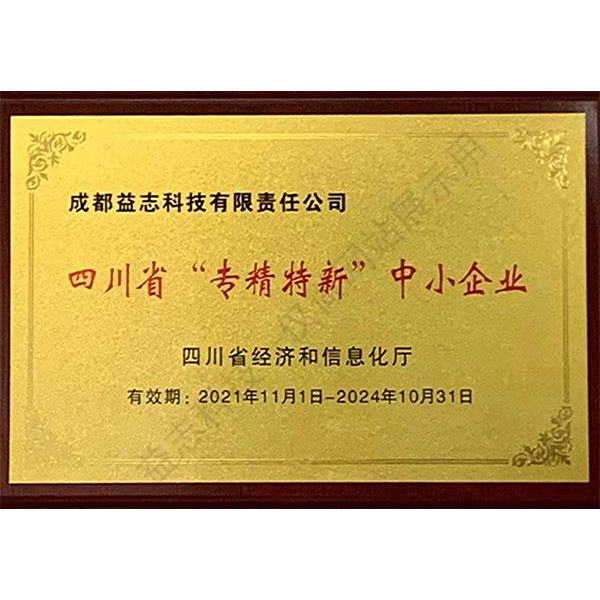
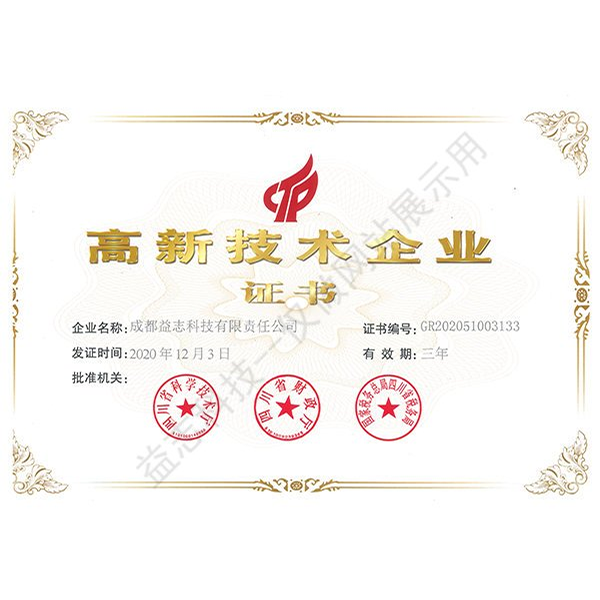
It is in this niche - adaptation and engineering to Chinese conditions - that many local institutes and companies operate. Take, for example,Chengdu Yizhi Technology Co.(their website isyzkjhx.ru). This is not an abstract research center, but a design institute spun off from a chemical technology company. Their capital of 120 million yuan is not about fundamental research, but about applied solutions. When I looked at their portfolio, I noticed that there was a lot of work specifically on optimizing the composition of hydraulic fracturing fluids and well construction systems for complex formations. This is the same “workhorse”? an industry that solves boring but critical problems: how to reduce the cost of drilling a horizontal hole in a thin formation or how to drain water more efficiently. Without such links, all “breakthrough technology” hangs in the air.
The numbers are brilliant, but in reality it’s a “war zone?”
The statistics from the Chinese Ministry of Energy are impressive: tens of billions of cubic meters of production, thousands of wells. But if you go to a cluster in Shaanxi or Guizhou, the picture is more complicated. I saw fields where out of ten wells they consistently “sing” three or four. The rest are either low-yield or have a huge volume of produced water that has nowhere to go. This is not a failure, this is reality.Extraction of methane from coalis always a statistical game. The goal is not every well is a champion, but low average production costs for the field.
One of the key headaches is water. In some pools, it takes months to pump out before there is a steady flow of gas. And this is not just H2O - these are brines with mineralization, requiring expensive disposal. Ecology? Yes, it's a huge question. Construction of reverse osmosis plants or injection sites is a colossal investment that kills the economics of small projects. Government subsidies and benefits are often not an incentive, but a condition for survival.
And also safety. Transition frommine degassingto CBM mining as an independent business is a paradigm shift. Miners see methane as a threat that needs to be pumped out and thrown away. CBM miners are a commodity. But this “marketability” comes with risks. Reservoir pressure, residual gas in old workings, unpredictability during hydraulic fracturing. Heard of a case in Henan where an operator was too aggressive in re-fracturing and had an uncontrolled flow of mine gas through a tectonic fault. The incident was localized, but the project was frozen for six months. Breakthrough technology? Yes. But every breakthrough is also a breakthrough into the unknown.
Integration: where the real breakthrough may be hidden
This is what is now increasingly being talked about on the sidelines of conferences: the future is not in targeted CBM mining, but in integration. ?Coal-methane-sun-wind?. It sounds like a green utopia, but there are already pilot projects. Imagine: a methane production site that goes to a mini-CHP to power drilling rigs and pumps. Nearby are solar panels on reclaimed land, compensating for peak consumption. And if there is a mine nearby, then you can close the cycle using mine methane (which is many times more calorific) in the same cogeneration plant.
This is not fantasy. Companies like China Coal and Sinopec are experimenting with such hybrid power parks. The economy is changing immediately. A low-yield well, which is unprofitable in a standalone project, in an integrated system becomes a stable, albeit small, source for one’s own needs, reducing dependence on the external network. This is no longer just gas production, it is managing energy flows at the local level. And here Chinese scale and state planning are a huge advantage.
But there are also “buts” here. Legal barriers. A gas production license is one thing. A license to generate and sell electricity is another regulatory universe. Approvals can drag on for years. I saw a project where all the technical solutions were worked out, but the connection to public networks was blocked by the local power grid company, which saw them as a competitor. So technological integration is only half the battle. We need administrative integration, which is often more difficult.
Experience you can’t buy: why the West looks at China with interest
Previously, China learned from Australia and the United States. Now the flow of knowledge becomes two-way. Why? Because Chinese engineers have accumulated unprecedented experience working in conditions that are rare in the West. High mountain deposits in Sichuan? Multilayered, highly disturbed structures in Northern China? Experience drilling near old mine fields with the risk of sudden blowouts? No one has this amount of baggage.
This gives rise to interesting collaborations. Not just the purchase of technology, but joint R&D. For example, technology adaptationdirectional drillingusing real-time electromagnetic logging to accurately point a hole in a thin coal seam - such work is being carried out with Canadian specialists, but using Chinese geological models. China provides a “testing ground for complexity”; the West provides sophisticated tools.
That is why the question in the title does not have a clear answer: yes? or not?. A breakthrough does not always mean creating something fundamentally new from scratch. More often it is bringing to industrial, mass application under the most severe conditions something that has already been invented somewhere. In this sense, China is making a quiet but massive engineering breakthrough. They have transformed CBM from a niche technology for favorable geological conditions into an industry that works where, by all standards, it should not work. At the cost of trial, error and huge investments.
What's in the bottom line? Technology as a process
So, back to the beginning. Coal methane in China is not a frozen “breakthrough technology”, but a living, painful and extremely pragmatic process. This is not about one magical well, but about thousands of different ones, each with its own story. It's about institutions likeChengdu Yizhi Technology Co., which solve specific problems to reduce the cost of slaughter. This is about the fight against water and bureaucracy. This is about gradual merging with new energy.
The main conclusion that I would make, looking at all this from the inside: the Chinese experience devalues the word “impossible?” in the context of CBM. They take on the ?impossible? from a textbook point of view, formations and try (often successfully) to squeeze commercial gas out of them. Yes, with varying degrees of success. Yes, it is not always profitable without government support. But they created an industry that exists and develops not because of, but in spite of. And this, perhaps, is the most important breakthrough - not in the laboratory, but in the field, in the ability to make the most complex geology work through countless iterations. The rest of the world will now learn from this experience because it, with all its scars, is its most valuable asset.