China: innovations in the LNG liquefaction cycle?
2026-03-07
When people talk about innovations in Chinese LNG, many people immediately think about the scale - new terminals, huge tankers. But the real, quiet revolution is happening elsewhere: in the veryliquefaction cycle. It is there, in the details of technological lines, heat exchangers and control systems, that their own work is going on, not always noticeable from the outside. And here there is something to talk about and something to argue with.
Where does real progress lie?
Marketing presentations aside, the key challenge for us has always been adaptation. Climatic conditions, composition of raw materials, requirements for the final delivery point - all this is very different from the conditions for which classical technologies were designed. You can't just take it and copy it. For many years, the dominant view was that Chinese companies were only assimilating foreign technologies. This was partly true. But now the situation is different. Innovation is not necessarily about inventing a new cycle from scratch. More often this is deep modernization, integration, optimization for specific, often more stringent, conditions.
Let's take energy efficiency issues, for example. Theoretical efficiency of cycles is one thing, but actual operation in a field with fluctuations in pressure and gas composition is quite another. We have seen projects where a seemingly minor change in the pre-cooling or cold recovery design resulted in a several percent increase in the efficiency of the entire line. This is a huge saving over the life cycle of the plant. But this can only be achieved through detailed modeling and, more importantly, through the experience gained during commissioning and operation. It was this practical experience that became the driver.
It is worth mentioning here about domestic developments in the fieldmain heat exchange equipment. It's not about replacing everything at once. But look at some new medium-scale projects - heat exchangers of their own production are already in full swing, and in a number of parameters (for example, resistance to certain impurities) they show themselves to be very worthy. This is the result of long and painstaking work by engineers, and not loud statements.
Practical difficulties and ?unsuccessful? attempts
Of course, the path was not strewn with roses. I remember one of the early projects to modernize an existing line, where they tried to introduce a more compact nitrogen cycle scheme. On paper - perfect. In practice, there are constant problems with the stability of the turboexpander during sudden load changes. The equipment was good, but the control algorithms and the logic of system interaction turned out to be “crude”. I actually had to rewrite part of the ESD and automated process control system on the go, and learn from my mistakes. It was a valuable, if expensive, lesson: innovation is a system, not a single unit.
Another point is the footage. Technology can be bought or developed, but operator experience, the instinct that allows you to foresee a problem by indirect signs (say, by subtle changes in the sound of a working compressor), cannot be bought. Forming such teams is a process that takes years. And often it is they, and not the technologists, who make the most valuable proposals for optimizing the cycle already during operation.
A separate headache is import dependence on some critical components, such as special alloys or precision fittings for cryogenic environments. The situation forces us to look for alternatives, which, paradoxically, sometimes leads to interesting technical solutions. For example, to revise the design solutions of components in order to reduce the requirements for materials without losing reliability.
The role of design institutes and integrators
Here we cannot fail to mention how the role of local design and engineering companies has changed. Previously, they often served as documentation adapters. Now many have grown into full-fledged technology integrators. They take responsibility for assembling a technological mosaic from various, sometimes heterogeneous, components into a single workable system.
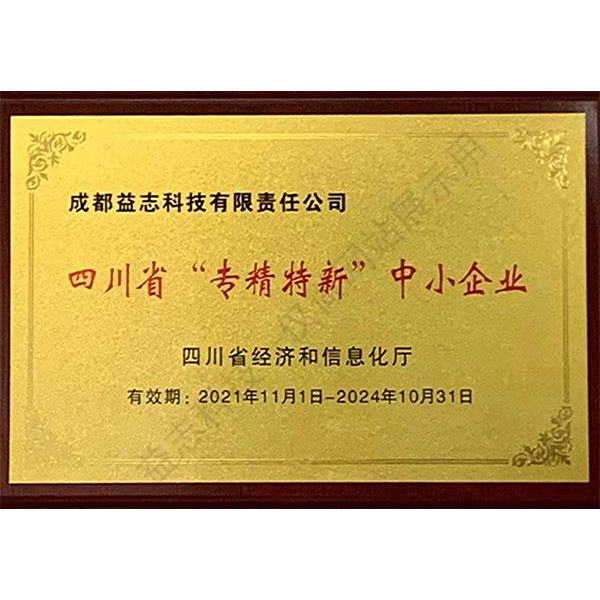
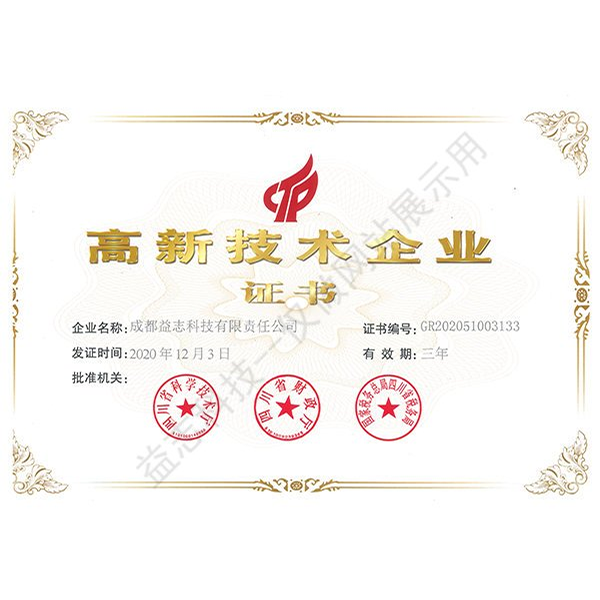
An example is Chengdu Yizhi Technology Co. (https://www.yzkjhx.ru). This design institute, created on the basis of Huaxi Technology, is actively working in the field of liquefaction technologies, including for LNG. Their approach, judging by some completed projects, is often based on a deep analysis of the customer’s initial data and subsequent fine-tuning of standard technological solutions. This is not a “boxed product”, but rather selection and integration. The registered capital of 120 million yuan indicates serious intentions and the ability to take on complex tasks. Their work is a good illustration of the shift: from simple copying to meaningful adaptation and system integration.
It is such organizations that become the bridge between fundamental research, the capabilities of equipment manufacturers and the harsh requirements of operation. They accumulate a database, an understanding of what works in reality and what is only in reports.
A look at specific technology trends
If we talk about specific areas, in addition to general optimization of cycles (mixed refrigerants, cascade cycles), I would highlight several growth points. Firstly, these are modular and mobile solutions of low and medium power. Demand for them is growing, and here Chinese manufacturers are actively offering their options, often with an emphasis on ease of operation and maintenance. Secondly, this is digitalization. This is not about ?industry 4.0? as a slogan, but about the implementation of predictive analytics systems that, based on data from thousands of sensors, can predict the condition of equipment and recommend optimal operating modes for specific conditions. This is the next level of optimizationliquefaction cycle.
Third, there is an increasing emphasis on flexibility. The plant must be able to operate efficiently not only with the calculated gas composition, but also within a certain range. This requires more complex control systems and, again, intelligent software. They are actively working on this now.
And, of course, ecology. Increasing efficiency is already a contribution to reducing the carbon footprint. But more targeted work is also underway, for example, to minimize boil-off gas (BOG) emissions at all stages or to use renewable energy for auxiliary systems of liquefaction plants.
Instead of a conclusion: what next?
So is there innovation? Undoubtedly. But they are of an applied, systemic and often invisible nature to an external observer. These are not loud breakthroughs, but daily work to improve, adapt, increase reliability and reduce the cost of ownership. The main thing is that an entire ecosystem has been formed - from research institutes and design companies such as the mentioned Chengdu Yizhi Technology Co., to equipment manufacturers and operators. This ecosystem learns, accumulates data and generates solutions.
The future, in my opinion, lies in hybrid solutions that will combine proven principles with new materials, digital twins and intelligent control. And the key role here will be played by practical experience, the same one that is obtained on industrial sites, and not in clean offices. It is he who turns technology into a sustainable and economical business. So innovation in China's LNG liquefaction cycle is not so much a story of "what", but rather a story of "how". And this story continues.