China: new LNG cycle products?
2026-03-07
When do you hear about ?new products? in Chinese LNG, you immediately think about giant plants or new tankers. But the reality often revolves around less visible but critically important things - around technology cycles, specific equipment and how innovation is implemented in practice. Many people are waiting for breakthroughs in liquefaction, but sometimes the key progress is hidden in regasification systems, storage or even in the management of the energy balance of a small plant. That’s what we’ll talk about, based on what I saw myself at the sites.
Where to look for innovation: not only liquefaction
The main attention, of course, is focused on liquefaction lines. China is increasing its capacity, but it is too early to talk about completely original technologies in this area. More often you see adaptation - say, optimization of processes for specific raw materials or local climatic conditions. For example, at one of the projects in Shandong province, they were faced with the fact that the design parameters for gas purity did not always correspond to actual supplies from the fields. We had to adjust the settings of cryogenic installations on the fly. This is not a loud innovation, but routine engineering work, but it is this that determines the reliability of the entire cycle.
But where I really see movement is in the intermediate storage and transportation segment. We are not talking about main pipelines, but about solutions for distributed energy. Cryogenic tanks are smaller in volume, but with improved insulation, allowing longer storage of LNG at supply stations for freight transport or remote communities. I saw how at such a station near Chengdu they were testing new composite materials for vacuum insulation - they were trying to reduce evaporation. Not all tests were successful; one of the prototypes developed microcracks after a cycle of sudden temperature changes. But the search itself is revealing.
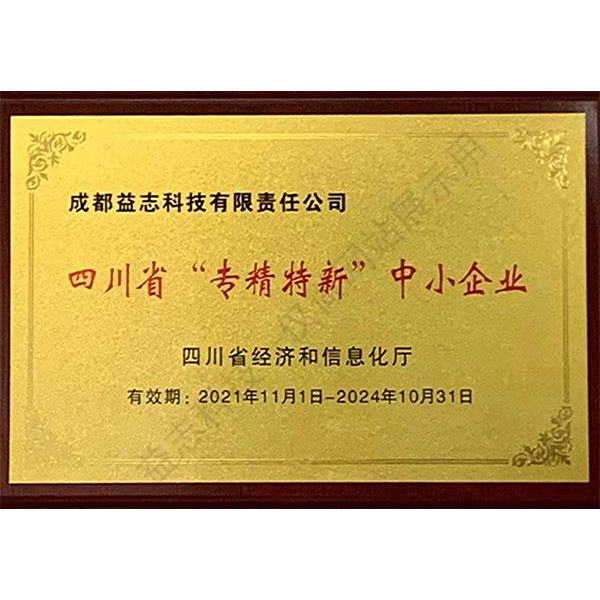
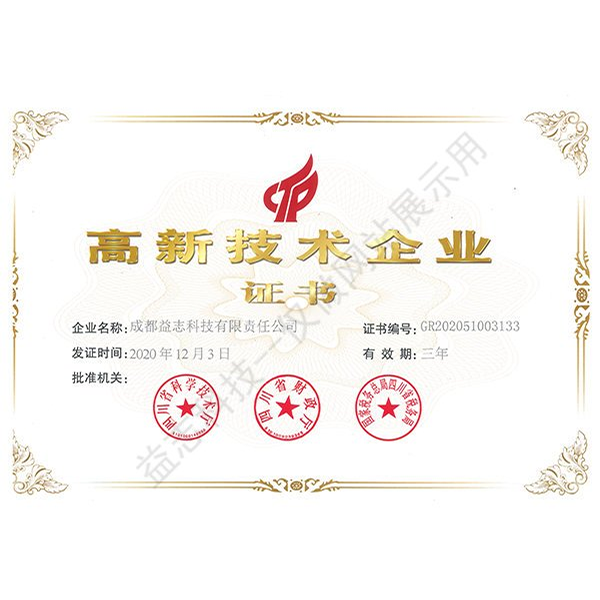
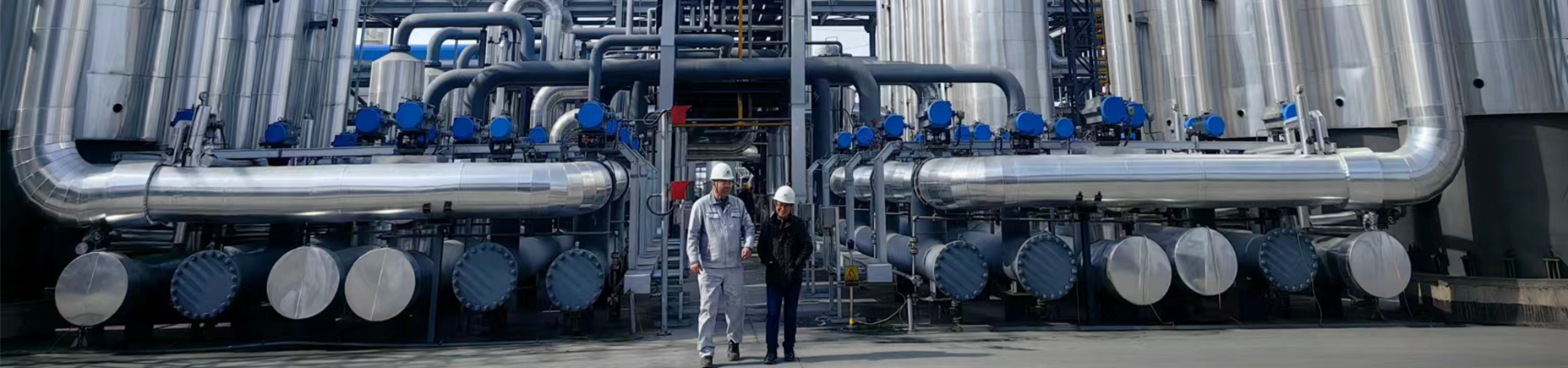
Or take regasification. It would seem that the process is standard. But new projects are increasingly incorporating modular regasification units with the ability to flexibly adjust power. This is a response to instability in demand. We once discussed with colleagues fromChengdu Yizhi Technology Co.(their website isyzkjhx.ru), who are engaged in design decisions in the chemical and related industries, which design to choose for a medium-power terminal. Their experience in process line design is useful because they are often faced with the need to integrate disparate equipment. By the way, they were created as the Huaxi Technology design institute back in 2013, with a solid authorized capital, which implies a serious foundation for R&D. So, their engineers paid attention to the importance of evaporator heating systems - a seemingly small unit, but the uniformity of gas supply to the network at peak loads depends on its efficiency.
Equipment and “localization”: what works and what doesn’t
The slogan of localizing equipment production sounds loudly. In reality, everything is more complicated. Cryogenic pumps and heat exchangers are key things. Chinese manufacturers have made great progress in the production of, say, pressure vessels. But when it comes to the most demanding components, such as compressors for large liquefaction lines, there is still often a reliance on imports or joint ventures. This is not a flaw, but a realistic stage. At one meeting, a supplier complained that its Chinese equivalent heat exchanger required more frequent maintenance stops. Solution? Use an imported core, but assemble and adapt the harness locally. This hybrid approach is now the most common practice.
An interesting trend is digitalization and control. Chinese companies are very active here. Implementation of IoT systems for monitoring the condition of tank insulation, sensors that monitor the slightest vibrations in pipelines. It's not just ?smart? words, but real projects. I remember how at the terminal in Fujian the system warned about an abnormal increase in pressure in the vapor return line - the problem was a clogged filter on the auxiliary line. Corrected before it affected the main operation. The savings are not so much in the cost of repairs, but in the prevention of downtime.
But there are also problems. Sometimes the desire for new products leads to the installation of unnecessarily complex control systems, which local operators then cannot work with effectively. I saw a control panel stuffed with hundreds of indicators, when for daily control you need at most thirty. Too much information is paralyzing. The best innovation is one that is intuitive and reliable in the hands of an engineer on duty, and not just in a report to management.
LNG as a transport fuel: a niche but growing segment
This direction is considered by many to be peripheral, but it is important for understanding the full cycle. We are talking about gas stations for trucks and river boats. Here are ?new products? — these are often business models and logistics. For example, the creation of mobile refueling complexes based on standard ISO containers. They can be quickly deployed to areas where a new road or port is being built. The economics of the project strongly depend on the coherence of the chain: delivery of LNG from the base terminal, storage, refueling.
The main headache is “boyover”, that is, evaporation when stored in small containers. In summer, losses can be sensitive. Therefore, there are now many experiments with systems for recycling these vapors - either returning them to the fuel system of the tanker, or using them for the station’s own energy needs. Success varies. At one station the system worked perfectly, at another it constantly broke down due to dust and vibration from the nearby highway. We had to modify the design of the air intakes and fastenings.
The development of infrastructure for the river fleet looks promising. LNG ships are already plying to the Yangtze. The specificity here is the safety and compactness of fuel systems. Equipment requirements are stringent, and this encourages manufacturers to create more reliable and integrated solutions. This is an area where Chinese engineering companies with experience in chemical engineering likeChengdu Yizhi Technology Co., can offer interesting developments, because designing safe technological systems is their specialty.
Interaction with the market: flexibility instead of gigantomania
Previously, the logic of megaprojects dominated. Nowadays there is more and more talk about flexibility. The new product in the LNG cycle is essentially the ability of the system to respond quickly. For example, a terminal that can accommodate both large tankers and small coastal gas carriers for distribution to neighboring provinces. This requires a special configuration of berths and storage facilities.
Another aspect is integration with renewable energy sources. Pilot projects where energy for liquefaction or terminal auxiliary needs is partially obtained from solar or wind installations. For now, these are rather demonstration initiatives, but they set the vector. The problem is the instability of such sources - this is critical for a continuous liquefaction process. Therefore, we are talking about buffer systems and smart energy management.
What has definitely changed is the approach to planning. Previously, they built with a large margin. Now the calculations have become more refined, more variables are taken into account: seasonality of demand, price fluctuations on the spot market, even environmental regulations in a particular region. Designers must now allow for future upgrades. It's more difficult than building from scratch. according to the once and for all approved plan.
Conclusions? More like observations in the fields
So are there new LNG cycle products in China? If by product we mean only a physical installation with revolutionary technology, perhaps not so much. But if you look more broadly—at optimization, integration, digital services and business models—then the movement is huge. Progress is often spotty and not always noticeable from the outside.
The key, in my opinion, is the growing depth of detail. From insulation material to control algorithm. And here the experience of companies that have been engaged in complex technological design for years is valuable. Their ability to calculate risks, to offer practical, and not just “innovative”? decision is extremely important. It is precisely such organizations, be they large government institutions or more narrowly specialized but experienced players like the one mentionedChengdu Yizhi Technology Co., form the real technological basis.
Ultimately, the new product is a reliable chain that is cost-effective and resilient to failure. And its creation is always a compromise between advanced developments, cost and harsh operational reality. Which, in fact, is the constant conversation among engineers at all sites, from drawing rooms to terminals under construction.