China: coalbed methane - technologies and products?
2026-03-02
- It’s not just “drill and pump”: geology is everything
- Technological zoo: what really works on site
- Products and disposal: what to do with what you get?
- Experiences and mistakes: the case of the project in Sichuan
- The role of engineering: why specialized institutes are important
- Looking forward: not only technology, but also economics
When they talk aboutcoal bed methanein China, many people immediately think about Shanxi or Inner Mongolia, about large reserves numbers. But in practice, there is often a gap between these figures and real, stable production. The most common question I hear is: “You have technology, what’s the problem?” And the problem is precisely that technology is technology, but each basin, each layer has its own story. What works in one place may be a waste of time and money in another. And this is not about the “bad” ones. or ?good? technologies, but about their adaptation. Now I’ll try to explain what it looks like from the inside, without the gloss.
It’s not just “drill and pump”: geology is everything
I'll start with the basics that many people miss.Extraction of methane from coal seams(CBM) is not shale gas that requires massive fracking. The key here is the permeability of the formation and its saturation. You can drill an ideal well by all standards, but if the formation is dense, like concrete, and the methane is “locked in,” then the flow rate will be scanty. There are many such complex, low-permeability formations in China. Especially in the south of the country. Therefore, the “well - casing - hydraulic fracturing” approach? often doesn't work. We first have to study in detail the structure, fracturing, and history of the geological development of the site. Sometimes it is more profitable not even to drill new wells, but to work through old, exhausted mine workings, but this is a separate, very risky story.
I remember one project in Guizhou province. The securities' reserves are very promising. We started drilling, everything was according to the textbook. But when testing began, the flow rate was catastrophically low. They began to figure it out. It turned out that the main layer, although thick, is separated by thin layers of clay that completely isolate the gas pockets. Standard hydraulic fracturing simply could not create a single system of fractures. We had to change the strategy, switch to the so-called “directional drilling with multi-stage fracturing?” exactly in these pockets. It is many times more expensive and takes longer. But this was the only way to reach a more or less industrial flow. Without such a deep analysis of geology, the project would simply be closed.
Hence the conclusion, which has already become an axiom in our environment: investments in exploration and detailed geological modeling are not an expense item, but the only opportunity to avoid millions of losses later. I saved on geologists and logging, but lost everything at the production stage.
Technological zoo: what really works on site
So, the geology is a little clear. Now about the tools. Universal "magic wand" No. A combination is often used. For example, technology is critical for low-permeability formations in Chinahydraulic fracturing(Hydraulic fracturing), but not just any one, but with properly selected proppants and fracturing fluids. Previously, standard quartz proppants were often used, but in deep or high-temperature formations they simply collapsed. Nowadays, sintered bauxite or even resin-coated ones are increasingly used - they can withstand greater closing pressure.
Another point is water management. There is often a lot of it in coal seams, and if not actively pumped out, it creates back pressure and suffocates the gas flow. Therefore, rod or submersible electric pump systems are a must-have on most sites. But there are also nuances here: water from a coal seam is not pure, it contains suspended matter, mineralized, and aggressive. Equipment wears out quickly. At one of the fields in Shanxi, we changed plunger pairs of pumps almost every two months, until we selected special wear-resistant alloys and set up a water pre-treatment system. This is a typical practical problem that is not written about in reports.
Directional and horizontal drilling are worth mentioning separately. This is already a standard for increasing contact with the formation. But in the complex tectonics of China (many faults and folds), the well trajectory can be very difficult to maintain. There were cases when the drill was led into an unproductive layer due to a sharp change in the angle of dip of the formation. Requires the highest operator qualifications and constant real-time monitoring.
Products and disposal: what to do with what you get?
Let's say the gas starts flowing. And here the next practical question arises: what to do with it? The main gas pipeline is not available everywhere. Therefore, local use is being developed in many CBM fields in China. The simplest option is to generate electricity for the needs of the field itself and nearby villages. Gas piston or gas turbine power plants are installed. This solves the logistics problem and adds economics to the project.
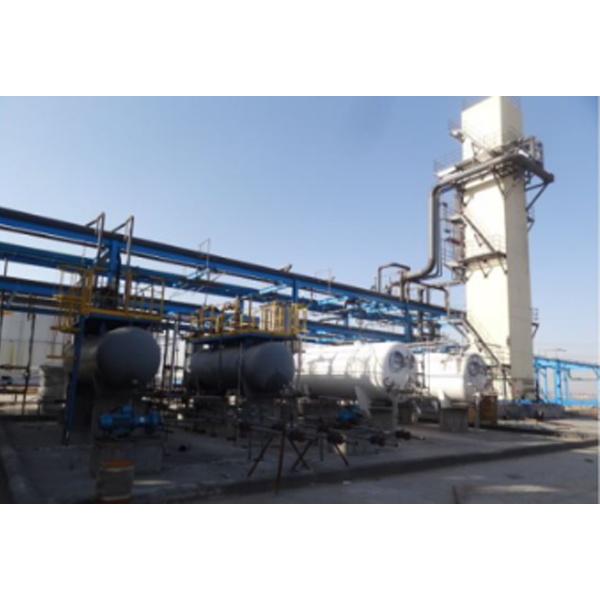
But there are also more interesting, additional products. For example,liquefied methane(LNG) low power. Such installations make it possible to transport gas by tanker trucks over long distances. For remote fields this is sometimes the only way out. I saw a mobile liquefaction plant in operation at one of the sites in Henan Province. The power, of course, is not gigantic, but it made it possible to launch the project into commercial operation two years earlier than the pipeline would have been built.
Another direction is cleaning and bringing gas to main quality (the so-called “gas preparation?”). Here it is necessary to remove not only moisture, but also carbon dioxide and nitrogen, if their content is high. These are entire technological lines with absorbers, adsorbers, and membrane units. The choice of technology again depends on the composition of the particular gas. An error in the design of this unit may result in gas not being accepted into the network.
Experiences and mistakes: the case of the project in Sichuan
I would like to give an example of a not very successful, but very illustrative project. We are talking about the basin in Sichuan, where the coal seams lie very deep and are strongly disturbed by tectonics. The initial assessment was optimistic. We attracted investments and purchased modern drilling equipment. We started with vertical wells with massive hydraulic fracturing. The first results were encouraging, but after 3-4 months the flow rate of all wells dropped sharply, by an order of magnitude.
The analysis showed that the fractures created by hydraulic fracturing under high geostatic pressure simply “closed”. The proppant was not strong enough. But the main mistake was elsewhere - in the development model. Deep formations under high stress conditions behave differently than medium-depth formations. It was necessary to drill not a cluster of vertical wells, but to lay the foundation on horizontal trunks with a smaller, but more distributed impact on the formation. The project had to be seriously revised, incurring financial losses. This experience has clearly shown that blindly copying technologies from other regions without taking into account the specifics of in-situ stress is a road to nowhere.
Now work is underway on the same site, but according to a different scheme. And a detailed study of the stressed state of the massif played a key role. Sometimes it seems that such research is “science-intensive excess,” but in fact it saves projects.
The role of engineering: why specialized institutes are important
Everything that I described above comes down to one question: who designs and adapts all this? Large oil and gas companies often have their own research institutes, but for medium and small CBM projects, highly specialized design institutes are critical. They are the ones who are doing the “landing?” technologies for specific conditions.
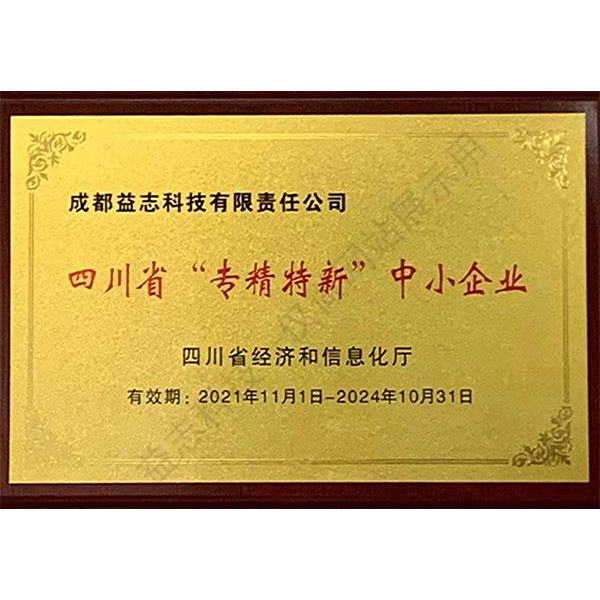
Here, for example,Chengdu Yizhi Technology Co.(website:https://www.yzkjhx.ru). This is just such an institute, created on the basis of a technology company. Their profile is not just the sale of equipment, but comprehensive solutions for gas production and treatment, including the verycoal bed methane. Why is this important? Because they can take on the entire cycle: from geological assessment and modeling to the selection of drilling technology, hydraulic fracturing and the construction of a mini-plant for gas treatment or liquefaction. The registered capital of 120 million yuan indicates serious opportunities for the implementation of such turnkey projects.
Working with such partners, the customer (often a coal mining company that wants to develop associated gas) receives not a set of disparate services, but responsibility for the end result - a stable gas flow. For China, with its huge number of small and complex deposits, this approach is one of the most rational. An institute like Yizhi Technology accumulates experience from different sites and can offer a solution that has already worked somewhere under similar conditions, avoiding common mistakes.
Looking forward: not only technology, but also economics
In conclusion, I would like to say that the futuremethane extraction from coal seamsin China depends not only on breakthroughs in hydraulic fracturing or drilling. It increasingly comes down to economics. The cost of production in difficult areas is still high. The key technologies will be those that reduce it: more durable materials, intelligent well monitoring and control systems to optimize flow rates, energy-efficient solutions for gas treatment.
In addition, methane from closed mines is a huge resource. Its extraction is often even more difficult due to safety issues and the complex structure of the workings, but the potential is enormous. Here we need completely different, almost tunnel technologies and robotic systems. This is the next stage of work.
So, to answer the original question ?technologies and products?? - yes, they exist and are constantly developing. But their success will always be determined not in the office, but in the field, at the well, through the analysis of specific data, trial and error. The main technology is the ability to listen to the layer and have the courage to abandon the standard approach if it does not work. This, perhaps, is the whole essence of this work in China today.