China: New LNG liquefaction methods for exporters?
2026-02-18
When they talk about new Chinese technologies inLNG liquefaction, many immediately imagine giant “turnkey” factories. But the reality is often more subtle - this is a story not so much of revolution as of adaptation, where the key role is played by engineering companies that are able to bring an idea to working equipment in specific conditions.
Where is “new” born: not factories, but design institutes
The main driver is not even end operators like CNOOC or PetroChina, but design and engineering institutes that have grown within large technology holdings. They became the link between fundamental R&D and the commercial project. Their capital is not only money, but also the accumulated experience of unsuccessful tests, which is not published anywhere.
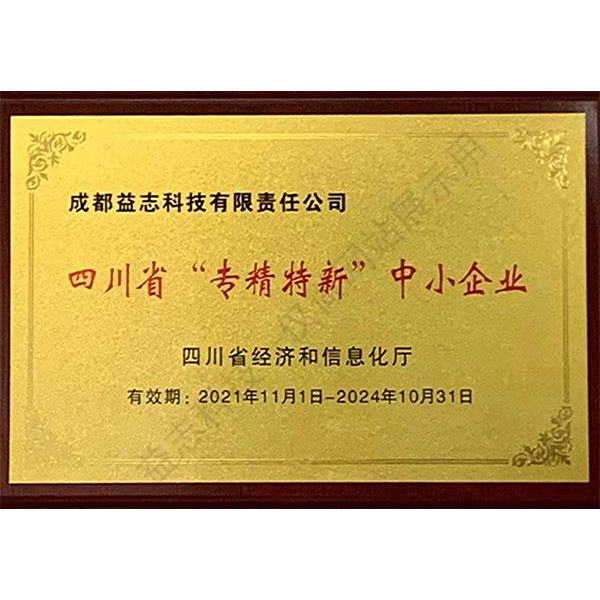
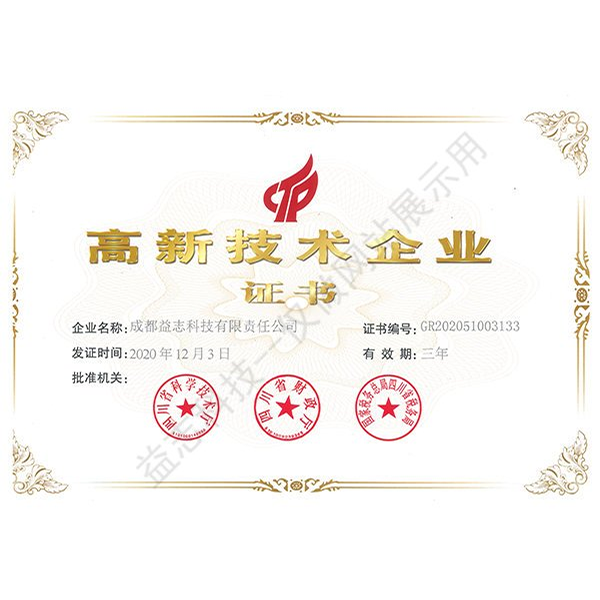
Take Chengdu Yizhi Technology Co. for example. is a design institute established by Huaxi Technology. The registered capital of 120 million yuan is not just a number, it is an indicator of the seriousness of intentions and the ability to take risks on complex contracts. Their websiteyzkjhx.ruis more of a showcase for partners, but behind the dry descriptions of installations there are dozens of technical solutions for optimizing liquefaction cycles.
It is such organizations that are often the source of real “new methods”. They don't reinvent the cryogenic cycle from scratch, but they can radically redesign, say, the pre-cooling circuit or integrate a cold recovery module from BOG (evaporating gas), which ultimately gives the very efficiency gains that are then written about in the news.
What it's really about: adaptation, not breakthrough
Under ?new methods? usually imply not the discovery of a new physical principle, but new configurations of known cycles - cascade, mixed refrigerant (SMR, C3MR), nitrogen expansion. Chinese engineers are actively working on adapting them for medium and small-scale installations, including floating (FLNG). This is a response to a market request: not everyone needs a giant $10 billion plant.
For example, one of the trends is hybridization. Combine stages. Let's say the first stage is propane pre-cooling, and then a mixed refrigerant based on nitrogen and methane. It sounds academic, but in practice this reduces energy consumption by 8-12% for installations with a capacity of about 1 million tons per year. Not fantastic, but significant savings.
The problem is that each such adaptation is a puzzle of equipment that must fit perfectly together. And here there is often a problem: Chinese compressors and heat exchangers for such specific modes may still lag behind leaders like GE or Linde in reliability. Therefore, sometimes a ?new method? is limited by the need to import a key node, which negates some of the savings.
Case from practice: when ?optimization? faced with reality
I’ll tell you using a hypothetical example based on several real projects. The goal was to increase the efficiency of a medium-sized liquefaction plant for the domestic market. Engineers from one institute (I won’t name it) proposed an ingenious scheme for recovering cold from the waste stream at the stage of gas purification. On paper and in simulation - energy savings of up to 5%.
Installed. Launched. And we were faced with the fact that the proposed scheme turned out to be extremely sensitive to fluctuations in the composition of the raw material, which at the field could change more than was assumed in the technical specifications. The heat exchangers began to freeze in an unexpected way, so we had to urgently install an additional heating and control system. Savings fell to 1.5% and capital costs increased.
This is a classic story. Novelty inLNG liquefactionalways balances on the brink of risk. Chinese teams are now going through this path - they are hitting their bumps, but they are learning very quickly. The same Chengdu Yizhi Technology Institute, judging by their portfolio, now immediately lays down a wider range of work on gas composition for such schemes and offers clients flexible, rather than “ideal-optimal” ones. solutions.
Key Link: Refrigerants and Materials
A separate big topic is working with refrigerants. The global trend away from fluorocarbons forces us to look for alternatives. Chinese research groups are actively testing mixtures that are less harmful but remain effective. This is a huge job, because the slightest change in the composition of the mixed refrigerant requires recalculation of the entire heat exchange chain and adjustment of the compressors.
In one of the projects where our partners were involved, an attempt to use a new environmentally friendly mixture led to increased corrosion at certain points in aluminum heat exchangers. The problem was solved, but the deadlines shifted by six months. These are the kinds of details that never make it into press releases, but they shape the actual experience.
The current focus is on creating our own, more resistant materials for cryogenic technology and developing digital twins that allow us to test these new refrigerants and their effect on equipment in a virtual environment before pouring them into a real installation. This is an area where China is actively investing.
What is the result: competition at the level of integration
So do Chinese exporters have new methods? Yes, but they are not the monopoly know-how of one giant. It is rather a set of adapted, tested and gradually improved technological solutions that are offered by engineering companies such as Chengdu Yizhi Technology Co. Their strength lies not in a breakthrough theory, but in the ability to integrate known components into a workable, economical and, importantly, suitable for turnkey construction. system in different countries.
Their ?novelty? often lies in the ability to reduce the cost and simplify operation without losing key indicators. For example, by standardizing modules for mediumLNG installations, which reduces construction time. This is not as impressive as announcing a new cycle, but it is often more important for the customer.
Therefore, when you see a headline about “new Chinese methods?”, look not at loud statements, but at the portfolio of specific design institutes and what installations they have already commissioned and are operating. Experience, including negative ones, is their main asset. And this asset is now growing rapidly, making China an increasingly serious player not only as a market, but also as a supplier of technologies forgas liquefaction.