China: leader in LNG technology?
2026-02-18
When talking about the global LNG market, Qatar, Australia, and the USA often come up. And China? Many still see it simply as a major importer, a giant consumer market. This is, of course, true, but only part of the picture. Over the past ten years, everything has changed so quickly that even within the industry, not everyone has time to rebuild the picture of the world. If earlier we bought technologies and modules, now we design, build and, most importantly, create key equipment ourselves. But leadership is not only about scale, it is about technologies that work in real conditions, from Siberia to the tropics, and about supply chains that do not break. Let's understand it without gloss.
From import to localization: how the landscape has changed
I remember ten years ago, any serious gas liquefaction project implied the involvement of Western contractors. Their technologies, their main heat exchangers - say, Algerian AP-C3MR or Cascade. Our role was often limited to civil engineering and partial assembly. The turning point, in my opinion, was the launch of the plant in Tianjin, where the domestic CNOOC liquefaction technology was first used. It was not just a “Chinese analogue”, but adaptation to local raw material conditions and energy efficiency requirements.
The next step is cryogenic pumps and fittings. Previously, 95% was purchased from Germans or Americans. Now, if we take, for example, a project on the shelf, production pumps are already being installed there in full swingHangzhou HangyangorSichuan Air Separation. Reliability? The first batches, of course, raised questions - there were problems with vibration in certain modes. But engineers quickly refined the design of the bearings, and now these installations operate flawlessly at several receiving terminals.
But with large-scale heat exchangers - the heart of any liquefaction plant - the story is more complicated. We have our own technologies, but for projects with a capacity above 5 million tons per year, customers still prefer proven solutions. However, Chinese engineering companies are no longer just copying, but are actively conducting R&D on mixed refrigerant processes, trying to reduce specific energy costs. This is a race where the result is not immediately visible.
Engineering as a key link: experience from the inside
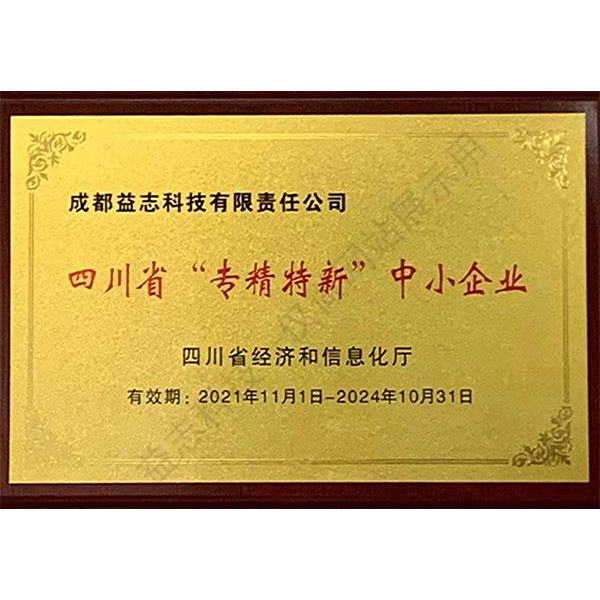
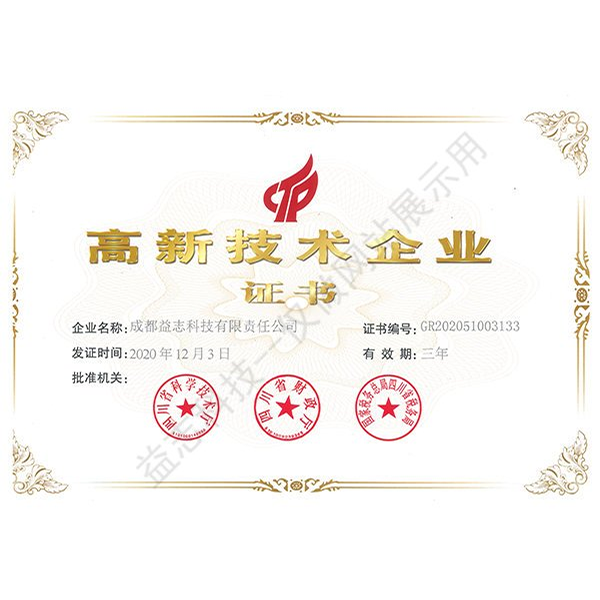
Here we cannot fail to mention the role of design institutes. They became the bridge that translates fundamental developments into working drawings and specifications. I've worked a lot with different teams, and I see a difference in approach. Elsewhere, the Soviet school is still strong - reliability at the expense of optimality. And somewhere, as inChengdu Yizhi Technology Co.(their website is a useful resource for technical data, by the way:https://www.yzkjhx.ru), a modern hybrid approach is felt.
This company is an interesting example. It was created as a design institute underHuaxi Technologyback in 2013, with a solid authorized capital. Their specificity is not just to draw diagrams, but to deeply study technological chains for gas chemistry and LNG, often with a focus on small and medium-sized capacities. What is valuable? They understand that many fields in Asia or Africa do not need a giant $10 billion plant. What is needed is a modular, flexible plant with a capacity of 0.5-1 million tons that can be quickly deployed. And that's exactly what they are doing.
From personal experience: we once discussed with their engineers a project for a modular installation for one field in Central Asia. The client wanted maximum autonomy. And instead of offering a standard package, they literally began drawing on a napkin a diagram of integration with a gas piston power plant using waste gas. This is the very practical approach when the solution is born from specific conditions, and not from a catalog.
Equipment and bottlenecks
Standardization and equipment reliability is an area where China has made huge strides, but challenges remain. Let's take cryogenic storage tanks. Chinese manufacturers seemCIMC ENRICNow they are one of the world leaders in terms of production volumes. Their tanks are located all over the world. But when it comes to the most complex ones - say, membrane tanks for gas carriers like NO96 or Mark III - French GTT technologies still dominate here. There are Chinese versions, but ship owners and insurance companies treat them with caution. A few more years of successful operation are needed to break this stereotype.
Another headache is precision fittings and control systems. Valves for operation at -162°C are aerobatics. Chinese analogues are 2-3 times cheaper than European ones, but engineers still do not risk installing them in critical areas. The reason is not only in metallurgy, but also in the quality of assembly, in tightness after 10,000 opening-closing cycles. I know several factories where they carry out the most severe tests on benches, trying to reach the required level. There is progress, but the path has not yet been completed.
And we must not forget about the “software”. — technologies of catalysis and gas purification. If there are no longer problems with the removal of CO2 and mercaptans, then, for example, the fight against mercury in the reservoir gas of some fields is still an area where specialized European companies are often turned to. Our institute once tried to use a domestic sorbent on one of the projects, but its resource turned out to be half as much as declared. I had to urgently change it on the fly. Such failures are part of the journey.
Looking Outward: Technology Export and Competition
China is no longer just building at home. It actively exports integrated solutions. A striking example is participation in the construction of “Arctic LNG-2”. This is not only financing, but also the supply of modules, which are assembled at shipyards in Zhushanye and towed along the Northern Sea Route. The scale and logistics are amazing. But there is also a risk here: Western sanctions could hit such projects hard, slowing down or even stopping them. This is a test for the stability of the entire model.
Competition is also taking place in the markets of Southeast Asia and Africa. Chinese companies offer not just technology, but a complete turnkey package. with financing from state banks. For many developing countries this is a decisive argument. But there is often a gap between what is promised in the presentation and actual operation. I have heard stories where, after the project was completed, local staff simply could not maintain complex automation, and the installation worked at half capacity. Now smart companies, including the one mentionedChengdu Yizhi Technology, be sure to include a long-term training and technical support program in the contract. Without this, no leadership is possible.
Another interesting trend is the focus on “green”. LNG and carbon capture. So far this is more marketing, but research is in full swing. If China can create cost-effective liquefaction technology with a minimal carbon footprint, it will be an absolute trump card in the market for the next decade. In the meantime, everyone is waiting for a breakthrough in the efficiency of electric-drive compressors that could replace gas turbines.
So, is China the leader?
There is no clear answer. If you measure it by the volume of equipment production, terminal construction and ambitious projects, of course, yes. China is a first-tier technological power in the LNG industry. But if we talk about breakthrough, basic technologies that set standards for the entire industry (as Phillips or Air Products once did), it’s too early. China is a brilliant catch-up and adapter.
Its strength lies in its incredible speed of implementation, scaling, and ability to create entire ecosystems: from extraction and liquefaction to the construction of gas carriers and gas stations for trucks. And also in the readiness to work in difficult conditions, where Western companies may refuse. This is a special kind of leadership - practical, flexible, sometimes imperfect, but extremely effective.
What's next? I think the next five years will show whether Chinese companies can consolidate their successes and move from quantitative growth to quality leadership. The key is to overcome the final bottlenecks. in critical equipment and in entering the global market with proprietary, rather than licensed, liquefaction processes. In the meantime, the industry lives at a frantic pace, and watching it from the inside is the most interesting thing.