China: innovations in LNG complexes?
2026-02-18
When people talk about innovations in Chinese LNG terminals, many immediately imagine gigantic scales and new liquefaction technologies. But in practice, real evolution is often hidden in the details of engineering, in the adaptation of solutions to specific, sometimes unobvious, conditions. This is not about revolution, but about constant fine-tuning.
From plans to reality: where the gap lies
When designing, you often come up against one point: standard solutions that work well in other regions may fail in China. Not because of the quality, but because of the specifics of the locations, safety requirements, and even because of the logistics of equipment supplies. I remember that at one of the sites in the coastal zone we were faced with the problem of high air salinity and its effect on materials. Everything in the documentation is smooth, but on site we had to quickly change the approach to anti-corrosion protection for critical components. This is the same “non-bookish” one. Job.
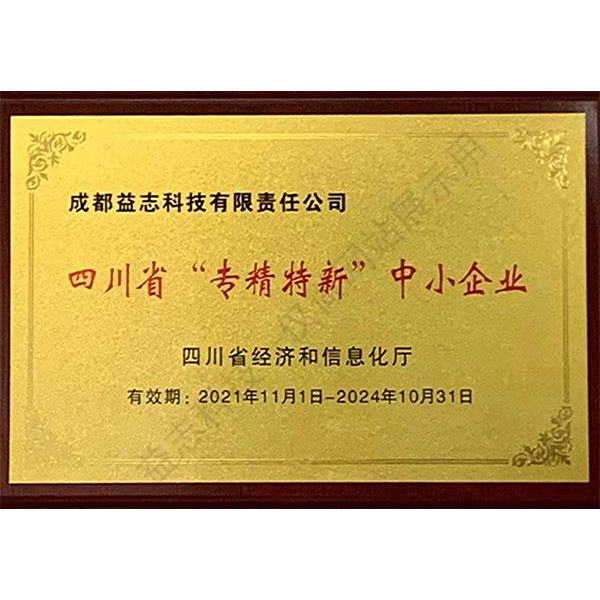
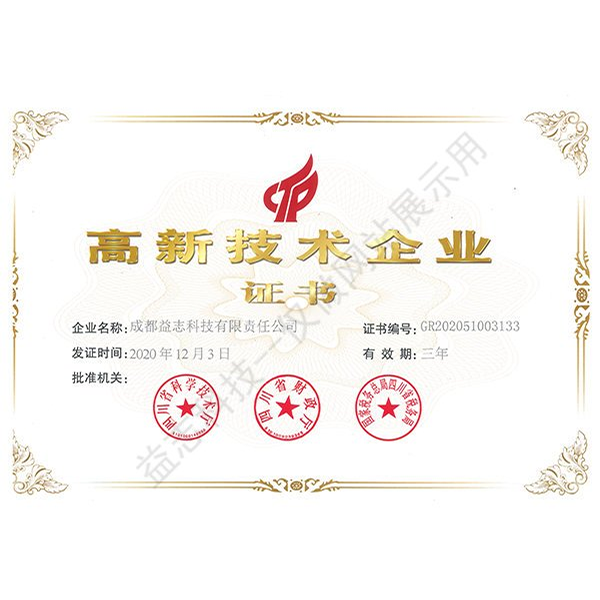
This is where the role of institutions such asChengdu Yizhi Technology Co.(their website ishttps://www.yzkjhx.ru). This is not just a bureau, it is a design institute with a registered capital of 120 million yuan, established by Huaxi Technology back in 2013. Their value lies in the deep integration between R&D and practical design. They don't just draw circuits, they often participate in commissioning, seeing the consequences of their decisions in the metal.
A common gap is the underestimation of systems integration. It is possible to supply the latest liquefaction equipment, but if the energy or refrigerant management system is not designed for the peak loads of a particular terminal, efficiency will drop. Innovation is often not a new compressor, but a new algorithm for its operation in conjunction with other installations.
Case: adaptation for ?local? gas
Let's take the story of one of the projects in northern China. Gas from local fields had an unstable composition, with a high content of nitrogen and CO2. The standard liquefaction technology required modification at the pre-treatment stage. Project team fromChengdu Yizhi Technologyproposed not only to increase the capacity of the treatment modules, but to revise the entire treatment scheme by introducing an additional separation stage with flow recirculation. The solution increased CAPEX, but dramatically reduced operational risk and improved final product purity.
The implementation took longer than planned. There were problems with the supply of specific valves designed to work with aggressive media. We had to look for alternative manufacturers and conduct additional tests. This point is rarely highlighted in success reports, but it is key to understanding real innovation - it is always about overcoming unexpected obstacles.
What did you get in the end? A terminal that can flexibly work with gas of different qualities, minimizing downtime. For the client this is reliability. For engineers, this is invaluable experience that is now incorporated into design standards for such conditions.
?Smart? systems: more data, less certainty?
Now everyone is talking about digitalization and predictive analytics. Yes, there are thousands of sensors on the new sensor systems. But is this innovation? More like a necessity. The real challenge is not collecting data, but learning how to interpret it correctly to make decisions. I saw the implementation of a vibration monitoring system on turboexpanders. The data was sent in real time, but alarm thresholds were set according to general recommendations, which led to false stops.
I had to ?train? system in place for several months, taking into account the installation features and operating modes of this particular unit. The innovation here is in the creation of adaptive algorithms, not in the sensors themselves. And this is painstaking work that is not advertised in press releases.
In addition, the issue of cybersecurity of such complex integrated systems arises. Increasing connectivity also means increasing vulnerability. Designers are now required to include this at a very early stage, which has also become an integral part of modern engineering.
Economics of innovation: when payback is not linear
The implementation of any new solution comes down to money. Investors want quick returns. But many technological improvements, especially those related to energy efficiency or the environment, have a long payback period. For example, cold recovery from evaporating LNG. The technology is known, but its implementation requires significant capital investment and complicates the infrastructure.
The solution often lies in combination. Do not install the recovery system at full capacity immediately, but create a modular infrastructure that allows you to expand it as demand grows or energy tariffs change. This requires more sophisticated design, but provides flexibility. Such solutions are a quiet innovation in the field of project finance and economic modeling.
Failure can be considered cases when they were chasing the “best” thing. without taking into account the economics of the project. A contractor I know suffered while installing state-of-the-art remote-controlled cryogenic pumps at a small receiving terminal. The complexity of maintenance and the cost of spare parts ate up all the savings from a slightly higher efficiency. Innovation must be proportionate.
Looking forward: not technologies, but competencies
So, where is innovation heading in China?LNG complexes? The main vector, in my opinion, is not breakthrough discoveries, but the consolidation of experience and the creation of holistic competencies. We are talking about the ability to take ready-made technological blocks and assemble from them efficient, reliable and economically viable systems for the unique needs of the client.
This is clearly visible in the evolution of design institutes. Players likeChengdu Yizhi Technology Co., have grown from highly specialized units into full-fledged engineering partners capable of leading a project from concept to commissioning, taking into account all the pitfalls. Their capital is not only money, but also an accumulated database on the actual operation of equipment under different conditions.
The future lies with hybrid models. Behind a combination of large-scale base terminals and small flexible regasification facilities built into the customer infrastructure. Innovation will be required in the areas of miniaturization, modularization and even greater automation for such distributed objects. And here the experience gained on large projects will be invaluable. The main thing is not to lose the connection between the drawing board and the construction site, between the algorithm and the real turbine. This, perhaps, is the point.