China and Russia: joint LNG technologies?
2026-02-17
When people talk about joint projects between Russia and China in the field of LNG, they often immediately think of “Yamal LNG”. or ?Arctic LNG 2?. But this is just the tip of the iceberg, and even there the main technological platform is Western. The real question, which few people discuss openly: do we, Russia and China, have our own, jointly developed technological chain for gas liquefaction? Not just the supply of modules or turbines, but joint engineering competence capable of creating a plant from scratch? My experience suggests that the situation is much more complex and interesting than it seems. We are not standing in a vacuum, but we shouldn’t have any illusions.
From ?iron? to the “brains”: the evolution of cooperation
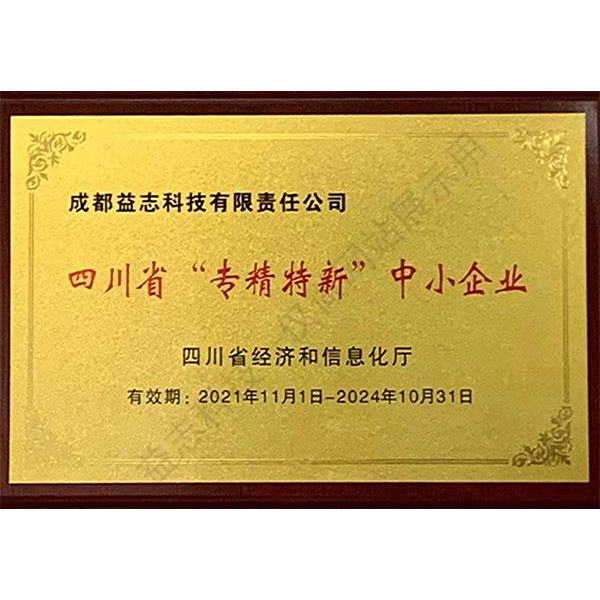
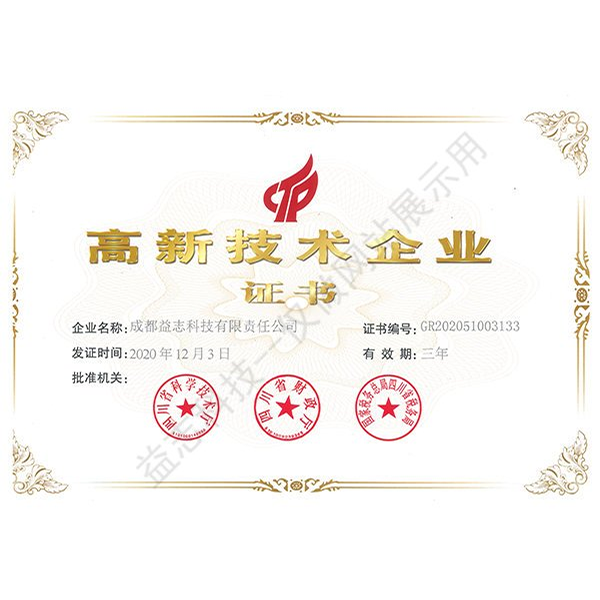
Previously, everything came down to the exchange of goods: our resources are their equipment. The Chinese supplied cryogenic tanks, pumps, heat exchangers. The quality, to be honest, raised questions at first. I remember a story with a batch of plate-fin heat exchangers for one of our nitrogen installations - they arrived with microcracks at the seams. But that was eight years ago. Now the same Chengdu Yizhi Technology Co., which is the design and research institute of the parent company Huaxi Technology, is demonstrating a completely different level. Their websiteyzkjhx.ruis no longer just a product catalog, but a portfolio of comprehensive solutions for low-temperature processes.
The turning point, in my opinion, began with their participation in projects of medium complexity in the Far East. We are not talking about main liquefaction lines, but about small LNG production plants for local consumption or bunkering. This is where Chinese engineers showed flexibility. They didn’t just sell boxes, but adapted their technological schemes to our raw material conditions - gas with a high content of nitrogen or heavy hydrocarbons. This is already a step from seller to partner.
The key word here isdesign institute. When a company has not just a factory, but an engineering core with a registered capital of 120 million yuan, like Yizhi Technology, it changes things. They can lead the FEED stage (Front End Engineering Design) and offer process optimization. My colleagues from VNIIGAZ and I We once examined their proposal for a pre-cooling scheme using a mixed refrigerant for one of our fields in Eastern Siberia. The scheme was, in general, workable, although it required modification to suit our climatic realities - their initial data on ambient temperature were too “soft?” for our winters.
Technological niches and growth points
Where are the real common ground for collaborative technologies today? Large-scale liquefaction using Air Products or Linde technologies is not yet at our level. It requires decades of experience and enormous investment in R&D. But there are niches.
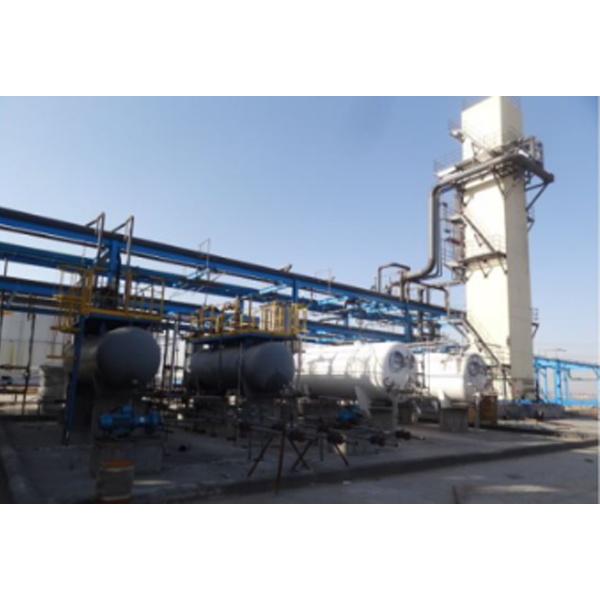
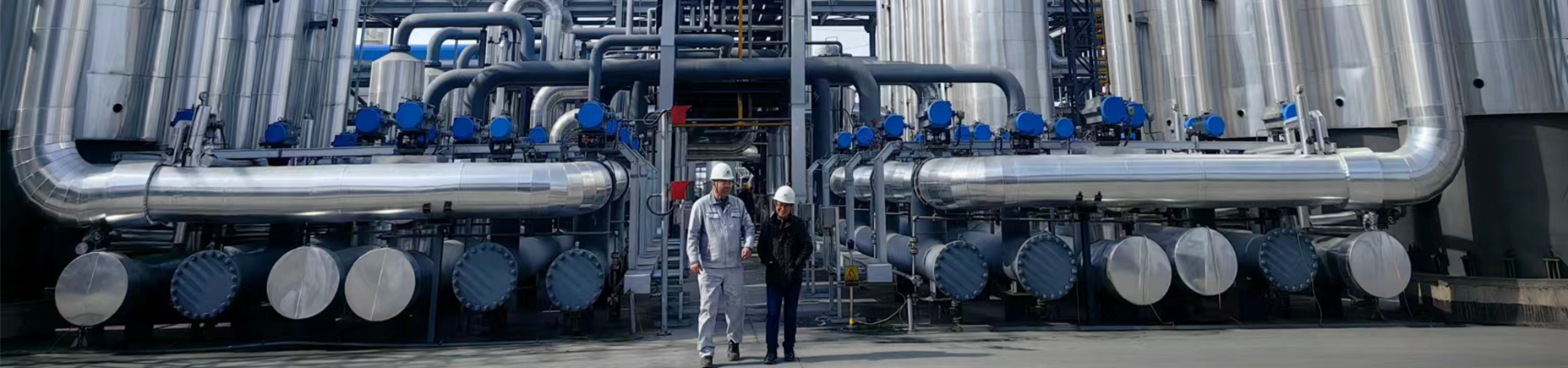
Firstly, these are small and medium-sized LNG installations (Small-scale and Mid-scale LNG). Here, Chinese companies, including Yizhi Technology, have amassed a serious portfolio. Their approach is often more economical for projects up to 1 million tons per year. They actively use the modular principle, which reduces construction time on site. We considered this option for gas supply to a remote area - not to build from scratch, but to import ready-made technological modules. It is financially beneficial, but the question of long-term service and availability of spare parts arises. Agree on the creation of a joint service center - this would be a practical joint technology.
Secondly, these are related technologies: storage, transportation, regasification. Here cooperation is in full swing. Russian companies order from China not just tanks, but entire LNG logistics management systems with telemetry. This is already the integration of hardware. and software. Onwebsite yzkjhx.ruyou can see how they position themselves precisely as a supplier of integrated solutions, rather than equipment.
Thirdly, and this is the most interesting, technologies for specific gases. We have many deposits with so-called “skinny” deposits. gas or with a high content of impurities. Developing an economical liquefaction scheme for such raw materials is an ideal task for joint Russian-Chinese R&D. We have raw materials and an understanding of geology, they have rapid prototyping and production capacity. So far this is more talk, but I know of several pilot initiatives at the level of engineering groups.
Barriers: not only sanctions
Everyone is immediately talking about sanctions and the departure of Western technologies. Yes, this is the driver. But there are barriers within our cooperation.
The first is the difference in standards and norms. Chinese GOSTs (GB) and our GOSTs or even ASME are often a headache for designers. Certification of equipment, especially in terms of safety, may take a long time. Mutual recognition is needed, and this process is underway, but slowly.
The second is the “project mentality”. The Russian customer is accustomed to detailed technical specifications and strict control at all stages. A Chinese contractor often works on the principle “give us general parameters - we will make the optimal solution?”. This leads to misunderstandings in the early stages. We need joint design offices where engineers sit together from day one. Experience Chengdu Yizhi Technology Co., Ltd. it just shows that they are moving in this direction, creating teams capable of working according to international, including Russian, standards.
The third, and most delicate, issue is the protection of intellectual property. Who will own the patents for the jointly developed technology? This issue often inhibits truly in-depth collaborative research. For now, each side prefers to refine its developments independently.
Case: a failed project and its lessons
I'll tell you about an incident that taught me a lot. There was a project to create a mobile unit for liquefying associated petroleum gas (APG) for one of our fields in Western Siberia. The customer wanted a quick and cheap solution. They brought in a Chinese company (not Yizhi, another one). They proposed a very compact and, on paper, effective solution based on the nitrogen cycle.
At the commissioning stage, all the problems emerged. The equipment was not ?sharpened? due to sharp fluctuations in the composition of APG - today 70% methane, tomorrow 50%. The automation couldn't keep up. The frost resistance of the materials turned out to be lower than declared. The project was eventually canceled and suffered losses.
But the lesson is not that “Chinese is bad.” The lesson is that there was nojoint technological developmentat the level of deep engineering. The Chinese brought “boxed” solution, and our technologists were not involved in adaptation at the design stage. After this, many, including me, began to insist on the obligatory stage of joint testing on a pilot plant, preferably in real conditions, before launching a full-scale project.
It is precisely such failures, oddly enough, that move cooperation forward. After them, real conversations begin about the creation of joint engineering centers, where they will test equipment and technologies at the intersection of Russian conditions and Chinese production capabilities.
The future: chain integration, not transactions
So what's next? I do not believe in the imminent emergence of ?Russian-Chinese liquefaction technology? as a brand competing with Linde. But I believe in deep integration of technological chains.
It will look like this: a Russian company (for example, Novatek or Gazprom Neft) is preparing technical specifications for a medium-scale installation. An alliance is participating in the tender, where Russian engineering (say, ?NIPIgazpererabotka?) is responsible for adaptation to the field, regulations and general design, and a partner such asChengdu Yizhi Technology Co., is responsible for the detailed design of the cryogenic part, the supply of key equipment and modules, as well as their production at its facilities. Funding can be mixed.
There is already progress in this direction. Looking through the portfolio of projects onyzkjhx.ru, it is clear that they are increasingly indicating cooperation with Russian engineering companies, and not just looking for distributors.
The ultimate goal is to create an ecosystem where the Russian customer can receive a solution optimized for his tasks with the best ratio of price, time and quality, combining our know-how in the field of gas treatment and their know-how in the field of modular cryogenic construction. This will be a real joint technology - not as a single patent, but as a streamlined process of joint creation of value.
Conclusion? Joint LNG technologies between China and Russia are not a myth, but also not a ready-made reality. This is a difficult, iterative process, driven by practical necessity and increasingly complex projects. We have passed the stage of simple procurement, we are getting to grips with the stage of complex cooperation, and perhaps the next step will be the emergence of hybrid solutions that will be recognizable on the global market. But this requires more trust, more joint pilots and less talk about ?strategic partnerships? in isolation from specific drawings and test benches.