China: new technologies at LNG plants?
2026-02-17
When you hear about “new technologies in Chinese LNG,” many people immediately think of the giant “PetroChina” plants. or about the latest tankers. But reality, especially in the segment of medium and relatively small capacities, often revolves around more mundane, but critically important things - around specific engineering solutions, components, and around the companies that supply these solutions. Not about space, but about how, conditionally, to increase the efficiency of a heat exchanger by one and a half percent or to optimize the logistics of refrigerants. This kitchen contains a lot of interesting, and sometimes unexpected, things.
Not only the scale, but also the “filling?”
Yes, China is increasing its liquefaction capacity at a gigantic pace. But in parallel, work is going on that is less noticeable from the outside: modernizing existing lines, debottlenecking, introducing technologies that are not necessarily revolutionary globally, but are very effective in local conditions. We are often talking about improvements and adaptation. For example, widely discussed in specialized circlesrefrigeration cycleson mixed refrigerant processes - Chinese engineering companies are now not just purchasing them, but are actively working on their own optimizations for specific raw materials, which can vary greatly in composition from field to field.
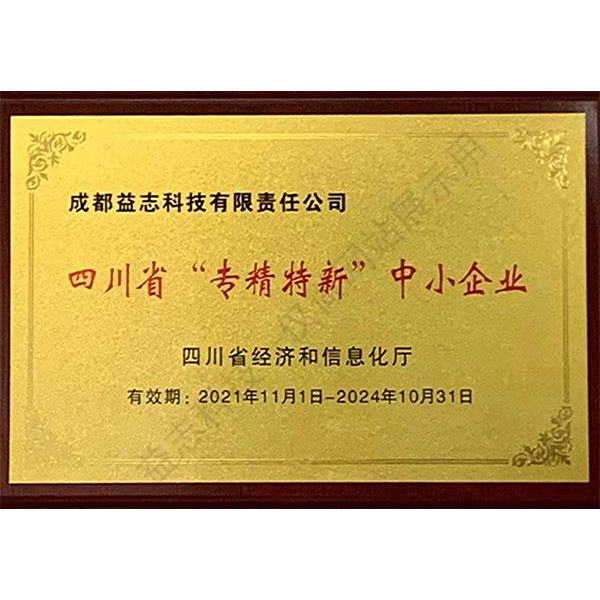
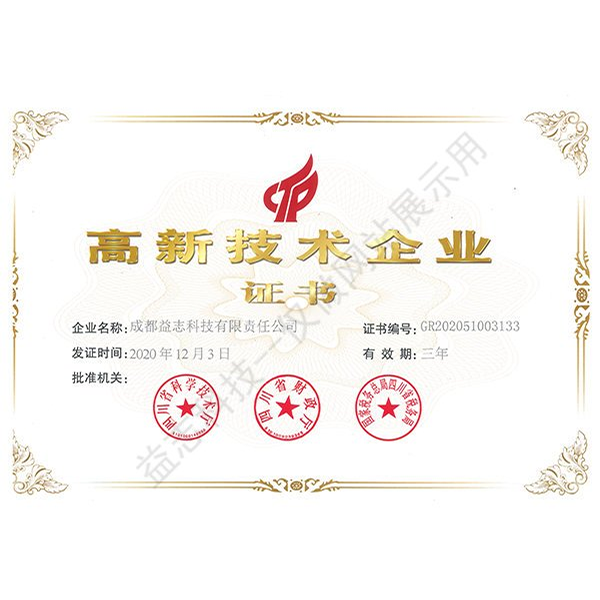
Here the key role is played not so much by giants as by highly specialized design institutes and technology companies. They act as integrators and adapters. One of these is Chengdu Yizhi Technology Co. (a subsidiary of Huaxi Technology). Looking at their websiteyzkjhx.ru, it is clear that their portfolio is not the construction of turnkey plants, but rather technological packages, design and supply of critical equipment for liquefaction, purification, and separation processes. The registered capital of 120 million yuan is a serious bid for sustainability in niche engineering.
What is their practical contribution to “new technologies”? Often - in the details. Let's say a standard module for preliminary gas purification from CO2. It would seem that everything is known. But they can offer a solution with a slightly different arrangement of adsorbers and a regeneration system, which for a plant with a certain cyclogram will provide savings on capital costs of 5-7%. For the customer, this means direct millions of dollars in savings. This is the same “new technology”? in its practical, non-glamorous form.
Case: optimization of energy consumption at the liquefaction stage
I’ll tell you about one project that I came across indirectly while studying the market. The discussion was about modernizing the liquefaction line at one of the onshore terminals. The goal is to reduce specific energy consumption without replacing the main turboexpanders. The standard way is to replace heat exchangers with more efficient ones. But Chinese engineers from a company like Yizhi Technology took a different approach.
They suggested improving the management systemrefrigeration cycle, introducing a more complex algorithm for predicting and compensating for pressure fluctuations in the raw gas supply line. In essence, “teach?” the system should predict changes and smoothly adjust parameters, and not work in “reaction to deviation” mode. This is a hardware and software solution. The risk was in reliability: complex control logic means potential failures.
There were indeed problems at the commissioning stage. The system was “relearned” longer than expected, false alarms occurred. The local staff were furious. But after several iterations of tuning and refinement of the algorithm, the system reached the operating mode. Result? Energy consumption fell by the expected ~3%, but more importantly, wear on key fittings decreased due to smoother transient processes. This is a typical example: ?new technology? as a comprehensive, non-obvious solution, and not just a new piece of hardware.
Why does this work in China?
It's worth taking a break here. Such deep, targeted optimization is possible thanks to a unique combination of factors: a huge domestic market with many projects of different sizes, which gives engineering companies a lot of data and practices for analysis; strong academic base in chemical technology and thermodynamics; and, importantly, the willingness of customers (often government) to try solutions from local suppliers as part of the policy of import substitution and technological sovereignty.
Chengdu Yizhi Technology Co., Ltd., as a design institute established on the basis of a technology company, is in its element here. They can quickly prototype a solution on digital twins and then test it in one of their partners' many pilot or production facilities. The iteration speed is higher than that of Western competitors, although, of course, sometimes at the expense of initial fault tolerance, as in the example above.
Trend: modularity and digitalization
A separate large layer is modular construction. This is not news, but in China they gave it its own scale. The novelty lies in the technologies that are incorporated into these modules at the design stage. We are talking about the complete digitalization of the project - from the BIM model, which takes into account not only the geometry, but also all technological parameters, to the predictive analytics system built directly into the module software.
In practice, it looks like this: a gas purification module, designed, say, in Chengdu, is delivered to a site in another province not just as a set of pipes and vessels, but as a “black box?” with digital passport and built-in sensors for future monitoring. This reduces commissioning time. But there is also a downside: such deep integration creates a strict tie between the customer and the technology and service provider. A way out from under this “digital umbrella?” may be painful.
I saw how on one of the terminals they tried to connect a third-party diagnostic system to such a smart module. There were problems with data exchange protocols - they were proprietary. I had to negotiate with the original supplier (in this case it was a group of companies including Huaxi Technology) to purchase a license for the interface. So what are ?new technologies? also bring new challenges in the areas of dependency and compatibility.
Not only successes: lessons from failures
It would be dishonest to talk only about successes. In the pursuit of efficiency and speed of implementation, distortions occur. One striking example is the attempts of some engineering companies to overly aggressively optimizerefrigeration cyclesto work at extreme parameters. Theoretical calculations showed a gain, but in practice the equipment (compressors, heat exchangers) could not withstand long-term cyclic loads in this mode.
A specific case: at one of the small peak-shaving plants, after a year and a half of operation, the line had to be stopped for unscheduled repairs due to cracks in the air cooler fins. The investigation showed that the fault was not only the materials, but also the calculated temperature gradients included in the project, which in actual operation, with fluctuations in gas quality, turned out to be higher. The lesson has been learned: new projects from top players, including Yizhi Technology, now include more conservative reserves on key parameters, but at the same time improve real-time monitoring systems to more accurately track these gradients.
This is an important point: the maturity of a technological approach is demonstrated not by the absence of mistakes, but by how they learn from them and how quickly they adjust their design standards.
What's in the bottom line? Look ahead
So what is the end result of new technologies at Chinese LNG plants? To summarize, the vector is clear: this is a movement from simple scaling to intellectualization and deep optimization. The focus shifts from ?build more? on ?build smarter and work smarter?.
The role of companies like Chengdu Yizhi Technology Co. it will only grow here. Their niche is to be a bridge between the basic research that is being actively carried out in Chinese universities and the harsh industrial reality. Their product is not a ready-made “revolutionary technology”, but a customized, field-tested technology package or solution for a specific problem: be it purification, liquefaction, energy conservation or digitalization.
We probably shouldn’t expect breakthroughs on the level of a completely new liquefaction principle in the coming years. But we should expect constant, progressive improvements in all related processes, reduction in unit production costs and increased plant flexibility. And in this progress there will be many Chinese patents, Chinese equipment and, most importantly, Chinese engineering experience accumulated at dozens and hundreds of facilities. It is this experience, with all its successes and bumps, that becomes the most valuable new “technology”.