Gas liquefaction methods in China?
2026-02-17
When it comes to gas liquefaction methods in China, many immediately imagine giant LNG plants and large-scale national projects. This is, of course, the basis, but the picture is much more subtle and interesting. In practice, especially in the last decade, everything has shifted towards adaptation, flexibility and the search for profitability for medium and even relatively small flows. It’s not just to build according to a textbook, but to make the technology work in specific conditions - with local raw materials, under local regulations and, what is critical, to the needs of a specific market. Here nuances begin that are not written about in review articles.
From theory to site realities
If we take the classics -gas liquefaction methodbased on cascade cycles, for example, using propane, ethylene and methane, then in China it is used mainly at flagship facilities, such as receiving terminals. The technology has been proven, the efficiency is high, but the capital costs are enormous. The problem is that for many fields, especially those that are smaller or located inland, such a scheme is an unaffordable luxury. This is where they come into playmixed refrigerants(MRC) and nitrogen cycles.
From my own experience I came across a project for the utilization of associated petroleum gas in Xinjiang. The customer initially wanted “something reliable and simple”, leaning towards the nitrogen cycle. But when the logistics and cost of producing liquid nitrogen at a remote site were considered, the economics fell apart. I had to study in detail the option withmixed refrigerant, where light hydrocarbons from the field itself could be used as components. The key issue has become the stability of the composition of the raw material - if it “floats”, the efficiency of the entire chain drops catastrophically. It was necessary to design a buffer tank and a preliminary stabilization system, which was not included in the original technical specifications.
It is in such situations that the difference between “paper” is visible. project and implementable. Often contractors, especially local ones, offer seemingly ready-made solutions, but without a deep connection to raw materials. As a result, the installation reaches its design parameters only on ideal laboratory gas, and in real life its efficiency is one and a half times lower. This is not a lack of technology, it is a lack of pre-design analysis.
The equipment and its ?Chinese? specificity
Equipment market fornatural gas liquefactionin China today there is a confusion of possibilities. There are serious players who don’t just copy, but develop their own designs. If we talk about heat exchange equipment - the heart of any liquefaction cycle, then progress is noticeable. Large plate-fin heat exchangers (PHEs) for mega-projects are still often purchased from Linde or Air Products, but for medium and low-power installations, Chinese manufacturers such as Hangyang or Sitic already offer quite competitive products.
But there is also a downside. In pursuit of cost reduction, there are many offers on the market for, relatively speaking, “simplified” ones. versions of key equipment. For example, turboexpanders. A high-quality expander with high efficiency is a complex machine. Some local factories offer options that work in theory, but have a narrow operating range and reliability problems under variable loads. In one of the mini-LNG projects, it was necessary to actually re-balance the entire cycle at the commissioning stage due to the fact that the actual performance of the expander differed from the rated one. What saved me was the ability to flexibly adjust the refrigerant composition.
An interesting trend in recent years is modular design. Increasingly, customers, especially for gas filling stations (CNG filling stations) or small energy supply sources, do not want to build a facility from scratch, but rather receive ready-made modules of high factory readiness. This imposes its own limitations on design - everything must be compact and maintainable in cramped conditions. This is where hybrid solutions show themselves well, where, for example, pre-cooling occurs along one circuit, and deep cooling occurs along another, more compact one.
The role of engineering and a specific company example
Technology is only half the story. The second half is competent engineering, which takes into account thousands of little things: from climatic conditions (say, high humidity in coastal areas, affecting the operation of air coolers) to the qualifications of future operating personnel. This is why companies with a full cycle are valued - from the FEED stage to installation supervision and training.
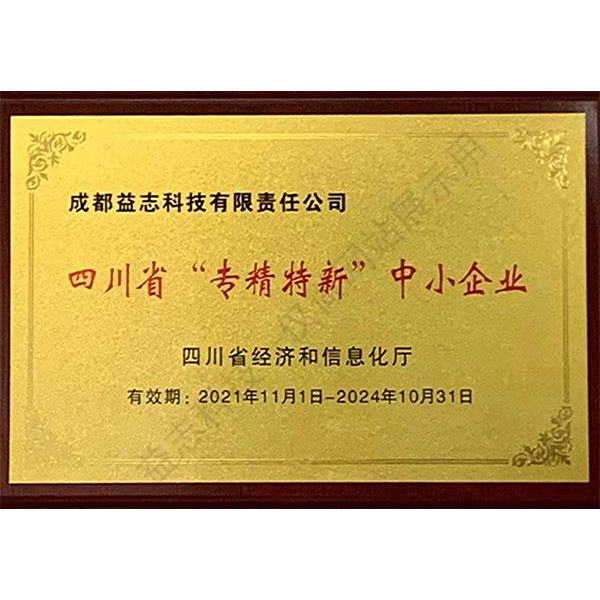
In this context, we can recallChengdu Yizhi Technology Co. (https://www.yzkjhx.ru). This design institute established in 2013 by Chengdu Huaxi Chemical Technology Co., Ltd. with a registered capital of 120 million yuan, is just an example of such a player deeply immersed in the topic. They don’t just sell licenses, but are engaged in complex design of technological processes, including for liquefaction plants. Their strength, in my opinion, lies in their emphasis on the chemical and technological component, which is critical for working withmixed refrigerantsand unstable raw materials.
Their portfolio includes solutions for the liquefaction of coke oven gas, associated petroleum gas, and biogas - that is, precisely for those cases where it is impossible to take a standard project from a textbook. I know from industry discussions that they are actively working on optimizing energy consumption in cycles, which is now one of the main market requests. When capital costs can no longer be reduced, they begin to fight for operating costs, and here every detail of the process matters.
Challenges: energy efficiency and ?non-ideal? raw materials
The main challenge for anyoneliquefaction methodin modern realities - energy consumption. Compressors “eat up” the lion's share of the cost of the product. Therefore, now all searches come down to how to reduce the compression work. One way is to use turboexpanders with energy recovery, the other is to more accurately select the refrigerant composition for the specific pressure and boiling point of the raw material. Sometimes it is more profitable to go for a slightly more complex scheme with two circuits, if this ultimately results in savings of 10-15% on energy.
A separate headache is gases with a high content of nitrogen, CO2 or heavy hydrocarbons. Standard cycles immediately begin to act up here. CO2 freezes at low temperatures, clogging heat exchangers. Nitrogen reduces the heating value of the final LNG and requires an additional stage for its separation, which complicates the process. Often you have to make a compromise: either build an expensive pre-treatment, or put up with some losses and more complex operation of the main cycle. In one of the projects for the liquefaction of coal mine methane with a high nitrogen content, they eventually settled on a scheme with short-cycle heatless adsorption (PSA) at the inlet and a nitrogen liquefaction cycle. It turned out to be expensive on CAPEX, but cheap on OPEX, which turned out to be the right choice in the long run.
Looking ahead: trends and niche applications
Where is everything going? In addition to the obvious trend towards miniaturization and modularity, I see interest in hybrid and customized solutions. It is no longer uncommon for people to combine, for example,natural gas liquefactionfor transport needs and the production of liquid CO2 from waste streams for the food industry. This requires the highest flexibility from the process design.
Another growing segment is the liquefaction of biogas and landfill gas. The volumes here are not gigantic, but the policy of “green” development is fueled by demand. The specificity is the monstrously variable composition of raw materials and small scale, which makes large-scale technologies inapplicable. Here, solutions based on absorption or adsorption pre-treatment methods coupled with compact liquefaction cycles using mixed refrigerants often win.
As a result, to summarize,gas liquefaction methodsin China today it’s not about blind copying, but about adaptation. Adaptation of global technologies to local economic conditions, to the specifics of the raw material base and to the specific tasks of the customer. The most effective method is the one that is economically justified for a given field, a given market and a given budget. And behind this simple principle there is a huge layer of engineering work, trial, error and a constant search for the optimal balance between reliability, efficiency and cost. It is in this search that the very practical experience that determines the real state of the industry is born.