Is China the new leader in LNG exports?
2026-02-17
I've been hearing this question a lot lately at industry meetings. Many, looking at the growth figures of Chinese liquefaction capacity, are immediately ready to declare a new world leader. But in reality, everything is more complicated - the growth of production capacity in itself does not equal automatic leadership in the global market. There is a nuance here that outside analysts often miss: China has historically been and remains the largest importer of LNG. And its export ambitions are not just about entering a new market, but a complex balancing act between domestic needs, long-term contracts and geopolitical logic. Let me speculate a little based on what I see in the supply chain.
Capacity versus logistics: where is the bottleneck?
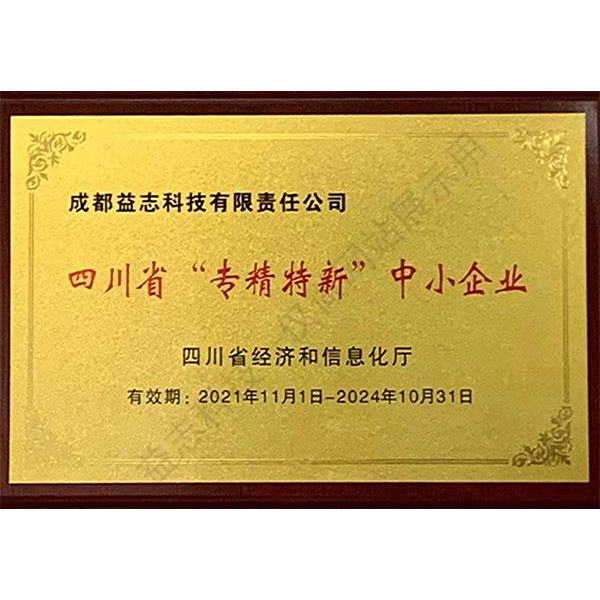
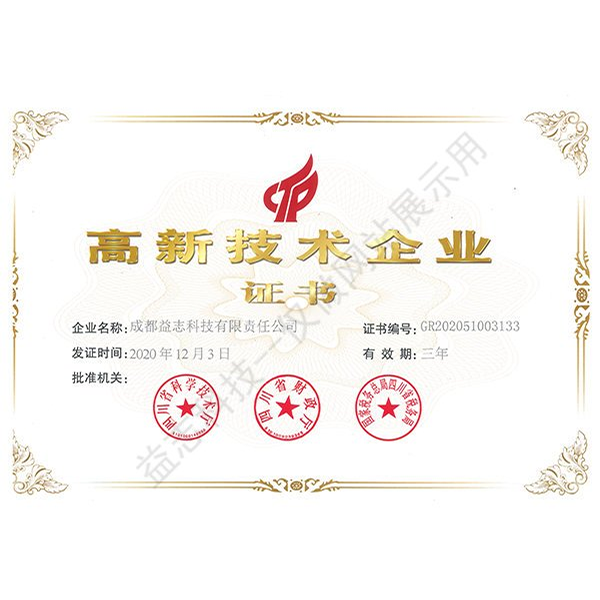
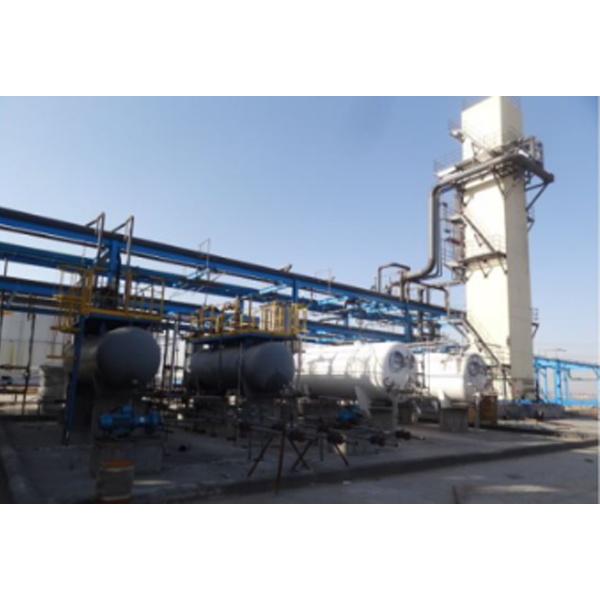
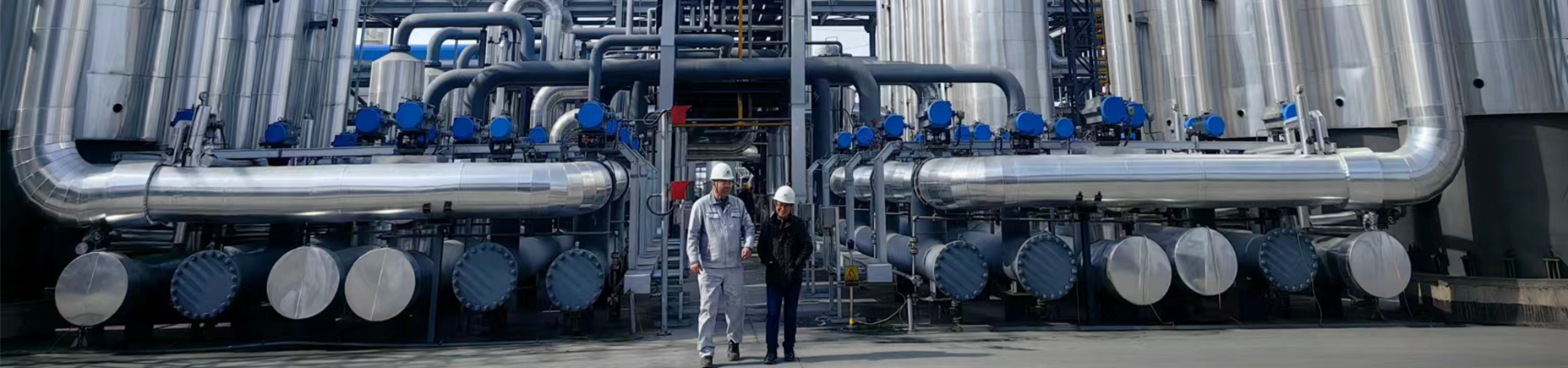
The construction of liquefaction plants is certainly impressive. Take the same project in Shenzhen or the new lines in Tianjin. Technically, Chinese engineering companies such asChengdu Yizhi Technology Co., have long ago reached a level that allows them to implement complex turnkey projects. Their websiteyzkjhx.ruThis approach reflects well - these are not just equipment sellers, but an institute with a full design cycle, which is critical for the gas industry. But here’s the catch: even if you have a modern plant, you need to ensure a stable and competitively priced gas flow at the inlet. And here China faces the same problems as other players - dependence on pipeline gas (often under long-term contracts) and the need to balance it with more flexible but expensive spot gas for redirection for export.
I remember a conversation with a logistician at one of the northern terminals. They could technically ship the shipment to Europe, but economically it was borderline profitable due to freight and the cost of purchasing raw materials. Exporting LNG is not only about “producing”, but also about “profitably delivering”. The fleet of gas carriers, logistics corridors, especially in conditions of tension in the Red Sea or around the Cape of Good Hope - all this eats into margins. Many new players do not take this into account, thinking only about tons of liquefied gas.
And one more point - seasonality. Domestic demand in China jumps sharply in winter. And that very same potential export batch could be used overnight to cover the deficit in the eastern provinces. Therefore, it is too early to talk about a stable, predictable export flow, like Qatar or Australia. It is more of a situational export, a tool for balancing the internal system.
Contract Policy: Flexibility versus Commitment
Here lies, in my opinion, the main difference from traditional exporters. Qatar is building its strategy on long-term contracts tied to oil. Chinese companies, CNPC, Sinopec, CNOOC, act differently. They themselves are the largest buyers of long-term contracts around the world. They can redirect part of this gas, especially during the summer period of low domestic demand, for re-export. This gives them enormous flexibility, but does not make them a “producer-exporter” in the classical sense.
In practice it looks like this: you have a contract with, say, a project in Mozambique. You take your volume, but if the price on the domestic market is lower than on the spot market in Europe, there is a reason to resell the batch. But this is not systemic export, this is arbitration. And it depends on hundreds of variables. We tried to model such schemes for one of the partners in Asia - the numbers look good only on paper, until you add delays in the Suez Canal or a sudden jump in the price of coal within China, which changes the entire economics of generation.
In addition, Chinese companies are extremely cautious about purely spot sales. Their contracts, even for export, are often tied to their own long-term obligations or have a hybrid price formula. This is not the kind of volatility that traders in Singapore or London love. This creates some opacity for the market and makes Chinese exports less predictable, but perhaps more stable in the long term for China itself.
Technology and Localization: The Hidden Power
When people talk about leadership, they often forget about the technological component. A leader is someone who sets standards. In liquefaction, China has been catching up for a long time, buying technology from Air Products and Linde. But now the situation is changing. Localization of equipment and processes is a government priority. Design institutes like the one mentionedChengdu Yizhi Technology Co., Ltd., play a key role here. Their experience accumulated since 2013 with a registered capital of 1.2 billion yuan is not just numbers. We are talking about deep adaptation of technologies to specific Chinese conditions - from gas composition to seismic features and environmental standards.
I saw one project using a heat transfer optimization solution developed by local engineers. It was slightly less effective than the “premium” version from a Western vendor, but 30% cheaper to maintain and fully repairable by local services. This is critically important for exports - reducing CAPEX and OPEX. If China can offer to the foreign market not just gas, but entire technological packages for liquefaction on a turn-key basis? at a competitive price, as does, for example,Chengdu Yizhi Technology Co.within its niche, this will be a qualitatively different level of influence.
But there is also a weak point - cryogenic pumps, some types of compressors, and high-end control systems. Here the dependence still remains. And until you overcome it, it is too early to talk about complete technological sovereignty in LNG exports. This is a path for at least 5-10 years.
Geopolitics as a driver and limiter
No conversation about Chinese gas is complete without geopolitics. Russia's turn to the East after 2022 is both an opportunity and a challenge for China as a potential exporter. On the one hand, the volumes of pipeline gas “Power of Siberia” are growing. This is a cheap raw material that could theoretically be liquefied and exported. But contracts, as a rule, have restrictions on re-export. And logistically, not everything is so simple - liquefaction capacities are concentrated mainly in the south and east of China, and gas comes to the north.
On the other hand, sanctions pressure on Russia opens a window of opportunity for China in the Arctic - the Yamal LNG projects. and ?Arctic LNG 2?. China is not just an investor here, but a technological and logistics partner. This experience of working at high latitudes is invaluable. If China learns to effectively manage the supply chain from the Arctic to the Asia-Pacific region, this will give it unique expertise that many traditional players do not have.
But geopolitics is a double-edged sword. Active exports of Chinese LNG to Europe, for example, will immediately raise questions in Washington and Brussels about “substitution?” Russian gas. Beijing doesn't want this. Therefore, its export strategy will most likely be focused on its Asian neighbors - the countries of Southeast Asia, Bangladesh, and Pakistan. Logistics are shorter there and political risks are lower. This is a market that he can gradually conquer without entering into direct confrontation with Qatar or the United States.
What's the result? Leadership of a different type
So is China the new leader? If you measure solely by tons and the speed of capacity expansion, perhaps it will soon become one. But if we talk about leadership as the ability to set the rules of the game, dictate price indices and be a guarantor of stable supplies for the whole world - no, not now and not in the coming years.
China is forming a different type of leadership model: not a global exporter, but a regional balancer and technology integrator. Its strength lies in its huge and flexible domestic market, which allows arbitrage play. Its strength lies in its growing ability to build complex facilities using its own companies, be they giants like CNPC or specialized design institutes. Its strength lies in the long-term game, where energy security is more important than short-term profits from spot sales.
Therefore, when people ask me whether we should expect China to become the new Qatar, I answer: don’t wait. Expect something new. Expect a player who will use LNG not as a final commodity to make money, but as a tool to ensure its influence and stability in the Asia-Pacific region. And there will be tons... tons. But their route will be determined not only by the market, but also by the complex internal logic of the Celestial Empire. And this, perhaps, is its main difference and its main strength, which has yet to be fully appreciated.