China: new LNG liquefaction technologies?
2026-02-19
When you hear this question, the first thing that comes to mind is giant factories, modules weighing tens of thousands of tons, and of course, Gazprom. But the reality in China now is often different. They talk a lot about breakthroughs, but on the ground, in projects, you see something else: an emphasis on small- and medium-scale solutions, on adaptation, and not just on gigantomania. And here lies a lot of nuances that are often lost in reports.
Changing focus: from mega-projects to flexibility
Previously, everyone was chasing scale, after analogues of plants like Yamal LNG. The logic is simple: more volume means lower unit cost. But the Chinese gas market, especially in remote regions or to supply transport, requires a different logic. It is necessary to quickly deploy an installation, sometimes mobile, to work with associated petroleum gas or small fields. This is where the main testing ground for technology is now.
For example, I see a growing demand for liquefaction technologies usingmixed refrigerants(MRC) in a compact design. Not those huge cascade cycles, but ones optimized for specific gas supply conditions. Often the composition of the gas is unstable, the pressure fluctuates - and ready-made “boxed” ones. decisions from the West are stalled here. We have to modify it, hybridize it. This is what happened in one project in Xinjiang: we took a cycle with propane-ethane precooling as a basis, but had to integrate an additional circuit to adjust it to seasonal changes. It turned out not ideal from the point of view of efficiency, but the plant is working and not standing still.
It is in this niche - medium and small capacities from 50 to 500 thousand tons per year - that there is now a lot of experimentation. Keyword -modularity. Do not build on site for years, but assemble from ready-made blocks. But there’s a catch here: Chinese equipment for cryogenic heat exchangers was lagging far behind ten years ago. Now they are catching up, but, frankly, trust in it among many operators is not yet absolute. I often see a hybrid: the main compressors are German or American, and the auxiliary systems and piping are made locally.
Cold hearts of projects: compressors and heat exchangers
If we talk about the technical core, then everything comes down to two nodes. The first is turboexpanders and compressors. Chinese manufacturers like Shenyang Blower Works have made great strides in axial compressors for large installations. But for medium power applications, high-pressure centrifugal blowers are often required, and here Ariel or Dresser-Rand are often preferred. Not because ours is bad, but because reliability developments in a continuous cycle lasting years are not something that can be copied quickly. I saw attempts to replace it at the tender stage - the customer’s engineers are usually strongly against it, the risks of stopping production are too great.
The second unit is heat exchangers. Alphabet mess of technologies:SPIRAL WOUND(twisted) from Linde or Shell vsPLATE-FIN(soldered plate-finned). Twisted ones are reliable, but expensive and heavy. Plate-type ones are more compact and cheaper, but require ultra-pure gas. China is now actively developing its production of plate-fin heat exchangers. Companies like Hangzhou Hangyang make good devices, but when it comes to the most important thing - the main cryogenic heat exchanger for a large line - customers often still lean towards proven Western suppliers. This is not a question of patriotism, but of guarantees. A disruption in the delivery of such a device for a month could result in tens of millions of dollars in losses.
Energy efficiency: where to look for reserves?
Everyone talks about efficiency, but in practice it is often sacrificed for the sake of capital costs or startup speed. A typical story: a design institute issues a technological diagram with beautiful specific energy consumption figures. Then the customer comes and says: “The budget was cut by 20%, let’s do something simpler?” And optimization begins: the precooling stage is removed and the cold recovery system is simplified. As a result, the installation works, but it doesn't work. 10-15% more energy than it could.
One trend that is trying to compensate for this is integration with renewable sources. I heard about a pilot project in Qinghai, where part of the energy for liquefaction is taken from solar panels. For now, this is more of a demonstration than an economy. Variable generation does not fit well with a process that must run 24/7. But as a backup source or to cover peak loads on auxiliary equipment, the idea has a right to life.
A more realistic reserve is digitalization and predictive analytics. Implementation of digital twin systems for monitoring heat exchangers and turbomachines. This allows you to catch a drop in efficiency at an early stage - for example, by an increase in pressure drop or microscopic changes in vibration. But again, this adds costs for software and staff training. Not every operator is ready.
People and knowledge: the weak link?
Technology is only half the story. You can buy the most modern equipment, but if there is no team that understands the physics of the process, and not just knows how to press buttons according to instructions, the result will be disastrous. This is difficult in China. There are only a few experienced cryogenic engineers who have gone from start-up to scheduled maintenance several times. They are dealt with by large state-owned giants like CNOOC or Sinopec.
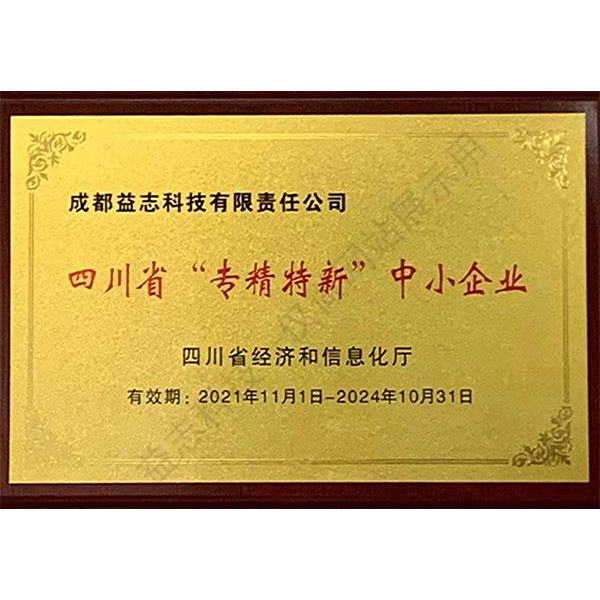
For small private projects this is a pain. I saw how at one APG liquefaction plant, an operator, trying to cope with foaming in the separator, released pressure into the system in a panic, which led to a shutdown for a day. The problem could be solved using standard methods, but there was no experience. Hence the growing demand for third-party engineering and technical support. This is where companies likeChengdu Yizhi Technology Co.- a design institute created by Huaxi Technology. They don’t just sell technology, but accompany the project at all stages, which is critically important for medium-sized businesses. Their experience in chemical technology, judging by the projects, helps solve non-standard problems with gas composition.
Training is a separate headache. Curricula in universities are divorced from reality. Graduates know the theory of the Claude cycle, but have no idea what the level regulator in the lower column looks like in real life. Therefore, successful projects always include a long stage of installation supervision and commissioning with the involvement of a technology licensor or an experienced engineering center.
Looking ahead: What will drive the industry?
I think that in the next 5-7 years we will not see revolutionary breakthroughs in the physics of liquefaction itself. Don't expect the appearance of some kind of "quantum" cycle. Evolution will follow the path of optimization, digitalization and further miniaturization. Focus will shift tofloating LNG liquefaction units(FLNG) of smaller tonnage for the development of offshore fields in the South China Sea. This is a new challenge: pitching, limited space, explosion safety requirements are an order of magnitude higher.
Another driver is hydrogen. There is a lot of buzz around the hydrogen economy right now. But hydrogen also needs to be liquefied to be transported. And these are completely different temperatures (20K versus 111K for LNG) and different materials. Chinese research institutes and companies are already actively conducting R&D in this area. Perhaps developments in the field of cryogenics for hydrogen will then result in new solutions for traditional LNG, for example, in the field of insulating materials or refrigerant management systems.
Ultimately, ?new technologies? in China, this is often not reinventing the wheel, but a smart and quick adaptation of world experience to suit its specific needs: decentralized gas sources, strict payback period requirements, growing environmental standards. And the main indicator of success is not patents, but the number of installations that operate stably in the field, in cold and hot weather, under the control of local specialists. In terms of this indicator, looking at the map of new projects, there really is progress. Slow, with reservations, with mistakes, but irreversible.