China: new LNG liquefaction technologies?
2026-02-24
When people talk about new liquefaction technologies in China, many people immediately think about giant factories and import licenses. But the real picture is often in the details that don't make it into press releases - in the adaptation, in the engineering for specific, sometimes non-ideal conditions, and in how these "new" ones actually work. solutions in practice.
From ?big? technology to ?applied? adaptation
In recent years, the focus has gradually shifted. Yes, the basic processes are the same mixed refrigerants or cascade cycles. But innovation now often lies not in creating a fundamentally new circuit from scratch, but in optimization, integration and, critically, in reducing capital and operating costs for medium and smaller power projects. This is a response to the growing demand for distributed energy and supply to remote areas.
Here there is often a gap between expectations and reality. Many customers want the “most advanced” technology, implying maximum efficiency. But in the field, “advanced?” depends on the availability of qualified service, stability of power supply and even the logistics of spare parts. Sometimes a reliable, slightly less efficient, but completely localized in production and maintenance module turns out to be more advantageous.
I remember one project involving gas flares at a field. In theory, an ideal candidate for mini-LNG. But when they started to really count, nuances emerged: the composition of the gas changed seasonally, and the requirements for the purity of the product turned out to be stricter. We had to not just take a ready-made licensing process, but seriously modify the preliminary cleaning and management system. Is this the same “new technology”? — assembly and fine-tuning of known solutions for a non-standard task.
Equipment and materials: where does progress lie?
If we talk about specific “new products,” then a lot is connected with cryogenic equipment. For example, progress in manufacturingmain heat exchangersspiral wound or plate-fin type. Chinese manufacturers are now not just copying, but offering their own options with improved channel geometry or materials that work better under variable loads. This directly affects the compactness of the modules.
Turboexpanders and compressors are a different story. Increasing their efficiency and, most importantly, reliability is the key to reducing OPEX. I saw how a predictive analytics system for centrifugal compressors was implemented at one of the new plants. This is not a revolution in the physics of the process, but a revolution in operation. Allows you to predict vibration and plan maintenance, avoiding sudden stops.
And, of course, automation. Modern process control systems (APCS) have become smarter. They not only maintain set parameters, but optimize the operation of the entire liquefaction chain in real time, taking into account the cost of electricity, ambient temperature and quality of raw materials. This is practical “novelty”.
Case Study: Not Everything Goes According to Plan
I would like to give an example that clearly shows the difference between a paper project and reality. We are talking about the construction of a modular LNG plant to supply the coal mining region. The project was ambitious, with an emphasis on a high degree of equipment localization.
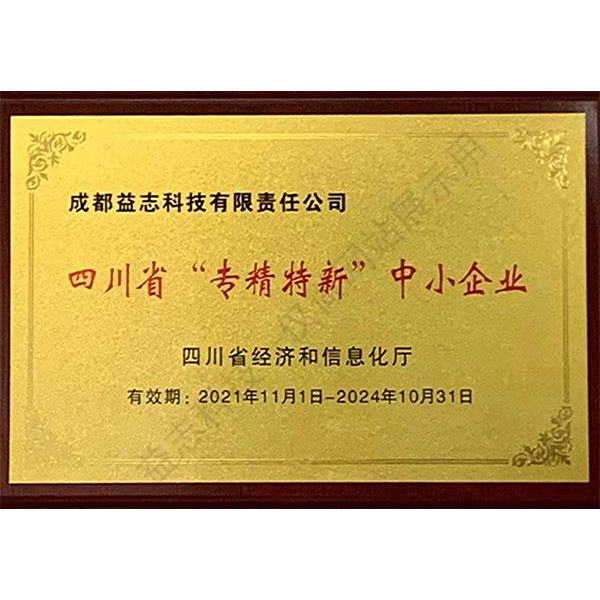
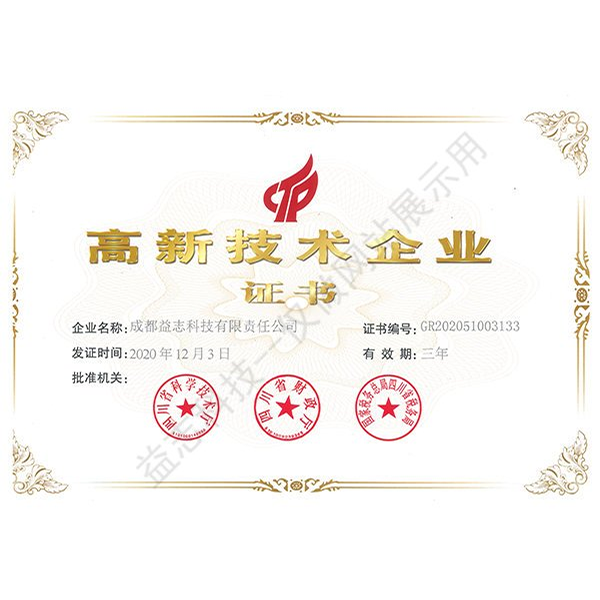
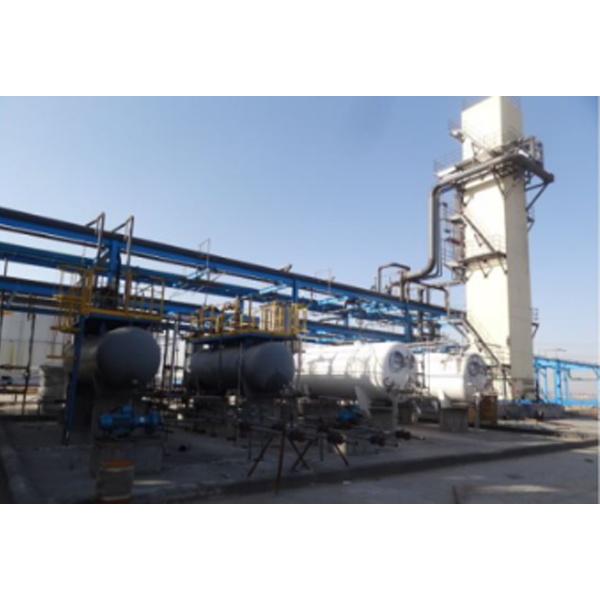
The main problem arose not with the liquefaction process itself, but with the gas treatment system. The local gas contained more CO2 and mercaptans than the original data predicted. Standard adsorbents could not cope with the declared cycles; they had to be regenerated twice as often. This hit the economy. The project team, including specialists fromChengdu Yizhi Technology Co.(this is a design institute created by Huaxi Technology), we had to quickly revise the process flow, combining adsorption with membrane separation at the pre-treatment stage.
This case is a good illustration. New technologies are often born from just such “fire fighting”. We had to look for a non-standard solution and integrate different methods. The result is a hybrid approach, which is now successfully used at other facilities with complex gas compositions. You can read more about their experience athttps://www.yzkjhx.ru.
Trends and Constraints: Looking Ahead
Where is everything going? It is clear that the trend is towards electrification and “green” energy creates new challenges. One of them is the use of energy from renewable energy sources (solar, wind) for liquefaction processes. For now, these are more pilot projects due to the instability of such sources. But work is progressing, for example, in the direction of creating flexible technological lines that can quickly change productivity depending on the available power.
Another trend is the capture and use of CO2 emissions associated with LNG production. This is no longer just liquefaction, but integration into a wider ecological cycle. Technically challenging, but pressure from regulators and society is growing.
The main limitation, in my opinion, remains economic. Any ?new technology? must prove its commercial viability. Now, with high prices for energy and metals, the issue of construction costs is especially acute. Therefore, the future probably lies in modular, scalable and highly standardized solutions that reduce CAPEX. Innovations in logistics and construction (for example, maximum factory readiness of modules) can have no less effect than innovations in the liquefaction process itself.
Final Thoughts: What is ?new??
So what should be considered new LNG liquefaction technologies in China? It's rarely a stunning discovery. More often it is complex engineering, smart integration of existing methods, deep localization of critical equipment and the creation of flexible, adaptive solutions.
Success is determined not only by the efficiency of the installation on the test bench, but also by its ability to operate stably for decades under less than ideal conditions: with fluctuations in gas composition, temperature changes, and with available local personnel. It is in this applied, “non-glossy” area and the main work takes place.
Therefore, when you hear about “new Chinese technology,” you should ask not only about patents, but also about the number of successfully launched and, importantly, sustainable projects. Experience similar to that of companies like Chengdu Yizhi Technology Co., Ltd. (with a registered capital of 120 million yuan), where the focus on the full cycle from design to implementation, in this sense, is more revealing than many high-profile statements.