Chinese technologies for the Arctic cascade: a breakthrough?
2026-02-23
When do you hear about “Chinese technology?” for the Arctic, the first thought is again about icebreakers or satellites. But a cascade? We are talking about the chain: exploration, production, logistics, energy supply, life support. Here many are waiting for loud statements, but the point is often in adaptation, in “fine-tuning” under severe cold and isolation. And here Chinese companies, especially those that grew out of heavy industry or petrochemicals, show interesting, although not always smooth, approaches.
Not only “Harbin”: where do Arctic solutions come from?
China's image in the Arctic is often reduced to state-owned giants - CNPC or COSCO. This is important, but incomplete. A breakthrough, if there is one, often matures in design institutes and engineering companies that have been accumulating experience on internal “heavy” issues for years. facilities - in Xinjiang, on the Tibetan Plateau, where there is also no sanatorium. Their trump card is not fundamental research, but rapid engineering adaptation of existing solutions to extreme TPE (technical production conditions).
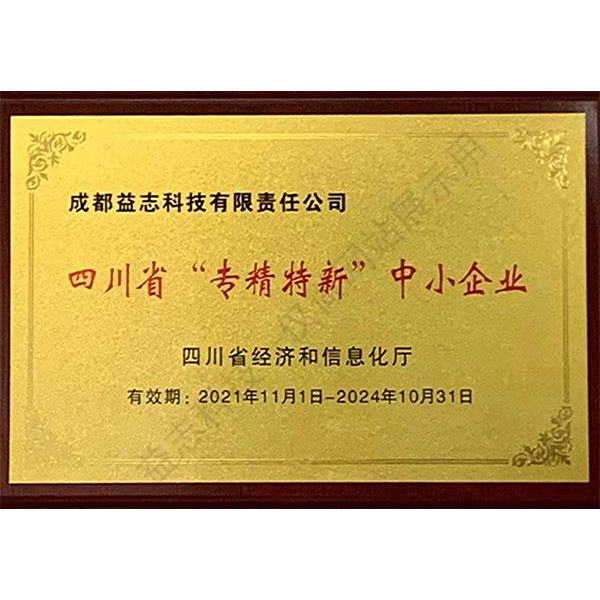
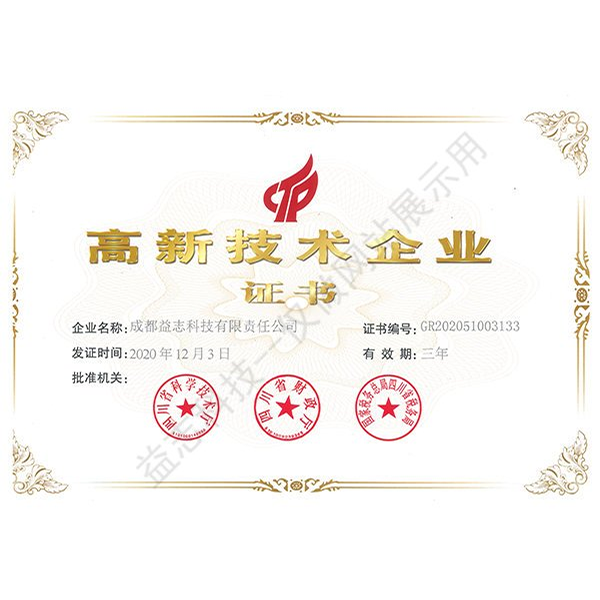
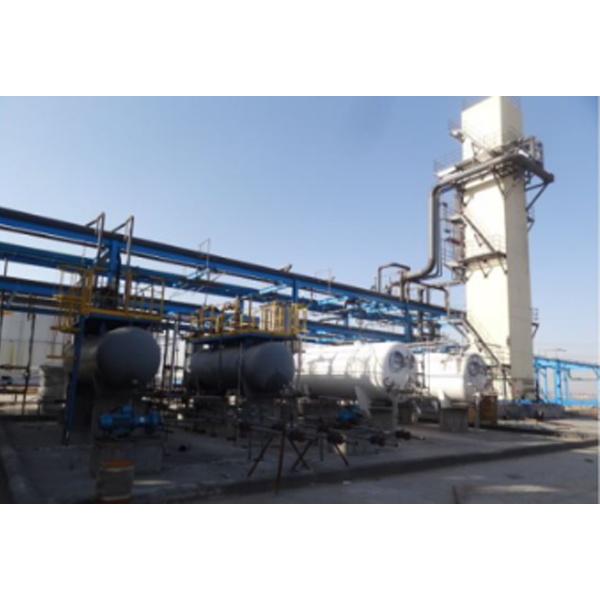
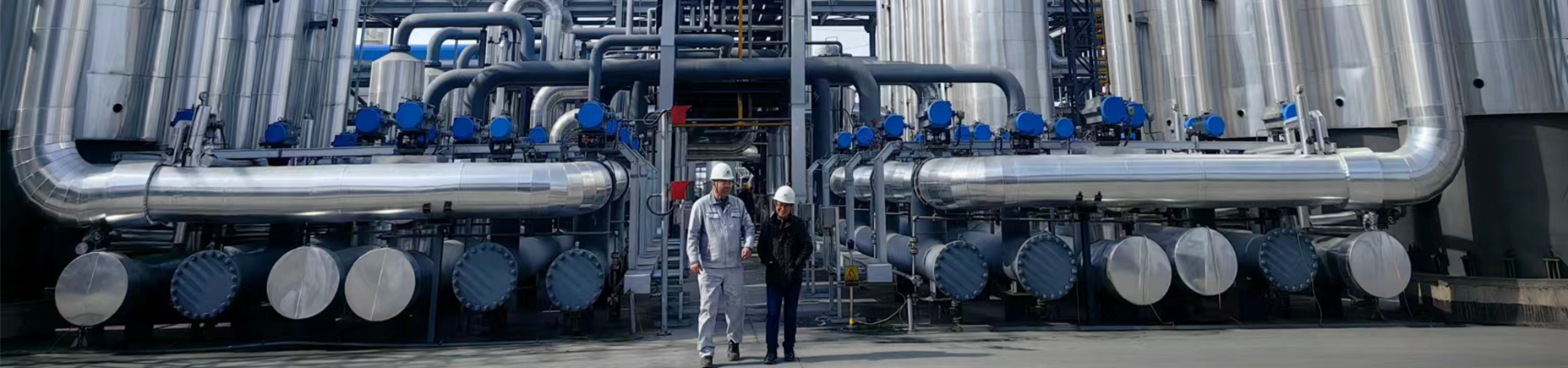
Let's take for exampleChengdu Yizhi Technology Co. Design Institute(also known from the siteyzkjhx.ru). It was created in 2013 by the parent company Huaxi Technology, which has been in chemical technology for decades. Their capital of 120 million yuan is not the finances of an IT startup, these are funds for serious engineering. Their niche is not the creation of fundamentally new machines, but the development of technological cycles and modules that will operate stably at -50°C. For example, water purification and recycling systems for rotational camps or fuel preparation modules where ordinary diesel fuel freezes. They came to the Arctic topic not from scratch, but through experience in working with cold-resistant materials and closed systems for Chinese high-mountain fields.
What do customers often get wrong here? They are waiting for “revolutionary” Chinese technology. And what they get is a deeply modified, sometimes even conservative in basic principle, but extremely tenacious complex. Its advantage is predictability of operation and, critically, speed of delivery and deployment. While the Western manufacturer is conducting long negotiations on customization, the Chinese institute is already bringing three versions of a standard project based on ten previously implemented ones. It's not always pretty, but it's often effective.
Kholod as chief designer: examples and caveats
Working with metal is a classic. Chinese suppliers have learned to supply for the Arcticcascadessteel structures with special low-temperature tolerance. But the key word is “learned?”. I remember the story with a batch of pipes for one of the piping. On paper, all welding tests (test welds) have passed, the chemical composition is normal. And during the first winter in the Far North, microcracks appeared along the welds. It turned out that the problem was not in the steel itself, but in the post-welding thermal rest mode, which did not take into account the cooling rate in the Arctic wind. It was necessary to organize local thermal curtains on site, with the help of installers. It was not a failure, but a typical “run-in” — this experience is now taken into account in their installation standards for high latitudes.
Another layer is energy. The approach to hybrid solutions is interesting here. Instead of installing one powerful diesel generator (expensive in logistics and capricious in case of sudden temperature changes), Chinese engineers, including from the mentioned Yizhi Technology, are promoting “diesel + storage + RES” schemes. A small wind turbine or solar panels (yes, there is a lot of sun in the Arctic in the summer) cover the base load of the camp, and the diesel is turned on at peak or to recharge the buffer batteries. This reduces fuel consumption by 30-40%, which for a remote site is a direct savings in the millions. But there is a nuance here: lithium-ion batteries themselves are extremely sensitive to cold. They have to be placed in heated containers, which eliminates some of the benefits. Now they are experimenting with passive thermal control systems, but this is still in the pilot stage.
Logistics and the “last mile”: where theory meets reality
All technology is useless if it cannot be delivered and assembled into a short navigation window. Chinese companies are actively working on modularity. The plant in Chengdu or Tianjin assembles the process unit - be it a wastewater treatment plant or a power plant - in the most complete form possible, in a standard container. It is transported by sea to Murmansk or Arkhangelsk, and then along the Northern Sea Route or by heavy aircraft to the point. The advantage is obvious: a minimum of work “in the field”, where every hour is expensive and dangerous.
But this is not without problems. I once saw how such a beautiful module simply did not fit into the dimensions of the cargo dropout of an An-74 aircraft, which was available for charter. The drawings were checked, but the design of the internal fuselage fastenings was not taken into account. I had to urgently “undress” module, to remove part of the casing already in the port, which shifted the schedule by two weeks. This is a lesson: making a module for the Arctic is not enough. You need to have several transportation scenarios for it and be prepared to “make it easier?” on the spot. Now leading institutes, including Yizhi, include in their projects not one, but three or four options for dimensional layouts for different types of transport.
Another point is compatibility with Russian infrastructure. A Chinese alternator may be great, but if its connectors, control system, or even the type of lubricant are not the same as what local service crews are used to using, problems will arise at the worst possible time. The most successful projects are those where the Chinese side includes Russian technologists in the working group from the very beginning and pre-adapts documentation and spare parts to local standards (GOST, TU). This seems like a small thing, but it solves a lot.
Breakthrough or evolution? A look from inside the chain
So is there a breakthrough? If you wait for a single “silver bullet”, then no. The breakthrough, in my opinion, lies elsewhere - in a systematic, integrated approach to the Arcticcascadeas a single task. Previously, Chinese firms often acted simply as equipment suppliers. Now they increasingly offer a full cycle: pre-design modeling (including climate), delivery, installation supervision, personnel training and even remote monitoring and technical support after commissioning.
This became possible thanks to the accumulated database. SameChengdu Yizhi Technology Co.after several projects in the Yamalo-Nenets District and Taimyr, it now has a catalog of proven solutions for different geological and climatic subzones of the Arctic. They can predict with a high degree of probability how their mud treatment system will behave in permafrost conditions or how to calculate the safety factor for structures taking into account the ice loads of a particular area. This is the main value - not bare technology, but technology enriched by experience, including negative ones.
The most illustrative case I observed was the creation of a closed water supply system for a rotational camp. The goal is to minimize the import of water and removal of wastewater. Standard biological cleaning methods “fall asleep” at low temperatures. Chinese engineers used a hybrid: preliminary mechanical and membrane purification, and then post-purification through compact modules with immobilized (attached to a carrier) cold-resistant bacterial cultures that were specially selected and “accustomed” work at +2°C. The system started working. But in the first year, its efficiency was below the design level - pH fluctuations due to the composition of the local water interfered. An additional step of pH adjustment was required. The facility is now operating stably. This is the very “evolution under environmental pressure” that creates real, and not declarative, technological competence.
What's in the bottom line? Looking forward
So, Chinese technologies for the Arctic cascade are not a sudden revolution, but a progressive movement along the path of tough, pragmatic adaptation. Their strength lies in their speed of response, modularity, willingness to replicate and refine solutions, as well as a growing data bank on actual operation at high latitudes.
The main challenge for them now is not technical, but cultural and personnel. So that their decisions become truly ?transparent? and trusted by end operators in the Arctic, we need more joint projects at all stages, more exchange of engineers, more openness in incident reporting. Technology must be enriched with human connections and mutual understanding.
The future, as I see it, lies in hybrid consortia, where Chinese design institutes like Yizhi provide the technological “skeleton” and modules, Russian companies - localization, logistics and knowledge of local specifics, and Western (where possible) - individual high-precision components. In such a symbiosis, the concept of “Chinese technology” will dissolve, giving way to “Arctic technology”, born of international experience. And this will be the biggest breakthrough - from the nationalization of solutions to their true globalization for the most severe conditions on the planet.