Will China buy Russian LNG liquefaction technology?
2026-02-23
A question that has recently come up more and more often on the sidelines of industry conferences and in correspondence with colleagues. Many, especially those who are far from the practice of implementing such projects, present this as a simple commercial transaction: there is a ready-made technology - it can be bought, like a machine tool. But in reality it all comes down toliquefaction technology, its adaptation, and, critically, into the geopolitical and economic context. I’ll try to sort it out based on what I saw myself.
Russian technological landscape: not only ?Arctic LNG?
When people talk about Russian technologies, often only flagship projects like Yamal LNG come to mind. or ?Arctic LNG-2?. Yes, they use their own developments, for example, “Arctic Cascade?” from Novatek. But these are technologies tailored to the specific, extreme conditions of the Arctic. Their effectiveness has been proven there, but the question is their versatility and cost for other conditions.
There are other players too. For example, ?Gazprom? has been developing its work for decades, including medium-tonnage liquefaction. But there is often a gap between laboratory success and commercial scale-up. I remember how in the mid-2010s a project was discussed to adapt Russian technology for a small field in Asia. It all came down to the energy efficiency of the installation - the indicators on paper and during real long-term operation in a different climate diverged.
Therefore, when China looks towards Russia, it looks not at abstract “Russian technology?”, but at very specific cases: what exactly works, at what capacity, what is the real OPEX, and most importantly, how independent this technology is from supply chains that may come under sanction pressure. This isn't about buying a box, it's more about assessing the possibilities for deep localization.
Chinese approach: do not buy, but assimilate
The Chinese are pragmatists of the highest standard in the LNG sector. They have a clear national strategy to ensure energy security, and technological independence is a key element of it. For decades they have been buying licenses from American (Air Products, Chart) and French (Technip) giants. But in parallel, through joint ventures and turnkey contracts, they learned these technologies inside and out.
Now they have their own serious players, such as CNOOC, Sinopec, who are already building their liquefaction plants, often using hybrid solutions. Their interest in Russian developments lies, in my opinion, on two levels. Firstly, diversification of technology sources in case of further aggravation of relations with the West. Secondly, there is interest in specific solutions - for example, the same Arctic or modular technologies that can be used to develop hard-to-reach fields or to create floating LNG units (FNG).
I saw how Chinese engineers at one of the exhibitions spent hours asking their Russian colleagues about the details of equipment operation at low temperatures, about materials, about the logistics of repair kits. They were not interested in passport data, but in “pain?” — what emergency situations we encountered, what broke, how we fixed it. This is the level of questions that are asked not by buyers, but by potential development partners.
Practical barriers and pitfalls
Let's say there is interest. What's next? And then begins the area where many beautiful memoranda have failed. The first is standards and norms. Russian GOSTs, PBs, SNiPs are a separate universe. Integrating a process line designed to meet these standards into a project that must comply with Chinese or international standards (ASME, API, IEC) is a herculean effort of coordination. This is not just a translation of documentation, it is a recalculation, new tests, and often replacement of key components.
The second is “iron”. Russian liquefaction technology is often tied to specific equipment, which is produced at factories in Russia or, as was previously the case, with the participation of European contractors. Sanctions have broken many chains. China can offer its production capacity, but validation will be required - to prove that a Chinese compressor or heat exchanger will work in conjunction with the Russian technological scheme just as reliably. These are testing years.
And the third, most delicate point is intellectual property and know-how. Often the most valuable part is not in the drawings, but in the heads of the engineers, in the settings, in the “proprietary” ones. installation and commissioning techniques. It is almost impossible to contract this out. This requires the creation of joint engineering teams for many years, in fact, the transfer of part of the competencies. Is the Russian side ready for this? The question is rhetorical.
A case for reflection: the experience of engineering companies
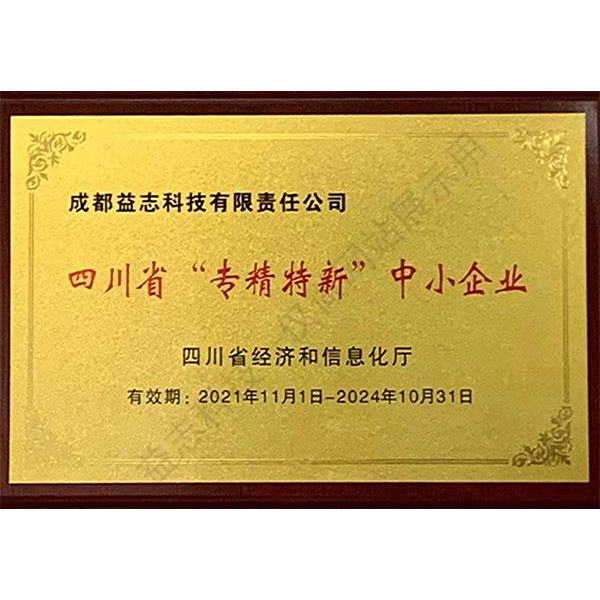
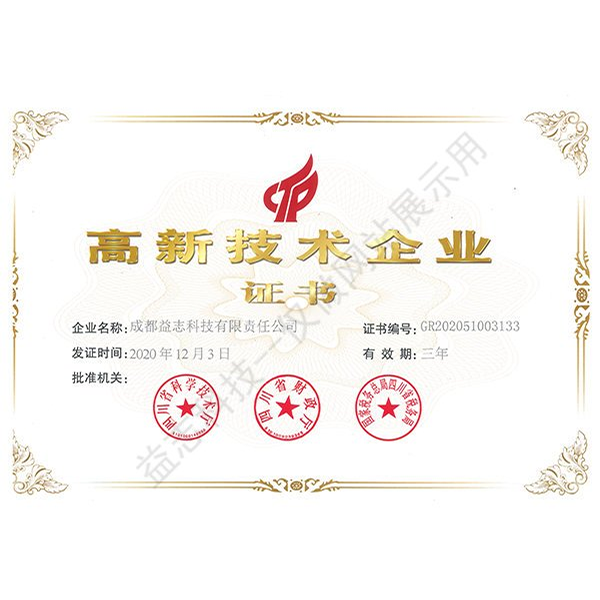
Here it is worth taking a look at how companies that are at the intersection of technology and practical implementation operate. Let's take, for example,Chengdu Yizhi Technology Co. (https://www.yzkjhx.ru). It is a design institute established on the basis of Chengdu Huaxi Chemical Technology Co. with a solid authorized capital. Their profile is complex chemical and gas projects. Such organizations are the very “workhorse” that turns technology into a working plant.
If we were talking about potential borrowing or adaptation of Russian solutions, these are the companies that would be at the forefront. They would have to solve the same routine but critical tasks: recalculating technological modes for other raw materials, selecting alternative catalysts or refrigerants, developing an automated process control system that can control a hybrid installation.
Their website, by the way, is in Russian - this is already a signal. This indicates a strategic interest in the market and, possibly, in technological cooperation with the Russian-speaking space. For them, the question is: should they buy technology? transforms into questions: “Can we integrate it into our standard project?”, “How much will it cost to support and modernize it in 10 years?”, “Do we have access to engineers who understand it?”.
What's in the bottom line? More cooperation than purchase
So, back to the title question. Direct purchase of ready-madeRussian LNG liquefaction technologyin the form of a package of licenses - an unlikely scenario. There are too many specifics, too many inconsistencies and risks for the Chinese side, which already has vast experience and its own vision.
A much more realistic path is strategic cooperation for specific projects. For example, joint development of technology for liquefying associated gas at fields in Eastern Siberia with a focus on the Chinese market. Or the creation of a joint venture for the production of critical equipment, where Russian design expertise is combined with Chinese manufacturing and global logistics capabilities.
Ultimately, China is not so much a buyer as it is a selective investor and partner. It can finance the further development of certain Russian technology, subject to its use in joint projects and access to the results. This is a long game, not a spot trade. And it is in such complex, time-extended formats of cooperation that something truly new and viable is born - not on paper, but in metal, on a real industrial site. As often happens in our business.