China: new LNG equipment environmentally friendly?
2026-02-23
- From declarations to practice: where the real indicators lie
- Materials and the “long game”: ecology throughout the entire life cycle
- Digital and data: how IoT is changing the idea of efficiency
- Regulatory and “green” Finance: The Hidden Driver of Change
- Results: is it environmentally friendly or not? Personal conclusion
When you hear about “green LNG equipment from China,” the first reaction of many in the industry is skepticism. Too often, loud statements hide only marketing ploys, but in reality there are the same emissions, the same problems with energy efficiency. But over the past five to seven years, the picture has begun to change, and not on paper, but in real objects. I myself was suspicious of this for a long time, until I had to deal in detail with several turnkey projects where Chinese components showed themselves in operation. And here the nuances begin that will not be written in press releases.
From declarations to practice: where the real indicators lie
The main myth is that ?environmentally friendly? comes down only to reducing emissions from fuel combustion. In fact, for the LNG chain this is just the tip of the iceberg. Much more important is the overall energy efficiency of the entire cycle: from liquefaction and storage to regasification and transportation. Chinese manufacturers, especially those working for the domestic market with its strict standards, began to place serious emphasis onminimizing cold lossesandintegrated energy recovery systems. For example, new low-power stations often use cascade cooling, which, with proper design, reduces energy consumption by 15-20% compared to outdated schemes. But smart design is the key word.
Here I look at the specification of one of the evaporators that we tested three years ago. The declared efficiency was excellent, but when integrated into the existing system, problems arose with synchronizing the operation of the valves - the equipment “suffocated”, and instead of saving, we ended up with overruns. It turned out that the control algorithms were tailored to ideal gas parameters, and not to real composition fluctuations. We had to modify it on site, together with the supplier’s engineers. This is a typical story: the equipment may be good in itself, but its environmental and economic effect directly depends on adaptation to specific conditions. Without this, any ?green? the equipment is just hardware.
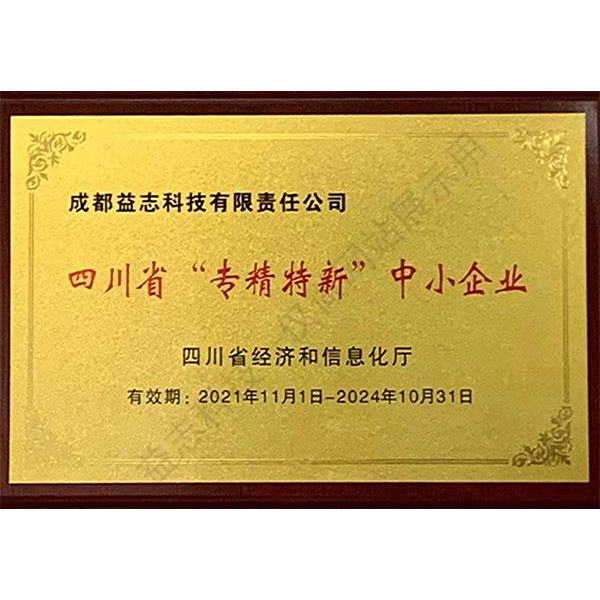
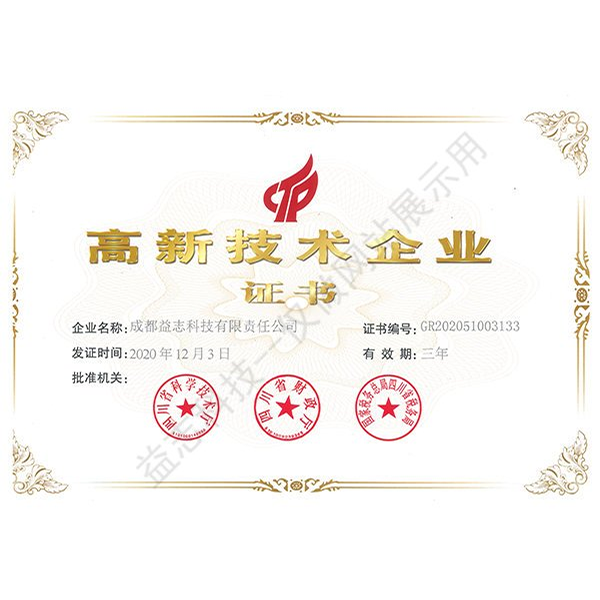
By the way, about suppliers. Now, not just factories have appeared on the market, but entire design institutes that take a facility from concept to commissioning. Let's take, for example,Chengdu Yizhi Technology Co.is just such an institute, created on the basis of a technology company. Their approach (information can be found athttps://www.yzkjhx.ru) is often built on deep customization. They don’t just sell you capacitive equipment, but offer a calculation of the optimal configuration for your needs in order to minimize heat losses and, accordingly, the carbon footprint at the storage and logistics stage. This is a different level of responsibility.
Materials and the “long game”: ecology throughout the entire life cycle
Another point that is often overlooked is materials. Environmental friendliness is not only about operation, but also about what the equipment is made of and how to dispose of it. In new lines of Chinese manufacturers, you are increasingly seeing a transition to high-alloy steels and aluminum alloys with improved corrosion resistance. For what? To increase the service interval, reduce the risk of methane leaks (which, as a greenhouse gas, is many times more dangerous than CO2) and ultimately extend the service life. A one-time, cheap solution is anti-ecology by definition.
I remember the story with the insulation of pipelines at one of the stations. We supplied polyurethane foam at a low price from an unknown sub-supplier. Two years later, the insulation began to deteriorate due to temperature changes and UV radiation, cold losses increased significantly, and it had to be urgently replaced. The savings resulted in multimillion-dollar losses and reputational risks. Now, many serious players, including the aforementioned Chengdu Yizhi Technology Co., Ltd., are paying insane attention to controlling the supply chain of materials. Their design institute status obliges them: they are responsible for the calculations, and therefore for the selection of components. The registered capital of 120 million yuan is not just a number, it is a signal of intentions to work for the future and invest in R&D for long-term solutions.
And yes, recycling. For now, this is more of a theory, but in recent tenders there are already requirements to provide a plan for the disposal of equipment after decommissioning. Chinese companies focused on exporting to the EAEU and Europe are beginning to take this into account, offering, for example, modular designs that are easier to disassemble and recycle. Slowly, but there is movement.
Digital and data: how IoT is changing the idea of efficiency
There is nowhere today without digitalization. But is the sensor itself environmentally friendly? No. Sustainability comes from the data it collects and the decisions it makes based on it. The new generation of Chinese LNG equipment is literally packed with sensors: pressure, temperature, gas composition, vibration. All this flows into a single monitoring system. The beauty is that many manufacturers are now opening up parts of the API, allowing their equipment to be integrated into wider facility energy management systems.
At one of the terminals, we connected such data to the analytics platform and identified a non-obvious pattern: the greatest losses occurred not during active loading, but during periods of inactivity, due to the suboptimal operating mode of pressure maintenance compressors. We adjusted the logic and received monthly savings of 7-8% on energy costs. This is real ecology: less consumption means less emissions to generate this very consumption. But it is important to understand that such fine-tuning is only possible in close cooperation with a supplier who is ready to share not just passports, but real algorithms for the operation of the hardware.
Here again, the difference between just a plant and a design organization is visible. The latter, as a rule, is ready to conduct a dialogue at the engineering level, because for them this is part of the service. When ordering equipment from Chengdu Yizhi Technology, you are essentially ordering part of their institute’s engineering resources to customize the system to suit your needs.
Regulatory and “green” Finance: The Hidden Driver of Change
Many people think that China is only chasing volume. This is no longer the case. Domestic policy of the ?green? developments and pressure from international investors who demand ESG reporting are radically changing the approach. To get ?green? financing or entering premium markets, the manufacturer must provide not a certificate, but a detailed calculation of the carbon footprint of its equipment throughout its entire life cycle (LCA - Life Cycle Assessment).
This forces us to restructure everything: from choosing a metal supplier (how much energy is spent on its smelting?) to logistics (how are components delivered to the plant?). Those companies that have gone this route now offer a completely different product. Their equipment may be 10-15% more expensive at the start, but its total cost of ownership, including the risk of emissions fines and energy costs, is lower. This is difficult to sell to a buyer who only looks at the price tag in the tender, but the trend is obvious. More and more large infrastructure projects in Asia and even in Russia require precisely such comprehensive solutions.
Therefore, when you see a new LNG equipment plant in China, it is worth asking not “how much does it cost?”, but “does it have a full LCA report and does it comply with, say, ISO 14040 standards?” The answer to this question will say more about environmental friendliness than all the advertising brochures.
Results: is it environmentally friendly or not? Personal conclusion
A clear answer: yes? or not? no and cannot be. Chinese LNG equipment is not a monolith. This is a spectrum: from cheap copies of old models that only create the appearance of “greenness”, to truly innovative developments where environmental friendliness is embedded in the very design philosophy. The difference is in the approach and goal of the manufacturer.
If the manufacturer is a design institute with solid registered capital, in-house R&D and experience in working in strict domestic markets (like Chengdu Yizhi Technology Co.), then the chances of getting a truly environmentally friendly solution are high. But it won't be magical. Its effectiveness will be revealed only with proper integration, adaptation and subsequent maintenance. Your own competencies or willingness to pay for complex engineering are required.
So, back to the title question. Yes, new equipment from China can be extremely environmentally friendly. But the key word is “maybe”. The guarantee is not the country of origin, but the depth of engineering, transparency of life cycle data and the willingness of the supplier to be a partner, and not just a seller of hardware. And in this segment, Chinese players are becoming more and more serious, forcing them to reconsider old stereotypes. Of course, you still have to check it in the field, in the cold, at three in the morning, when something suddenly stops working. Just like with equipment from anywhere else.