China: new technologies for tail gas utilization?
2026-03-01
When people talk about tail gas utilization in China, many people immediately imagine giant installations at petrochemical giants like Sinopec. But reality, in my opinion, often turns out to be much more interesting and... dirtier in the literal sense of the word. The main struggle and innovation now takes place not so much in the field of global CO2 capture, but in the field of working with those most difficult, “inconvenient” ones. flows - coke oven gas, waste gases from calcium carbide production, emissions from small chemical plants. It is where the composition is unstable, and the volumes do not always justify colossal capital investments, that those “new technologies” that everyone talks about, but few have actually seen in action, are born. And here often lies the main catch: a technology may be excellent on paper, but absolutely unviable in the conditions of a particular plant with its outdated equipment fleet and an eternal lack of funds for modernization.
From theory to practice: where do the “new” ones stumble? solutions
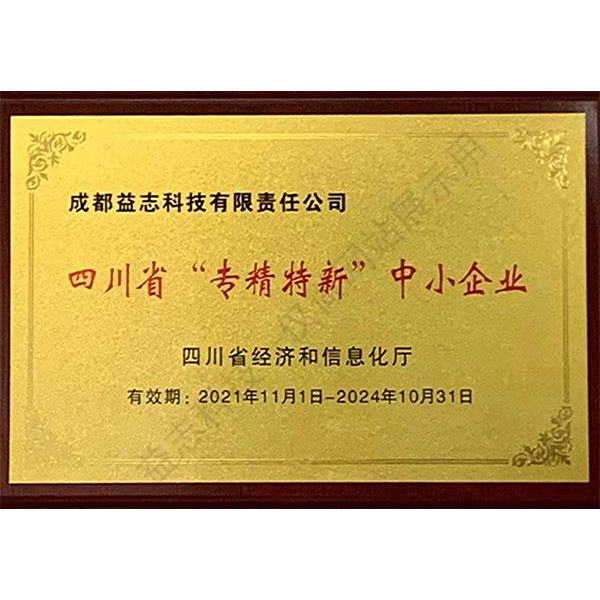
Take, for example, the trendy trend of catalytic oxidation at low temperatures to neutralize volatile organic compounds (VOCs) in tail gases. In the laboratory or on a bench with an ideally prepared gas mixture, the efficiency is 99%. You come to a pesticide production plant in Sichuan province - and in addition to the target VOCs, there is also dust, acid fumes, humidity under 90%, and the temperature at the inlet fluctuates. The catalyst, which should work for two years, is sintered in six months. And the entire economic calculation based on its durability goes to hell. This is not a flaw in the technology per se—it is a problem of adaptation. Often Chinese engineering companies, especially those that have grown out of practices like, say,Chengdu Yizhi Technology Co.(their website isyzkjhx.ru), they are not going through the creation of a universal “silver cartridge”, but are developing hybrid solutions. First - reliable and cheap absorption or adsorption to stabilize the flow and remove "garbage", and only then - a fine catalytic or thermal stage. This increases capital costs, but significantly increases the reliability of the entire system. Their approach, as a design institute with a registered capital of 120 million yuan, established on the basis ofHuaxi Technology, is often based on such an in-depth analysis of raw materials, and not on the sale of finished boxing.
Another stumbling block is energy balance. Many recycling technologies, especially thermal ones, consume more energy (for example, for heating) than they generate or save. In China, where electricity tariffs for industry are a separate big issue, this factor becomes decisive. Therefore, the trend is now shifting towards heat recovery and integration of the tail gas recovery system into the overall energy scheme of the enterprise. Don’t just burn the gas, but use its heat to heat raw materials or generate steam for your own needs. But there are a lot of nuances here: corrosion due to the composition of the gas, difficulties with automation for an unstable flow. I saw a project where, due to pressure fluctuations in the tail gas, the recovery system was constantly turned off, in the end it was simply abandoned, returning to a primitive flare.
And of course, we must not forget about the economy. The introduction of any, even the most advanced, recycling technology is costly. And the key question for the plant owner is: “When will it pay off?” If we are not talking about fines from environmental inspections (which, by the way, in China are becoming stricter year after year), but about real economic benefits, then there are not many options. Either this is the recovery of valuable components (for example, hydrogen from oil refinery tail gases), or the generation of energy for internal use, which reduces dependence on the grid. Everything else is most often image projects or a forced measure under pressure from the regulator. And specialists fromChengdu Yizhi Technologythey don’t hide this in their presentations, honestly showing the client payback schedules under different scenarios, which, by the way, inspires more confidence.
Specific cases: not only petrochemicals
Let's move away from abstractions. One of the most revealing projects in recent years, which I had the opportunity to study in detail, is the utilization of coke oven gas at a metallurgical plant. Traditionally it was simply burned in a torch. The task was not only to neutralize, but also to capture benzene hydrocarbons and hydrogen sulfide. A combined scheme was used: adsorption on activated carbon followed by regeneration and release of concentrated benzenes, and the purified gas was sent to the workshop heating system. The most difficult thing was not the cleaning technology, but the organization of an uninterrupted supply of unstable gas pressure to the adsorbers. It was necessary to design a buffer tank-gas holder and a complex automation system, which, according to rumors, was finalized by engineers fromHuaxi Technology. The project paid for itself not through the sale of extracted benzenes (their market is volatile), but through the replacement of expensive natural gas, which was used for heating.
Another example is small chemical production in industrial parks. There, emissions from a dozen different workshops are often collected into one common pipe. The composition is a terrible cocktail. Installing a single powerful cleaning system for everyone would cost astronomically. The solution I have seen in action in Zhejiang is a decentralized approach. At each source, where possible, compact catalytic oxidation modules are installed, selected for a specific type of emissions. And already general, relatively “clean”? the remainder is cleaned centrally. This reduces the overall load on the final stage and its cost. True, a problem arose with servicing many small installations at different enterprises - a single qualified service was needed, which was never fully organized.
And, of course, we cannot ignore the topic of capturing and using coalbed methane (CMM) from mines. This, strictly speaking, is also tail gas, but with its own specifics. Here, technologies follow the path of purifying and bringing gas to a quality suitable for injection into gas pipelines or for generating electricity on site. The main difficulties are, again, the variability of methane concentration and the presence of impurities. China is actively experimenting here, including with membrane separation and pressure swing adsorption (PSA). Success is highly dependent on the geology of a particular mine, and it is impossible to replicate a single solution. This is a field for real research work, not typical engineering.
The role of specialized engineering companies
This is where companies like the one mentioned come to the foreChengdu Yizhi Technology Co., Ltd.. These are not manufacturers of standard equipment, but design institutes. Their strength lies in their ability to conduct a detailed audit, simulate the process and assemble a system, like a designer, from the best components available on the market, adapting them to the needs of the client. Check out their portfolio atyzkjhx.ru— it is clear that they work with different industries: from coke chemistry to pharmaceuticals. This indicates broad expertise specifically in the field of purification of complex gas mixtures. Their creation in 2013 on the basis of the technology company Huaxi was a logical step for the transition from the development of chemical processes to their full industrial implementation, including “tails”.
What makes a good engineering company in this field? The ability to honestly tell the client: “This fashionable technology will not work for your case, let’s look at a simpler and more reliable solution.” I saw how sellers of “nano-catalysts” They sold their installations to factories where the gas was so dirty that the very first stage - the scrubber - failed every month. The design approach first involves a thorough analysis of raw materials, often over several production cycles, and only then the choice of method. Sometimes the correct answer is not one super technology, but a cascade of two or three proven, but intelligently combined methods.
Another critical point is post-project support. A tail gas recovery system, especially a new one, is a living organism. Raw materials change, equipment wears out, and standards become stricter. The maintenance contract and upgrade options are often more important than the original contract price. Companies that are themselves deeply immersed in chemical technology, like the parentHuaxi Technology, here they have an advantage because they understand the process from the inside, and not just as a set of devices.
Trends and dead ends: an inside look
Where is everything going? The first is a clear trend towards digitalization and intelligent management. Not just output sensors, but predictive analytics systems that, based on indirect signs (pressure drop in the catalyst bed, change in temperature profile) can predict the need for maintenance or the imminent failure of a unit. This allows you to move from planned preventive maintenance to the actual condition, saving resources. But it’s difficult to implement this: you need competencies in data science, which traditional factories do not have.
The second is working with highly concentrated but small-volume flows. For example, emissions from reactors in pharmaceuticals. There is no need for a giant installation; we need a compact, efficient and, importantly, quickly adjustable system. Most likely, the future here lies in modular “container” solutions. types that can be quickly connected to a new source.
What, in my opinion, is a dead end? The pursuit of absolute cleaning performance “at any cost?”. Sometimes reducing emissions from 95% to 99.9% requires doubling capital and operating costs with negligible environmental benefits. A reasonable compromise between legal requirements, technological feasibility and economics is the ultimate goal in designing recycling systems. Blindly copying Western solutions without taking into account the local specifics of raw materials, energy costs and personnel qualifications also often leads to failure. The equipment is installed, but does not work.
Instead of a conclusion: thinking out loud
So what is the bottom line with “new technologies?” in China? My experience suggests that real novelty now rarely lies in the invention of some fundamentally new physicochemical method. More often it lies in the ability to integrate, adapt and make economically viable an existing set of technologies for specific, sometimes very “non-ideal” ones. conditions of the Chinese industrial landscape. This is the work of a high-class industrial engineer rather than a theoretical scientist.
A successful tail gas utilization project today is 30% correct technology, 50% competent engineering and integration into existing production, and 20% the customer and contractor’s readiness for long-term partnership and “on-site” modifications. And when you see how at some fertilizer plant a system designed, for example, by such specialists asChengdu Yizhi Technology, has been working quietly and efficiently for several years now, processing stinking emissions into useful steam, you understand that it is in this unceremonious work that real progress lies. Without big words, but with concrete results. And the question from the title remains open for each new object, and this is perhaps the most interesting thing in our work.