China: leader in PSA nitrogen plants?
2026-03-01
This is a question that often comes up in conversations at exhibitions or when discussing tenders. Many people immediately imagine giant factories and tons of metal, but the reality, as usual, is more complex and interesting. If we talk about pure production volume and the number of completed projects around the world, yes, Chinese companies are certainly in the lead. But is this leadership in the full sense? Or is it just a mass thing? Let's figure it out, without gloss.
Where did this “boom” come from? and what's the catch
It didn't all start yesterday. Back in the 90s and early 2000s, the Chinese market was flooded with imported PSA units, mostly European. They were the standard, but they were priced accordingly. Local engineers then actively studied, disassembled, copied and, most importantly, adapted. The key point of adaptation is to your materials and components. It is no secret that Chinese carbon molecular sieves (CMS), valves, and pressure sensors have been lagging behind in terms of service life for a long time. The first generations of local installations suffered precisely because of this: the service life of the adsorbent could be 1.5-2 times less than declared, and the valves on the exhaust line failed after a year and a half of active operation.
This is where the first common myth lies. When they say “Chinese PSA installation?”, they often mean just such an early, raw product, assembled almost in a garage. There are still many of them on the market, they are cheap and create a negative background. But the industry did not stand still. Serious players quickly realized that without their own R&D and quality control of components they would not be able to export. This is how a layer of companies appeared that stopped simply copying, and began to develop their own technological cycles, patents for flow distribution and regeneration. This is already a different level.
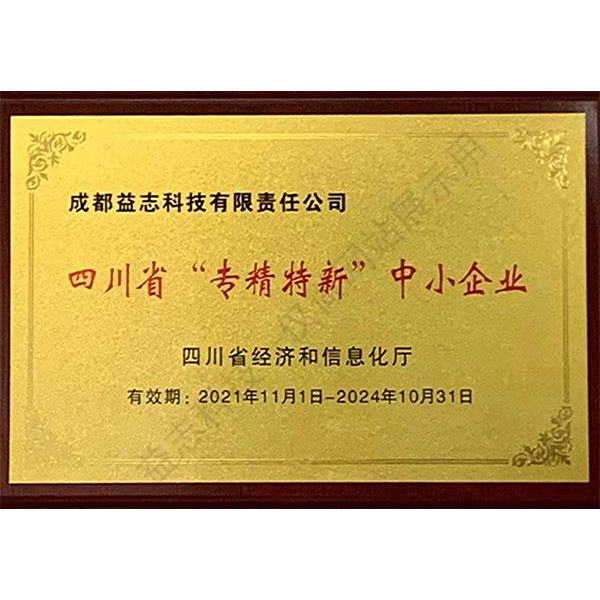
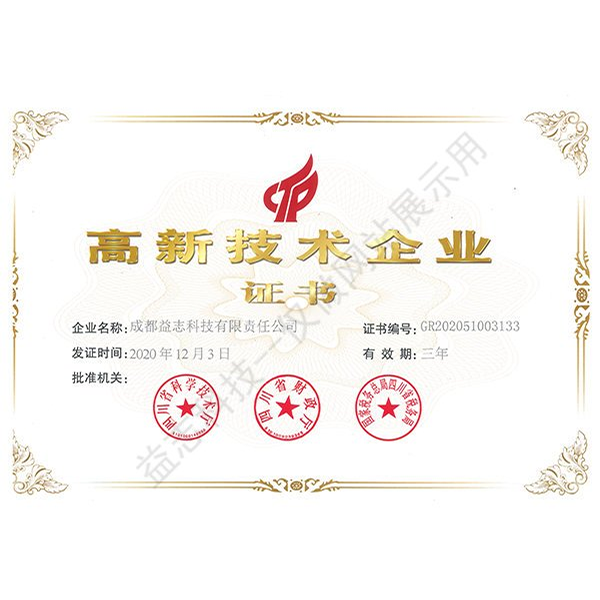
Let me give you an example from practice. About seven years ago we considered an offer from one such “garage” company. manufacturer for a small polymer production plant in Kazakhstan. The price was tempting, but a detailed study of the technical specifications revealed that they were using an adsorption cycle copied from an old European model, without taking into account the characteristics of local (also Chinese, but low-grade) zeolite. The result is predictable: a 20% drop in productivity after just 8 months and high residual oxygen. The project, fortunately, was cancelled. But the competitors fromChengdu Yizhi Technology Co.(their website, by the way,https://www.yzkjhx.ru) in a similar tender they offered not just an installation, but a preliminary laboratory test of our raw materials on their adsorbents. This is already an approach.
What has changed in the hardware? and control logic
The next leap occurred in hardware and, equally important, in control systems. If previously the standard was relay logic with basic PID control, now even for medium-sized installations they offer full-fledged SCADA systems with remote monitoring capabilities and adaptive logic. The essence of adaptability is simple: the system adjusts the adsorption/desorption cycles to the actual load, incoming air temperature, and pressure. These are not space technologies, but their correct implementation requires a deep understanding of the process.
Here Chinese engineers have shown themselves to be very flexible. They did not reinvent the wheel in terms of sensors or industrial computers - they took the world's best components (Siemens, Emerson, Yokogawa). But the “brains”, that is, the algorithms, wrote themselves, often based on a huge database from thousands of already operating installations in different climatic conditions - from the tropics of Southeast Asia to the harsh winters of Siberia. This is their key competitive advantage - huge statistics for debugging logic.
However, there is a nuance. Sometimes this flexibility plays a cruel joke. I came across a situation where, for a project in the Russian Federation, a company from Chengdu supplied a control cabinet with an interface in Russian, but the deep settings of the algorithm were “hardwired”. and are not available to local service engineers. When the parameters of the incoming air changed (say, summer heat), the system began to fail, and to reconfigure it we had to wait for a specialist from China. This is not a question of technology, but of service philosophy. Market leaders, which include the mentioned design instituteChengdu Yizhi Technology Co.(a subsidiary with a registered capital of 120 million yuan), this problem is already being solved by creating regional engineering centers.
Case: non-obvious difficulties in the field? conditions
Theory is one thing, but commissioning somewhere near Novosibirsk in February is completely different. I want to share one not very successful, but instructive experience. The issue was the supply of a PSA-nitrogen plant for food production. Everything is according to the classics: the required purity is 99.9%, dew point -40°C. Equipment from a trusted supplier, all components are of high quality. Assembled, launched - the parameters are normal. But after three months, the customer complains about periodic spikes in the dew point.
Let's start to figure it out. The culprit turned out to be... the compressed air drying unit located in front of the PSA. It was not supplied by the main contractor, but by a local installation company, saving on the cost of a refrigerated dryer. As a result, with sudden changes in temperature and humidity of the summer air (which were not taken into account in the technical specifications!) moisture periodically broke through into the PSA adsorbers. She was the one who “poisoned” zeolite, causing output dew point spikes. Chinese colleagues who came for diagnostics immediately pointed this out by providing log files of pressure in the columns, where anomalies were visible that were characteristic of moisture ingress. The conclusion is banal, but important: even the most advanced PSA system is only a link in the chain. Its effectiveness depends 30% on proper air preparation, and this point is often missed.
By the way, after this incident, their standard commercial offer began to include not just the line “air preparation?”, but detailed configuration recommendations and even specific models of dehumidifiers from partners. This is growth from the category of “iron sellers?” into the “solution providers” category.
Adsorbents: where China truly became a global player
While some manufacturers still have questions regarding the mechanical part, the situation with adsorbents is radically different. The production of carbon molecular sieves and zeolites in China is now a separate powerful industry. They not only met domestic demand, but also became the largest exporters in the world. And it's not just about the price.
Previously, everyone was eager to buy zeolite from UOP or CECA. Now Chinese manufacturers, such as Jalon, Union, or those that work in conjunction with engineering companies (for example, forChengdu Yizhi Technologythey make their own lines of adsorbents for specific tasks), offering products with very specific properties. Need a zeolite with increased CO2 resistance to produce nitrogen from high exhaust air? Please. Do you need a carbon carrier with increased granule strength for installations with frequent pressure changes? And there is such a thing.
We once tested zeolite from Union and from one German brand for one installation. In terms of the main parameters (working capacity, kinetics), practically no difference was found. But the price difference was almost double. Of course, for critical processes in the aerospace or pharmaceutical industries, the "proven" ones are still preferred. brands. But for metallurgy, chemistry, and the food industry, Chinese adsorbents have become the de facto standard. Their resource has learned to accurately forecast, which is critical for calculating the cost of ownership.
So is he a leader or not? View from the workshop
I return to the original question. If we measure leadership by innovation in the fundamental physics of the process - not yet. Breakthrough patents in the field of new adsorbent materials or radically new cycles (like the fast pressing cycle) are still being born in Europe, the USA or Japan.
But if you measure leadership by the ability to cover 80% of the world demand for reliable, efficient and, importantly,affordable PSA nitrogen plants- then the answer will be in the affirmative. Their strength lies in optimal engineering, scaling and, I repeat, a colossal database for debugging. They took good, proven technology and brought it to the level of a high-quality mass-produced product, just like the Japanese once did with cars.
Their next challenge is not to make installation even cheaper, but to completely close the product life cycle on the global market: pre-sales engineering, turnkey delivery. taking into account all local nuances (even seismic and electrical networks), remote diagnostics and prompt service through local partners. Those who are already following this path define today's leaders. And judging by how companies at the level are expanding their presenceChengdu Yizhi Technology Co., having the status of a design institute and solid capital behind them, they understand this. So, yes - in a practical, market sense, China is already the leader. But this leader is still learning, and that's perhaps the most interesting thing about watching this market.