China: new technologies for tail gas utilization?
2026-02-06
When do you hear about “new tail gas utilization technologies?” in China, the first thought is again marketing. Everyone is shouting about innovation, but in reality it often turns out to be good old PSA (pressure swing adsorption) or membranes, just in new packaging. But over the past 5-7 years the picture has really shifted. It’s not that there was a revolution, but specific solutions that worked to the fullest appeared for those flows that were previously either burned or, excuse me, simply vented. And the main driver is not even ecology itself, but the strict economics of resources and the policy of “clean production”. It has become profitable for enterprises to capture these percentages.
From ?must be? to “how exactly?”: the evolution of the approach
Previously, a typical story: the installation has a tail gas flow, mainly hydrogen with impurities. According to the project, direct it to a torch or into furnace fuel. There is a recycling technology, but the CAPEX is high and the return on investment is questionable. And everything freezes. Now the approach is different. Not “how can we utilize it?”, but “what in this flow has value here and now?” Hydrogen? Then it is purified and returned to a process, for example, hydrotreating. Hydrocarbons C1-C4? Then either refinement to fuel gas, or, if the composition allows, separation of individual fractions. Keyword -integration. The technology is not selected in the abstract, but for a specific point at which the product is introduced into the existing plant layout.
Here is a live example from one refinery in Shandong. There was a stream from a hydrocracker that was rich in hydrogen, but at only 0.3 MPa pressure and with a decent amount of CO. The classical membrane method or swing adsorption were not very suitable due to the low pressure and the need for deep CO removal. A hybrid solution was found: first, rough cleaning and compression, then a special configuration of a short-cycle adsorption (PSA) unit with multilayer adsorbents that copes with CO. The hydrogen went back into the process, and the waste part, which is still high in calories, was sent not to the flare, but to the fuel gas network for the boilers. Paid for itself in 3 years. But here it is important: success was not in super-new technology, but in precise engineering for specific conditions. Many failures are precisely due to the fact that they take “boxed” ones. solution and try to screw it up.
Another point that is often overlooked is the stability of the tail gas composition. In theory, the flow is characterized, samples are taken, and a design is made. In practice, the composition can “float” depending on the mode of the main installation, raw materials, catalyst. If the technology does not have a sufficient operating window, problems begin: the product does not meet the specification, or the equipment cokes. It is necessary to install buffer tanks or, more expensively, online analysis and automatic control systems. This is the same “trifle” that eats up the entire economics of the project if it is not taken into account at the FEED (design) stage.
Technological zoo: what really works on sites
If we put aside the hype, several areas dominate the Chinese industrial sites today. Firstly, this is, of course,membrane separationfor flows with high partial pressure of the target component (the same hydrogen). Chinese membrane manufacturers, like the company from Chengdu, which will be discussed later, have made great progress. Their films already compete with Western analogues in selectivity and stability, and are noticeably cheaper. But membranes are capricious to aerosols, heavy hydrocarbons and plasticizers - very high-quality preliminary cleaning is needed.
Secondly,swing-cycle adsorption (PSA). Here, progress is mainly in control algorithms and adsorber designs, which make it possible to reduce hydrogen losses and increase the service life of the adsorbent. I have seen installations where, by optimizing the cycle and using layered adsorbents (molecular sieves + activated carbon), they achieve a hydrogen extraction rate of 90% from rather dirty streams. But this is energy-consuming—considerable volumes of fuel gas are used for regeneration.
And the third trend -cryogenic technologies. They are used less often, mainly for large flows, where it is necessary to obtain not just fuel gas, but liquid products (ethane, LPG) of high purity. CAPEX is sky-high, but for giants like Shenhua or Sinopec, which build integrated chemical complexes, this is justified. They "close" carbon cycle, converting tail gases into feedstock for pyrolysis.
But it’s too early to talk about biological methods or any plasma-chemical processes on an industrial scale. There are laboratory samples, pilot installations are also in the news, but they are still far from commercial reliability and understandable economics. Investing in such “dark horses” come mainly through state research funds, and not from the companies themselves.
Case in Focus: Chengdu Yizhi Technology Experience
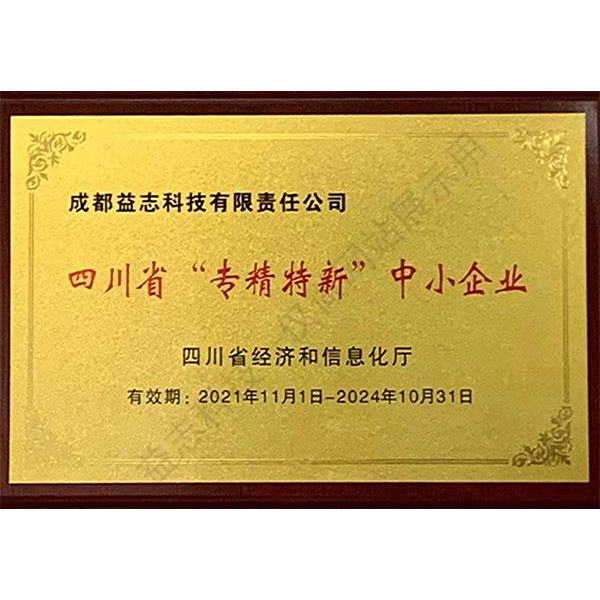
In the context of talking about practical implementation, experience is interestingChengdu Yizhi Technology Co.(a subsidiary of Chengdu Huaxi Chemical Technology). Their website (https://www.yzkjhx.ru) positions them as a design institute, and this is the key word. They don't just sell equipment, but do full-cycle engineering. From their open cases it is clear that their specialization is gases in chemistry and oil refining.
One of their projects that I had the opportunity to indirectly study was the recovery of tail gas from an olefin production plant. The problem was classic: a stream of variable composition (ethylene, ethane, propylene, hydrogen), which was periodically burned. The standard solution is to build a separate fractionation plant, but this is time-consuming and expensive. Yizhi engineers proposed and implemented a scheme with a preliminary membrane unit to separate and return part of the hydrogen and light olefins, and the remaining stream, enriched in ethane, was sent directly to the pyrolysis furnace as additional raw material. Essentially, they built recycling into the main process, avoiding the creation of a stand-alone complex.
What's valuable here? Not a technological miracle, but systems thinking. They looked at the plant as a single organism. Their strength, as a design institute with a registered capital of 120 million yuan, is the ability to carry out detailed process modeling (Aspen HYSYS, etc.) and offer customized rather than standard solutions. Their portfolio includes both PSA and membrane systems, but the choice is always justified by a technical and economic calculation for a specific customer.
Of course, not everything is going smoothly for them either. In one of the early projects for the utilization of coke oven gas at a metallurgical plant, they were faced with the rapid clogging of pre-filters with tar and dust. We had to modify the washing system on the fly and introduce an additional cleaning stage. This led to budget overruns and deadlines being delayed. But such experience is part of professional growth. Now, I’m sure they are setting more conservative tolerances for the purity of the raw materials at the inlet.
Pitfalls and lessons that are not written in brochures
When talking about new technologies, one cannot ignore the pitfalls. First and foremost -economics at low concentrations. If the valuable component in the flow is less than 15-20%, most often the project will not take off. The cost of isolating it will exceed the cost of the product. Sometimes it is more profitable to use gas directly as a low-calorie fuel in the nearest furnace, by modernizing the burners, than to build an entire purification system.
The second stone is infrastructure. Let's say you isolated beautiful, pure hydrogen. But where to submit it? If the plant does not have a network of hydrogen pipelines of suitable pressure or free capacity for reception, the project will face the need for huge additional investments. Often the optimal solution is not maximum purification, but getting a product that is “good enough.” for use at the nearest point of consumption.
The third point is operating expenses (OPEX). New catalysts, special adsorbents, membrane elements - all of this has its own service life and replacement cost. If supplies and services depend on a single foreign supplier, these are huge risks. Now, by the way, this is a powerful incentive for the development of local manufacturers in China. Reliability and availability of the service are sometimes more important than a couple of percent in efficiency according to the passport.
And the last thing is the human factor. A complex recycling plant needs to be maintained. If there are no trained personnel at the plant, even the most advanced technology will remain idle or work at half capacity. Successful projects always include not only the supply of “hardware,” but also full training of technologists and operators, and the writing of detailed regulations. Without this, any innovation turns into a headache.
Looking ahead: which way is the wind blowing?
So what's the bottom line? China has not invented a magic wand for tail gas disposal. But a powerful ecosystem has been created here for the practical, economically sound implementation of existing technologies. Drivers - green policy developments, tightening emission regulations and, more importantly, the growing maturity and competition among local engineering companies such asChengdu Yizhi Technology.
The future, in my opinion, belongs to hybrid systems. Not PSA or membranes, but combinations of both selected to maximize the value of a particular stream. And also behind digitalization - the use of real-time data and predictive analytics to optimize the operating modes of recycling plants in conditions of a changing composition of raw materials.
The main shift is in consciousness. Tail gas is less and less perceived as a waste that must be destroyed. It is increasingly seen as an underutilized resource, a potential source of income, or, at a minimum, a way to reduce operating costs in the main production. And this, perhaps, is the most important ?new technology? - not in the equipment, but in the approach. And technology, as we know, follows demand. And the demand here is clearly growing.