China: biogas technology - new products?
2026-02-06
When people talk about Chinese biogas, many people immediately imagine old underground tanks in villages. But this has not been the case for a long time. The question is, what is hidden behind the words “new products?” — just marketing or a real shift? Judging by what I see on the ground, this is rather an evolution of approaches, where is the “novelty”? often lies not in revolutionary inventions, but in adaptation and systems thinking.
From raw materials to systems: where to look for novelty
Previously, the focus was almost exclusively on agricultural waste. Now, especially in suburban areas or industrial enterprises, the flow of raw materials is different. For example, we worked with one food processing plant - there was not only processing waste, but also expired finished products and fats. The standard digester could not cope; preliminary pasteurization and finer adjustment of the hydraulic time were needed. The new product here is not the reactor itself, but the substrate preparation scheme, which has become key for the plant. This is not sold in the catalog as “installation”, but without this the whole system stops.
Or takebiogas technologyfor poultry farms. The litter is a seemingly classic. But its acidity and nitrogen content can “kill” it. process. I saw projects where they persistently tried to increase the volume of the reactor, but the problem was in the pre-acid fermentation stage and dosing of filler (for example, straw). The solution turned out to be a preprocessing module, which some suppliers now offer as a separate “product”. But in essence, this is a return to basic principles, which were simply forgotten in the past in the pursuit of scale.
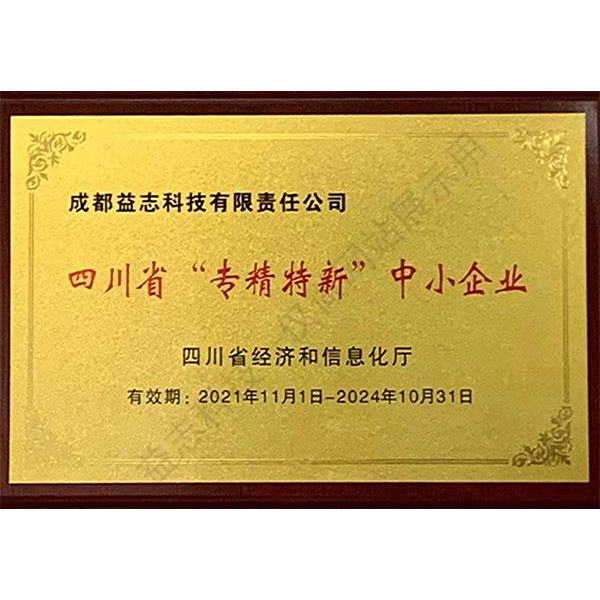
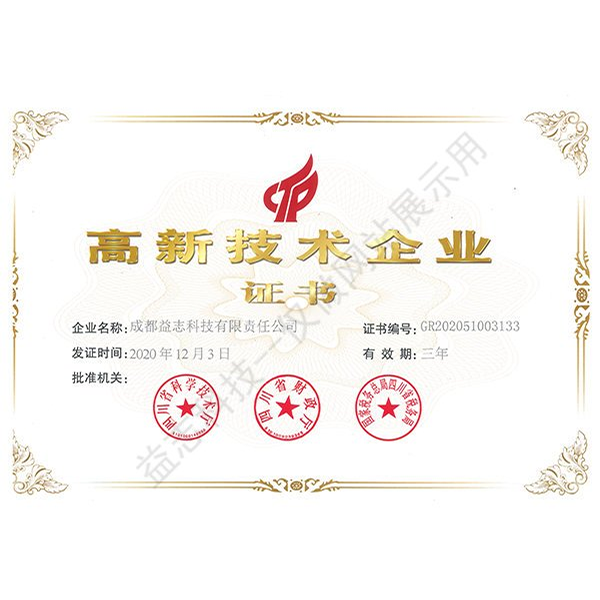
Worth mentioning hereChengdu Yizhi Technology Co.(their website ishttps://www.yzkjhx.ru). They, as a design institute created by Huaxi Technology, often work with such complex problems. Their approach is not just to sell the container, but to calculate the entire chain: from the composition of raw materials and pre-processing to the disposal of digestate. In their cases it is clear that the ?new product? - This is often a correctly designed system for a specific, sometimes unobvious, type of waste. The authorized capital of 120 million yuan allows us to take on large projects where engineering rather than standard solutions are needed.
Equipment: what has really changed in hardware?
When it comes to physical hardware, there are few breakthroughs. But there are noticeable improvements. For example, mixing systems. Previously, cheap mechanical stirrers were often installed, which broke after six months in an aggressive environment. Nowadays, hydraulic or pneumatic systems are used more. More reliable? Yes. But also more expensive. And this is not always justified for a small farm. I saw a situation where they installed an “advanced” one. pneumatics for a small installation - energy costs for the compressor ate up part of the profit. I had to simplify.
Another point is automation of control. Sensors for pH, temperature, and methane levels have become more accessible. But their implementation is a separate headache. A farmer or small factory owner often does not need complex SCADA. A simple indication is needed: “everything is good?”, “check the temperature?”, “add raw materials?”. Therefore, new ?products? in this segment, these are not supercomputers, but more reliable and understandable panels with basic logic. They are often developed by local engineering companies, not giants.
Cogeneration plants (CHP) using biogas are a separate topic. Engine efficiency is increasing, but slowly. The main struggle is for resistance to non-ideal gas (with hydrogen sulfide impurities, moisture). Here, Chinese manufacturers really offer interesting options for inlet gas purification systems. into the engine - compact and relatively inexpensive. This is perhaps one of the few segments where we can talk about truly new market offers.
Digestate: an underrated ?product?
Previously, they looked at it as a by-product that had to be disposed of somewhere. Nowadays, more and more people are thinking from the very beginning: what to do with it? Simply using it as fertilizer is not always the answer. Norms, logistics, seasonality. Therefore, new products are associated with the processing of digestate. For example, its division into fractions: solid - for litter or compost, liquid - for fertigation (fertilizer irrigation).
I saw a successful pig farm project, where the solid fraction, after drying and pelleting, was sold to neighboring farms as organic fertilizer. But there was also a failure: they tried to make a concentrated liquid fertilizer in the same place. They did not calculate the costs of water evaporation - the project became unprofitable. It turned out that almost all the energy from the same biogas was spent on this process. I had to refuse.
So newbiogas technologyin this part it is post-processing technologies. Separators, dryers, sterilization units. Their competent integration into the overall cycle is a modern “product”. Without this, the biogas plant may become a financial burden rather than a source of income.
Economics and politics: what drives the market
Without this context, talking about new products is pointless. Government subsidies and environmental regulations are the main drivers. For example, stricter requirements for the disposal of livestock waste are forcing farmers to look for solutions. But the subsidy often only covers the construction of the reactor. But there is no preliminary preparation, a gas purification system, or digestate processing. Therefore, “stripped down” ones appear on the market. solutions that formally meet the criteria for receiving money, but then work ineffectively.
On the other hand, this encourages companies to create more comprehensive “turnkey” package offers, which, although more expensive, actually solve the client’s problem and work for a long time. This can also be considered a new product - a product as a service (service product). The sameChengdu Yizhi Technology Co.positions itself precisely as a design institute offering a full cycle: audit, design, construction, training, and sometimes even assistance in obtaining the same subsidy. For a large client, such complexity is the main value.
An interesting trend is small and micro installations for individual households or small restaurants. They aren't technologically new, but their design and usability are improving. Plastic, not concrete modules, the simplest loading system. Their ?novelty? - adaptable to domestic use and low maintenance requirements.
Conclusions: is it new or not?
Returning to the title question. Yes, there are new products. But they are rarely anything sensational. More often this is: 1) System integration of known technologies for specific raw materials. 2) Improved reliability and "intelligence" specific components (mixers, sensors, gas purification). 3) Development of digestate processing technologies to close the cycle and generate additional income. 4) Packaging all this into comprehensive engineering solutions, rather than just selling equipment.
The biggest “newness” I see is a change in thinking. From “let’s build a reactor to produce gas?” to “design a system for recycling organic waste with maximum economic and environmental returns?”. In this vein, even an old, proven digester becomes part of a new product if it is correctly integrated into the technological and business chain.
Therefore, when colleagues ask if there is anything really new in China regarding biogas, I say: look not at equipment catalogs, but at completed projects of the last two or three years, especially those that work with non-standard raw materials or within strict economic frameworks. This is where real innovations are visible - pragmatic, sometimes unsightly, but solving specific problems. And this, perhaps, is the main Chinese specificity.