Who are the main exporters of MEA/MDEA/NHD desulfurization technology from China?
2026-02-06
If we talk about the export of gas purification technologies, in particulardesulfurizationbased on amines, many immediately recall large state-owned enterprises. But the real picture on the market is more complicated - key players are often in the shadows, and their success depends not on scale, but on the depth of engineering and the ability to adapt solutions to “non-ideal” ones. customer conditions.
Market and main players: behind the facade of big names
When we analyze the supply chain, we see a classic division: there are manufacturers of the solvents themselves - MEA, MDEA, NHD (this, by the way, is often specific to Chinese synthesis gas projects). There are many of them and they are well known. And there are suppliers of technology - that is, a complete engineering package: design, devices, mode passports, commissioning. This is where the circle narrows.
Large engineering companies such as Sinopec Engineering or SEI certainly have portfolios and vast experience. But their export is often tied to large-scale turnkey projects. within the framework of government agreements. For medium-sized projects, say an oil refinery in the CIS or a chemical plant in Southeast Asia, they may not be as flexible. It is in this niche that strong private design institutes operate.
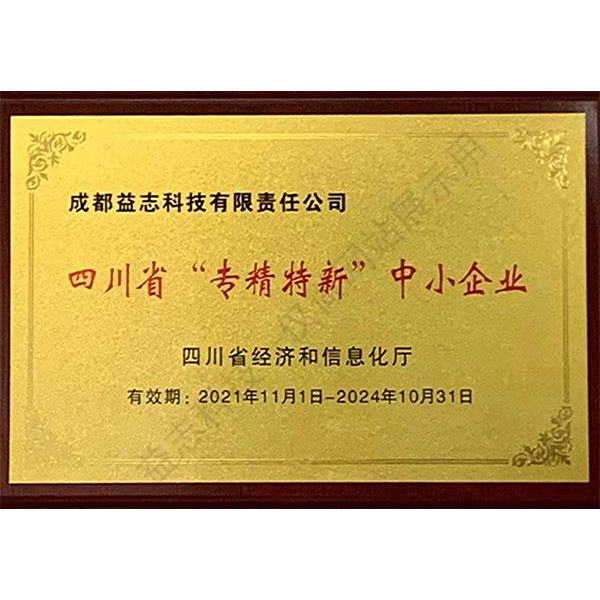
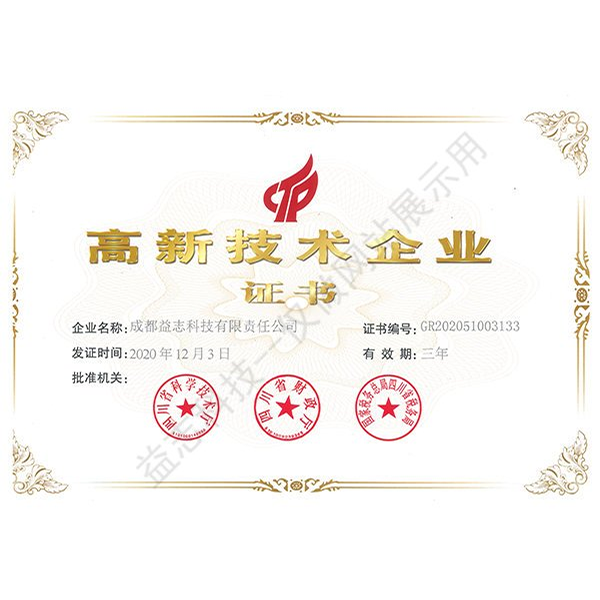
One such example isChengdu Yizhi Technology Co.(a subsidiary of Huaxi Technology). They are not as vocal on the international stage, but if you dig deeper into projects to modernize catalytic cracking units or hydrogen production outside of China, their name comes up regularly. Their websiteyzkjhx.rufocused on the Russian-speaking segment, which already says a lot - they are purposefully working on our market and the CIS. A registered capital of 120 million yuan is a strong claim to sustainability, especially for a private player.
Criteria for a real exporter: not just sell, but make it work
Many companies can offer drawings and basic calculations. But the real export of technology begins where the nuances of the customer’s raw materials are taken into account. Let's say we are talking aboutdesulfurizationnatural gas in Central Asia. The composition of impurities (not only H2S, but also mercaptans, COS) may differ greatly from Chinese deposits. There is no universal recipe.
This is where professionalism comes into play. A good supplier will not push a standard project. He will request a detailed analysis of the gas, study the experience of local operators (often it turns out that the problem is not in the absorber itself, but in the regeneration system or the quality of the incoming water), and only then proposes an adapted scheme. Possibly with a hybrid solution of MDEA with a foam inhibitor or a specific rinse.
I have seen projects where Chinese colleagues, including, apparently, from a team likeChengdu Yizhi Technology, they brought not just documentation, but their own technologist to the launch. And this specialist lived on site for weeks, selected modes, taught operators - because the slightest deviation in the MDEA regeneration temperature or in the level in the column could negate all efficiency. This is a real export of know-how.
Solvent specificity: why NHD is a special story
With MEA and MDEA, everything is more or less clear - this is world practice. ButN.H.D.(often called an analogue of Selexol) is a separate conversation. The technology for its use for deep purification of synthesis gas (especially in coal gasification processes or for ammonia production) has been actively developed in China. And the main experts on its use are located there.
Exporting technology from NHD is top notch. Because here it is necessary to take into account not only the kinetics of absorption, but also the issues of corrosion, stability of the solvent with possible impurities, and the features of regeneration under vacuum. Chinese institutes have accumulated a huge amount of practical data: which material is better for heat exchangers, how to combat solvent decomposition under conditions of specific impurities.
Therefore, when you are looking for a supplier for a project related to the purification of coke oven gas or synthesis gas, it is worth looking at those who have a reference list with NHD. Often these are not giants, but specialized design organizations that grew out of research institutes at large chemical holdings. Their competence in this narrow area may be an order of magnitude higher.
Problems and risks: where do people usually stumble? projects
When talking about exports, one cannot ignore the pitfalls. The first is ?repackaging? old solutions. Some suppliers take a twenty-year-old project, change the logo and pass it off as a modern development. This can be checked simply by requesting current equipment passports and calculations according to modern standards (ASME, GOST R, which is relevant for the customer).
The second problem is the lack of post-launch support. Technologydesulfurization- a living organism. After six months to a year of operation, problems may appear: a drop in selectivity, unaccounted for corrosion, foaming. If the supplier disappears after the documentation and main equipment have been shipped, the customer is left alone with the problem. Therefore, contracts now increasingly include long-term agreements for technical support and even remote monitoring of key parameters.
And the third point is “iron”. Chinese device manufacturers can be of different levels. A good technology exporter strictly controls the equipment supply chain, because the quality of the packed plates and the accuracy of absorber manufacturing is not a small thing. Sometimes it is more profitable when a design institute, likeChengdu Yizhi Technology Co., works in conjunction with trusted manufacturing plants, which he himself recommends and for which, in fact, he vouches.
Looking Ahead and Final Thoughts
The trend is now shifting towards more intelligent and hybrid solutions. It's not just about choosing between MEA, MDEA or NHD, but about combined processes wheredesulfurization- just one of the stages of complex cleaning. Demand is growing for technologies that can recycle recovered sulfur, or CO2. And here Chinese exporters, who are actively working on their R&D, are beginning to offer interesting solutions.
So who are the main exporters? This is not one or two names. It's an ecosystem: large public engineering companies for megaprojects; private but powerful design institutes like the aforementioned Chengdu Yizhi Technology for medium and complex niche projects; and, finally, highly specialized research centers, which often act as subcontractors for key technology components.
You need to choose not by the loudness of the name, but by the depth of elaboration for a specific task, by the presence of relevant experience (specifically in your industry and with your type of raw material) and by your readiness to be responsible for the operation of the technology at the customer’s site throughout the entire life cycle. It is these players who form the backbone of the real export of gas purification technologies from China today.