Is China a new exporter of LNG technologies to Russia?
2026-02-14
Lately, I’ve been hearing this question more and more often at industry meetings. Many, especially those who are accustomed to seeing Russia as a traditional technology supplier, perceive the very formulation of the question with surprise, if not skepticism. But the reality that we face on the ground, in negotiations on specific objects, tells a different story. This is not about a sudden “market takeover”, but about a gradual, very pragmatic and targeted penetration based on specific niche competencies and, critically, the willingness to work in difficult conditions. This is not about the abstract “Chinese LNG”, this is about specific solutions for specific problems, which here in Russia are especially relevant now.
Where did this trend even come from?
If we put aside political rhetoric, the roots lie in two planes. The first is China’s enormous domestic experience in gasifying its own remote regions and developing a network of small and medium-sized LNG plants. They built dozens of them, developing technologies that were not always the most advanced? in the Western sense, but they became reliable, adaptable and, most importantly, cost-effective in the logic of total optimization of capital expenditures (CAPEX). The second plane is the sanctions pressure of 2022 and the subsequent departure of a number of Western technology leaders from the Russian market, especially in the field of cryogenic equipment, automation systems, and special materials. The resulting vacuum needed to be filled with something, and Chinese engineering companies that already had experience working within the framework of cooperation projects on “Power of Siberia” or "Yamal LNG", turned out to be the most prepared.
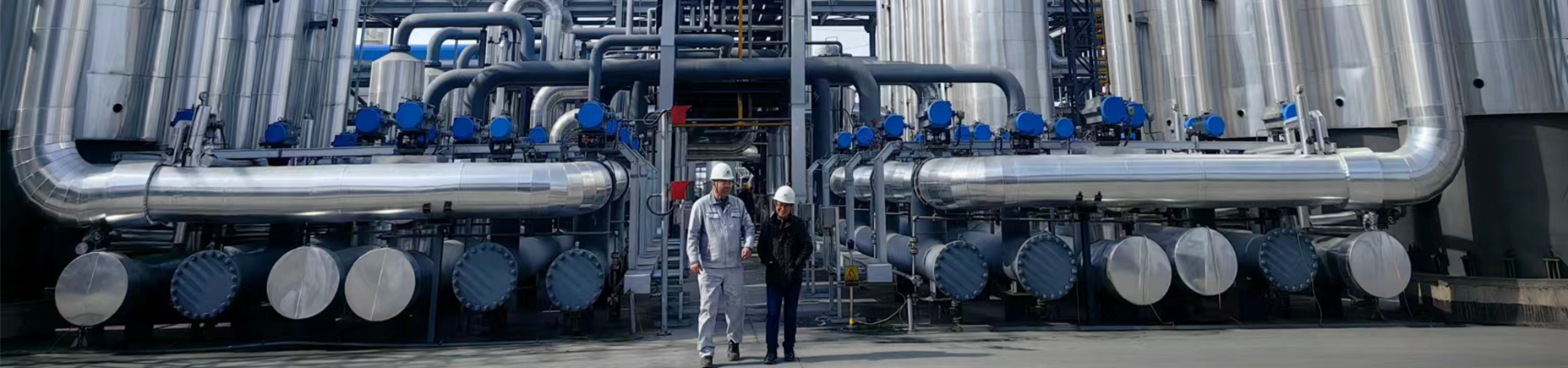
But it is important not to be confused: Chinese companies rarely offer turnkey solutions. the entire process chain of a large liquefaction plant like, say, Air Products. Their strength lies in modular solutions, middle-class cryogenic equipment (tanks, heat exchangers, pumps), and gas purification and preparation technologies for small flows. It is this segment – small and medium-sized distributed gasification, filling stations for natural gas motor fuel, small production facilities for local needs – that is most in demand in Russia today and is developing dynamically.
Let me give you an example from recent negotiations on a project in Siberia. The customer needed a compact liquefaction module with a capacity of about 50 thousand tons per year for the use of associated petroleum gas. European suppliers either left, or the timing and price became prohibitive. Chinese partner,Chengdu Yizhi Technology Co.(their website, by the way,https://www.yzkjhx.ru, has already been localized for the Russian market), offered not just equipment, but a technological scheme adapted to the local gas composition, based on their many years of experience in working with “complex” gases. raw materials in China. And the main thing is the willingness to undertake installation supervision and commissioning with the help of our own engineers, which in the current conditions is worth its weight in gold.
What exactly do they offer and what are their real advantages?
To summarize, the offer is built on three pillars: speed, price and flexibility. The speed of equipment delivery from China is now often higher than from Europe or even from some Russian factories that are overloaded with orders. The price is, of course, lower, but not significantly lower, as many people think. Savings amount to 15-30%, which is significant, but not fatal for the project budget. But flexibility is their main trump card.
They don't come with a rigid "catalogue of solutions". Their engineers are ready to discuss changes in the basic design for a long time and tediously, revise specifications for substitute materials available on the Russian market, and offer alternative layout solutions for an existing site. This is the approach of practitioners, not license sellers. I remember how at one of the sites near Omsk a problem arose with the foundation for a cryogenic tank - the soil conditions turned out to be worse than in the surveys. Representatives of the European company (even before 2022) insisted on a complete recalculation and change of the project by the head office, which led to a delay of six months. Chinese colleagues, having involved their technologist, within a week proposed an option with a modified anchoring scheme and additional local reinforcement, which was carried out by a local contractor. The project didn't get off the ground.
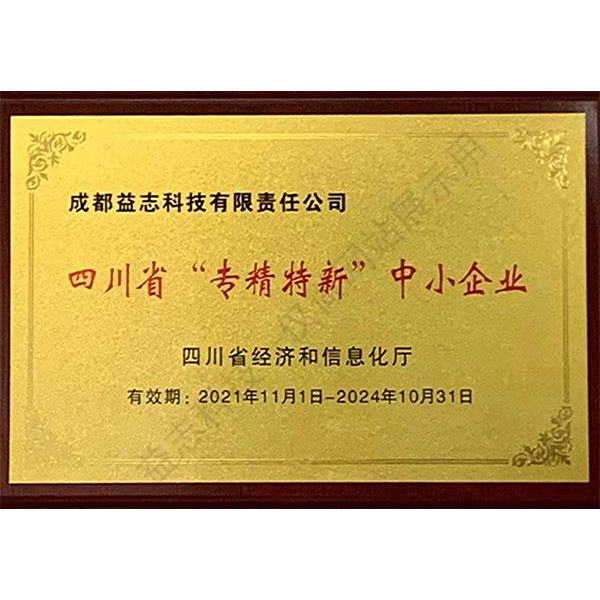
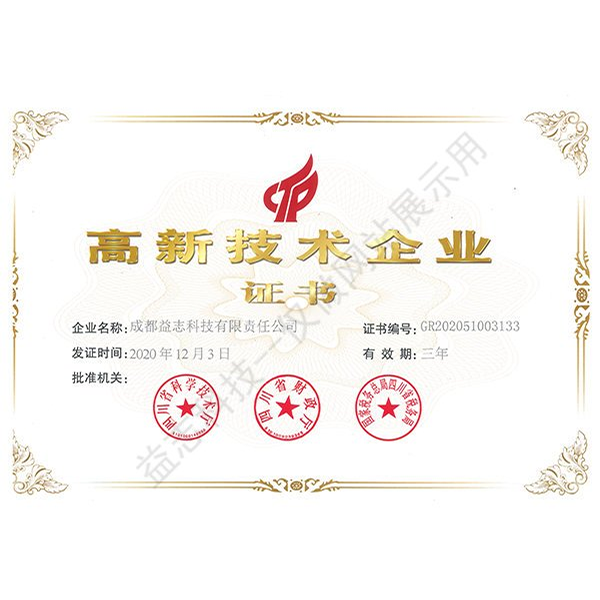
Another point is the willingness to work with the “non-ideal?” gas. Many Russian deposits, especially small ones, have an unstable composition, high nitrogen and CO2 content. Western technologies often require deep and expensive pre-cleaning. Chinese production lines, especially those based on proven processesChengdu Yizhi Technology Co., Ltd.(this design institute, created by Huaxi Technology back in 2013 with a registered capital of 120 million yuan, specializes in complex chemical technology solutions), are often initially tailored to a wider range of input parameters. Even with a slight drop in overall efficiency, the installation will work and produce a product.
Where are the pitfalls? Experience of failures and difficulties
Of course, not everything is smooth sailing. The most painful issue is the quality of equipment and materials. The stereotype about “Chinese quality?” tenacious for a reason. We have encountered situations where a batch of cryogenic fittings or welds on heat exchangers did not pass acceptance according to Russian standards (SP, GOST R). The problem is often not with the technology itself, but with controls at subcontracted manufacturing plants. Key lesson: You can't buy from a catalogue. You either need your own permanent representative at the manufacturing plant for inspection at all stages (FAT), or work only with those suppliers who already have a successful track record in Russia and value their reputation.
The second common problem is the “cultural code”. design and documentation. Their working drawings and P&ID (process flow diagrams) can be made in a different logic, with a different level of detail. Translation is often poor, especially for technical terms. This creates enormous difficulties for Russian installation and contracting organizations. The solution is to insist on maximum Russification and adaptation of documentation to our standards at the contract stage, setting aside time and money for this. Otherwise there will be chaos on the construction site.
We also had one frankly disastrous episode with an attempt to implement a Chinese automation and instrumentation system on a small installation. The software was “closed”, the interface was only in Chinese and English, and the data exchange protocols did not interface with our top-level system. There were no specialists in Russia for setup and, most importantly, for further maintenance. I had to urgently change it to a domestic analogue, incurring losses. Conclusion: mission-critical control systems are not their strong point yet. It’s better to take “hardware” and “brains”. install your own or from trusted suppliers.
Prospects: temporary fix or long-term partner?
Now many people view Chinese technology as a necessary measure, a temporary solution “for now”. But I am inclined to think that this will last for a long time. Their positions will strengthen, especially in the small and medium-sized LNG segment. Why? Because they quickly learn from their mistakes. The same companies that three years ago supplied frankly crude equipment, today bring products certified to international standards (albeit not all), with improved documentation.
They are actively starting to localize not only sales, but also service. The emergence of Russian-language technical support and spare parts warehouses in key regions (Ural, Siberia) is a matter of the next year or two. For players likeChengdu Yizhi Technology Co., which position themselves not as simple traders, but as a full-fledged design institute with serious authorized capital and Huaxi Technology experience, this is a natural path of development in a promising market.
In addition, real technology partnerships begin. I know of several negotiations between Russian engineering companies and Chinese institutes on the joint development and adaptation of liquefaction technologies, for example, to Arctic conditions. This is the next level, the transition from equipment import to import and joint development of engineering knowledge.
Final considerations for the practitioner
So, returning to the main question: yes, China is indeed becoming a new and significant exporter of LNG technologies to Russia. But not in the role of a hegemon, but in the role of a very pragmatic and flexible provider of solutions for specific, often not the simplest tasks. Their strength lies in their practicality, speed of reaction and willingness to enter those niches that others have abandoned.
You can and should work with them, but with open eyes. You cannot skimp on the pre-contract development stage, technical audits and the formulation of strict requirements for quality and documentation. You need to clearly differentiate which systems you take from them (equipment - often yes, complex automation - be careful for now). And the main thing is to consider them not as a temporary replacement, but as a potential long-term partner with whom you can build relationships, gradually raising the bar of requirements and level of cooperation.
The LNG market in Russia is changing, and the logic “only Western technologies are the key to success?” gone into the past. The era of pragmatic technological multiculturalism is coming, where Chinese engineering, with all its current shortcomings, occupies an increasingly strong place. To ignore this fact means to lag behind the reality in which today's projects live and work.