Chinese gas liquefaction technologies in Russia?
2026-02-14
When you hear this phrase, many people immediately imagine large-scale turnkey LNG plants. But reality, especially on the Russian market, often turns out to be much more subtle and interesting. This is not so much about selling ready-made giant lines, but about adaptation, about bottlenecks, about how Chinese engineering solutions are integrated into an already existing, and in some places outdated, infrastructure. A common mistake is to assume that Chinese companies only come with cheap equipment. No, increasingly we are talking about complex project solutions, especially for medium and small capacities, where flexibility and speed are key.
From ?iron? to design solutions: a paradigm shift
Previously, about ten years ago, the conversation really revolved around the supply of specific equipment: heat exchangers, separators, compressor stations. Chinese factories offered good value for money. But the market in Russia was changing, especially after 2014 and then against the background of the events of 2022. There was a request not just for equipment, but for the full cycle: pre-design calculations, process design, delivery, installation supervision and commissioning. And this is where the fun began.
Many Russian customers, especially in the regions, were faced with Western contractors leaving and their own engineering capacity being overloaded or lacking up-to-date expertise in specific liquefaction technologies, such as the use of mixed refrigerants for small installations. A niche has formed. And it began to be filled not by giants like CNOOC or PetroChina, but by design institutes and engineering companies that can “sharpen” a solution for a specific field, a specific gas composition and a strict budget.
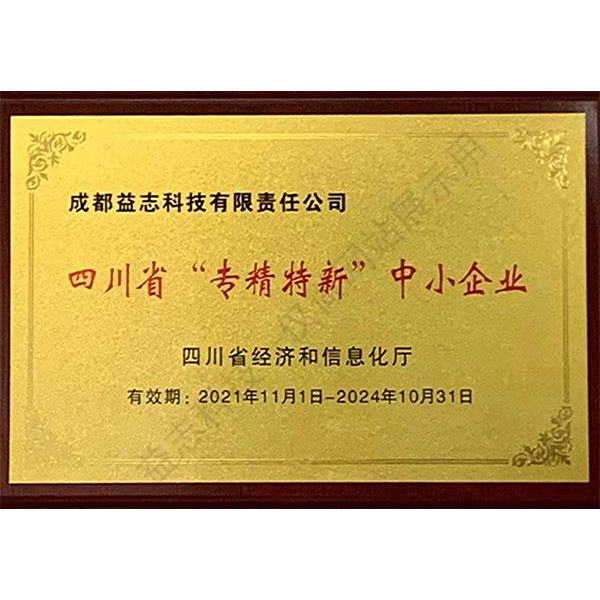
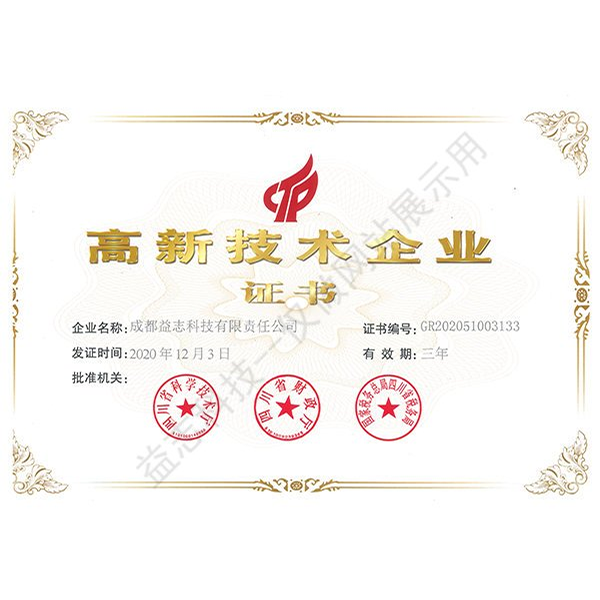
A striking example of this approach is the companyChengdu Yizhi Technology Co., which, in essence, is the design “hand” larger technology company. By going to their websiteyzkjhx.ru, you see not just a catalog of equipment, but an emphasis on engineering and EPC contracts. This is an important signal. They position themselves not as sellers, but as technology integrators, including for Russia. Their registered capital of 120 million yuan (this is a significant amount for an engineering firm) indicates their intention to take responsibility for projects.
Field testing: where theory meets reality
One of the most revealing cases that I personally observed was an attempt to implement a Chinese modular liquefaction plant at one of the remote fields in Western Siberia. The customer wanted to quickly and cheaply utilize associated gas. The Chinese side provided, on paper, an ideal solution: a ready-made module that only needs to be connected. But the classic “docking” problem arose.
Firstly, climate control. Equipment designed for China's temperate climate encountered Siberian temperatures of -50°C. We had to urgently modify the heating systems for small-diameter pipelines and instrumentation devices - a detail that was missed at the design stage. Secondly, documentation requirements. Russian PB and SRO standards, especially in terms of explosion protection and equipment certification, differ. The process of harmonizing Chinese certificates with Rostekhnadzor requirements took three times longer than planned.
This experience, although fraught with difficulties, was overall successful. The installation worked. But the main conclusion was this: success does not depend on the “box?” with equipment, but on the depth of pre-project analysis and the Chinese side’s readiness to adapt. Those companies that opened full-fledged engineering offices in Russia with local specialists who know the standards received a huge advantage. They can conduct a dialogue with the customer in the same language, literally and figuratively.
Technological nuances: not only large cycles
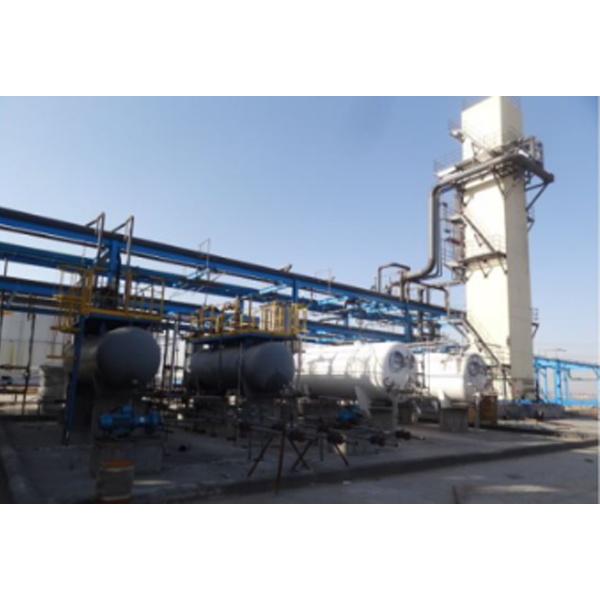
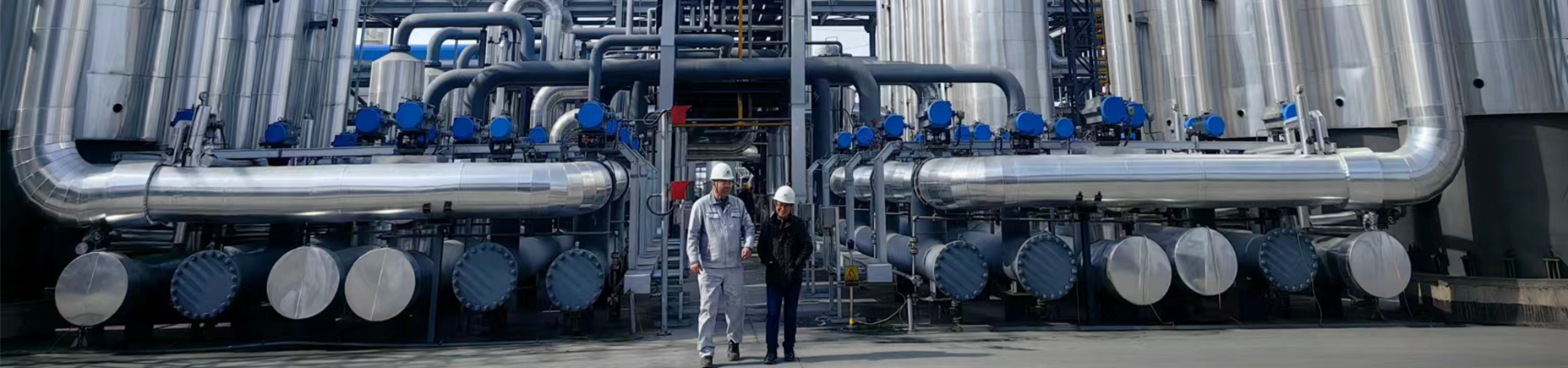
Talking aboutliquefaction technologies, everyone immediately remembers large-scale plants based on Air Products or Linde processes. But in Russia there is huge potential specifically for small and medium-sized capacities (from 0.5 to 100 thousand tons of LNG per year). Here Chinese developments came in very handy. We are talking about technologies based on the nitrogen cycle or cascade cycles with mixed refrigerants. Their advantage is a relatively quick payback and flexibility.
However, there are also pitfalls. For example, the efficiency (efficiency) of such installations with unstable or changing composition of raw materials. At one of the facilities in the Yamal-Nenets Autonomous Okrug, a Chinese installation designed for “ideal” methane began to lose performance when the nitrogen content in the gas increased. The problem was solved, but the gas treatment unit had to be modified on site, which led to unplanned costs. This is a lesson: liquefaction technology is inseparable from gas treatment technology. They need to be sold together, or better yet, as part of a single technological solution.
Another point is spare parts and service. Delivery is half the battle. Warranty and post-warranty service is what becomes the decisive factor for repeat contracts. Companies that have created warehouses in Russia for the most wearable components (seals, elements of recuperative heat exchangers, sensors) are taking the lead. Waiting two months for a valve to be delivered from Chengdu is unacceptable for the customer.
Looking to the future: integration instead of competition
Now, in my opinion, we are witnessing a transition from the phase of simple import of equipment to the phase of deep technological integration. Chinese companies are increasingly acting as non-competitors to Russian engineering giants like Gazprom Design? or NIPIgaz, and their partners or subcontractors in specific areas of work. For example, in projects related to the use of LNG as a motor fuel for quarry equipment or river transport.
Here, Chinese experience in creating compact, automated cryogenic filling stations has proven to be in great demand. Their solutions are often more ?digitized? — supplied with ready-made remote monitoring and control systems, which is a big plus for remote sites in Russia.
However, a trust barrier remains. Russian customers, especially government ones, remain wary of entirely Chinese technology lines for strategic facilities. The breakthrough will not be single deliveries, but joint projects, where the Chinese side takes on the liquefaction block, and the Russian side takes on the overall design, infrastructure and sales. Such pilot projects already exist, and their success will shape the landscape for the next decade.
Resume for a practitioner
So what do we have? Chinesegas liquefaction technologiesin Russia it is no longer exotic, but a working segment of the market. Their strength is not in fundamental breakthroughs, but in practical applicability, speed of deployment and price flexibility for medium and low power projects. The key trend is the transition from the sale of equipment to the sale of comprehensive engineering services with deep adaptation to Russian conditions.
The main risks still lie in the “soft” plane. factors: harmonization of the regulatory framework, climate adaptation, service logistics and the availability of local engineering support. Companies that are investing in creating such support in Russia, as it appears to be trying to doChengdu Yizhi Technologythrough their Russian-language portal, have a much better chance.
Ultimately, the question is no longer “do the Chinese have the right technology?”. They are. The question is how ready are both parties—the supplier and the customer—for the long, painstaking work of “grinding in?” these technologies to the harsh Russian reality. Those who understand this are already getting the first results. The rest continue to doubt and wait for “proven Western solutions”, which, perhaps, will no longer exist.