Is China a new exporter of LNG technologies for Russia?
2026-02-14
Lately, this question has been popping up more and more often in industry chats and on specialized platforms. Many, especially those who are accustomed to seeing China primarily as an importer of “know-how,” perceive the very formulation of the question with skepticism. But the reality we face on projects is different. We are not talking about loud statements, but about specific installations, components and, more importantly, about experience that has begun to be “packed”. and offered on the market. And the Russian market, with its request for diversification of technology partners, is an extremely indicative testing ground here.
From skepticism to specific contracts: how the landscape has changed
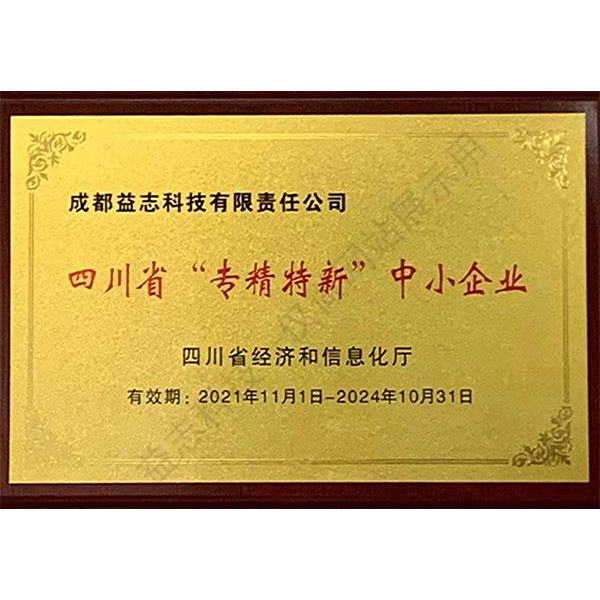
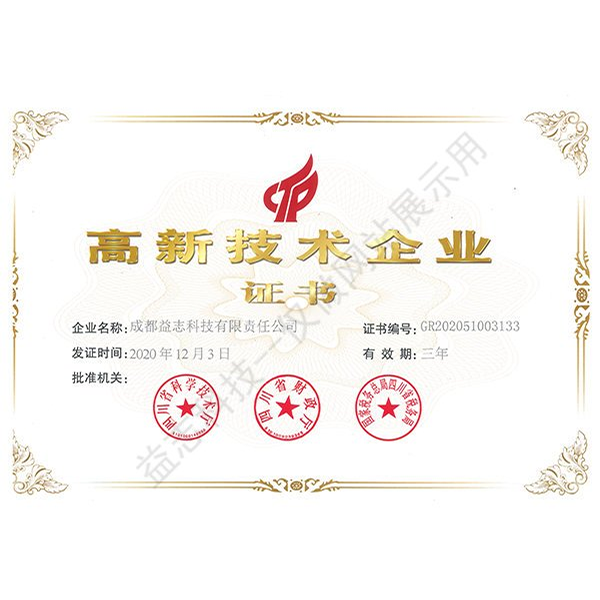
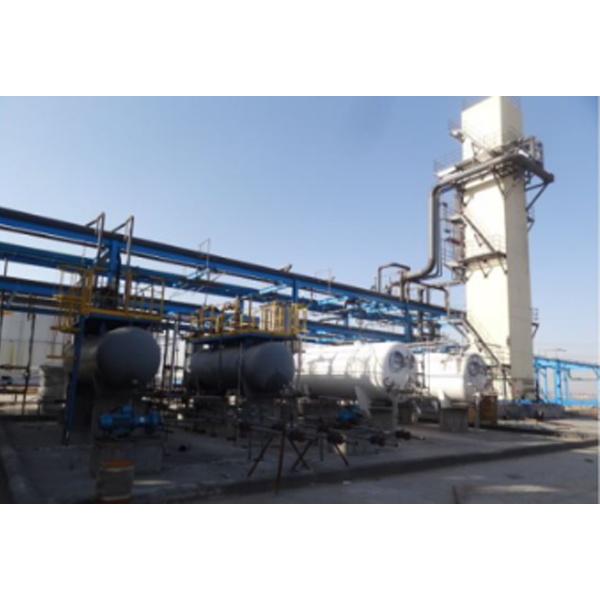
I remember that even five years ago, a conversation about Chinese liquefaction technologies at a serious meeting could only evoke a polite nod. The main players were known: Air Products, Linde, Shell. Chinese companies were perceived more as construction contractors, and sometimes as suppliers of standard equipment such as cold-box heat exchangers. The turning point, in my opinion, was not just one high-profile deal, but the accumulated critical mass. At first these were small installations for liquefying associated gas (APG) in fields, where the key was not the world record of efficiency, but adaptability, speed and price. Chinese engineering companies such asChengdu Yizhi Technology Co., have gained vast practical experience here.
Their websiteyzkjhx.ru, by the way, is quite indicative - it is not just a business card, but a portal with a technical library and cases, aimed specifically at Russian-speaking specialists. It is clear that working in our market is not a one-time event. The company positions itself as a design institute with a registered capital of 120 million yuan, established by Huaxi Technology. This is an important signal: we are talking about a structure designed for the full design cycle, and not just for the sale of equipment.
Now we see a transition to more complex objects. We are already talking about medium-tonnage LNG plants, gas purification and preparation technologies with strict composition requirements. The key difference is that Chinese suppliers have begun to offer not just hardware, but technological solutions tailored to local conditions. For example, adaptation to the specific composition of Russian gas or requirements for operation at low temperatures. This is already the level of a partner, and not just a vendor.
?Iron? and “software”: what exactly they deliver and what are the pitfalls
If we break it down into components, export goes in several directions. The first is, of course, cryogenic equipment: heat exchangers, separators, capacitive equipment. The quality has grown noticeably, although ten years ago there were big questions about this. The second is modules. The strength of many Chinese companies is modular design and delivery of highly prefabricated units. For remote Russian fields, this is often a decisive factor in terms of installation time and cost.
But the most interesting thing is “software”, that is, technological processes and design. Here there are still areas of mistrust. Many Russian customers ask: “Is your technology licensed?” Did you develop it yourself or is it reverse engineering??. Direct answers are often not given, and this is normal - a trade secret. However, working withChengdu Yizhifor one of the gas treatment projects, we saw their own calculation base, modeling in HYSYS, and in-depth study of process flow diagrams. This is not a ready-made license purchased from third parties, but our own engineering. Another question is how this scheme will behave after 15 years of continuous operation. They still have less experience with such long cycles.
Everyone has encountered pitfalls. The classic story is one of discrepancies in documentation. Translating P&ID from Chinese into Russian or English sometimes resulted in huge inaccuracies in valve specifications or control logic. It took several weeks to check each line. Another point is cultural differences in the approach to technical safety. Their standards (GB) and our understanding of industrial safety, based on Soviet scientific and technical documentation and Western experience, sometimes conflict. Finding a compromise is a separate job for the foreman and the engineer.
Case: unobvious difficulties with the “cold box”
Let me give you an example from practice. One project involved the supply of a main heat exchange unit. The Chinese partner offered a very competitive price and terms. But upon closer examination, it turned out that their standard design is designed for a certain range of ambient temperatures, and our site was in a region with more extreme winter minimums. Their engineers first stated that “this will do, we have a reserve?”. It took real debate, additional calculations and, ultimately, modification of the design. This showed that their standard solutions sometimes require serious adaptation, which they do not always initiate themselves - they need to put pressure and control.
Why Russia? Strategy vs market conditions
It may seem that Chinese companies came to our market solely because of the departure of Western vendors. This is only part of the truth. Yes, the window of opportunity has opened wider. But their expansion began earlier. Russia is an ideal springboard for them: geographically close, there is a demand for import substitution, and most importantly, our market is technologically complex and demanding. If your solution works here, this is a strong signal for other markets - Central Asia, the Middle East.
In addition, there is financial logic. Chinese banks and funds (?Belt and Road?) often partner with technology companies, offering a comprehensive solution: credit + technology + construction. For many Russian investors, especially in the middle segment, this is a convenient “package”. CompanyChengdu Yizhi Technology Co., Ltd., judging by its structure and connections with Huaxi Technology, operates precisely in this logic - as part of a larger technological and financial holding company.
But there is also a downside. Some Russian companies, having gained first experience, now want to “disassemble the package”: take funding from one source and technology from another, perhaps even Western ones, if there is such an opportunity through third countries. This is a new headache for Chinese suppliers, who find it more profitable to sell everything together.
The future: competition or symbiosis?
So will China become the new leading exporter of LNG technologies to Russia? Already established himself in certain niches. For small and medium-sized projects, for APG utilization solutions, for modular installations - they are already strong competitors. Their main trump cards are speed, cost and willingness to take on non-standard tasks.
However, at large, basic LNG plants such as Arctic LNG-2? or future projects in Yamal, a complete replacement of traditional licensors in the near future is unlikely. Rather, we are talking about symbiosis. We can see hybrid schemes: the basic technology is Western (or Russian, if NOVATEK brings its own to fruition), and a significant part of the equipment, modules and construction work is Chinese. Or vice versa: Chinese technology with key imported equipment (for example, turboexpanders or compressors).
The main challenge for Chinese exporters now is not technology, but the creation of full-fledged service and engineering support in Russia. Opening representative offices with real engineers, not sales managers, creating spare parts warehouses, training local personnel. Without this, they will remain in the category of “equipment suppliers” rather than “technology partners”. The first steps in this direction, as can be seen from the active positionyzkjhx.ru, are already being done. It will be interesting to watch.
As a result, the answer to the question from the title is yes, China has already become a new and significant exporter. But not the only one and not everywhere. The market has become more complex, and we, as practitioners, have a headache in choosing, but also more room for maneuver. Which, in general, is not bad.