China: LNG pressure and ecology?
2026-02-14
This is a question that constantly comes up in conversations at exhibitions or when discussing new projects. Many, especially from the outside, see this as a simple choice: either we increase our capacityLNG, or take care ofecology. In practice, everything is lubricated like oil on an old flange. Pressure - technological, market, and political - creates such a complex picture where environmental imperatives are not canceled, but are strangely intertwined with the need for infrastructure development. I’ll try to sketch out some observations based on what I saw and participated in.
The illusion of simple choice and the reality of projects
I'll start with a common misconception. It is often thought that environmental standards in China are just a piece of paper. for show. Previously, maybe it was like that. Now, especially after the tightening of the “blue sky” policy, any serious project, be it a new terminal or modernization of a plant, rests on environmental assessment so that mother don’t worry. I myself participated in the preparation of documentation for a gas processing project in Sichuan province. It would seem that gas is cleaner than coal, what are the problems? And the problems began with assessing the impact on water resources and modeling the dispersion of emissions. Local ecologists forced us to recount them three times, using methods that had only just come out.
And here the first real thing arisespressure. Deadlines. Investors are waiting, contracts have been signed, and you are sitting and waiting for approval from the Environmental Protection Agency. This is not bureaucratic red tape in its purest form - they really find fault with the details. I remember that on the same project they argued about an emergency pressure relief system at the futureLNG-stations. The standard scheme was not satisfactory; they demanded a more expensive option with an additional vapor recovery stage. Argument: Even an accidental release should not exceed the VOC (volatile organic compound) standard in the area. It was necessary to redraw part of the technological scheme, which entailed a revision of equipment specifications.
What did it give? On the one hand, there is an increase in capital costs and a shift in the monthly schedule by three. On the other hand, the project really became more “green”, and this later played a role in obtaining construction permits. But at the decision-making stage, such subtleties place a heavy burden on engineers and management. The balance between speed of implementation, cost and environmental friendliness is a constant search for compromise, and not following beautiful slogans.
Technological pressure: between import and localization
Talking aboutLNG, you can’t ignore the topic of technology. China is increasing its capacity at a gigantic pace, but somewhere up to 70-80% of critical equipment for large base terminals - heat exchangers, pumps, control systems - was imported until recently. This creates its own pressure: supply chains, currency risks, dependence on foreign services. Now, of course, localization is actively moving forward. But here’s a nuance: when you start working with Chinese analogs of, say, cryogenic fittings or measurement systems, sometimes you encounter inconsistencies.
I had experience on a small peak station project. We decided to save money and buy cryogenic pumps forLNG. On paper, the characteristics are ideal, the price is attractive. In practice, during commissioning, problems with vibration emerged in certain modes that were not provided for in the passport. The manufacturer, of course, promptly sent engineers and finalized it on the spot. But downtime and additional work consumed all the savings. This is a typical situation: there is a technological breakthrough, but there is experience in debugging and “running in”. equipment in real, not test conditions - accumulates more slowly.
And here he comes on stage againecology. Because unreliable equipment means not only economic losses, but also a potential risk of leaks and abnormal emissions. The environmental safety of the system lies in its reliability. Therefore, now many design institutes, even when choosing localized components, use a larger safety margin or redundant systems, which again affects the cost. This is a hidden environmental tax that is not written about in press releases.
Sichuan: gas hub and environmental restrictions
Regions like Sichuan are a special topic. Shale gas deposits, a developed pipeline network, and now also ambitions to create a hub forLNGfor supplying remote areas and transport. It seemed like an ideal place to grow. But Sichuan is also an environmentally sensitive region, a river basin important for the entire country. The construction of any industrial facility here is top notch in terms of approvals.
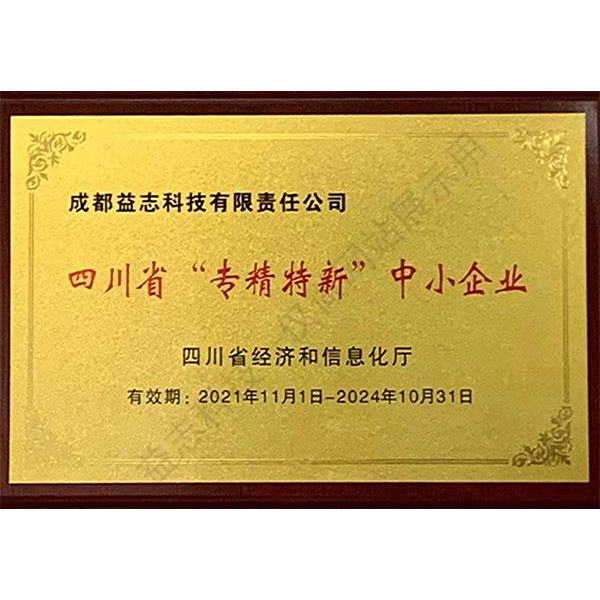
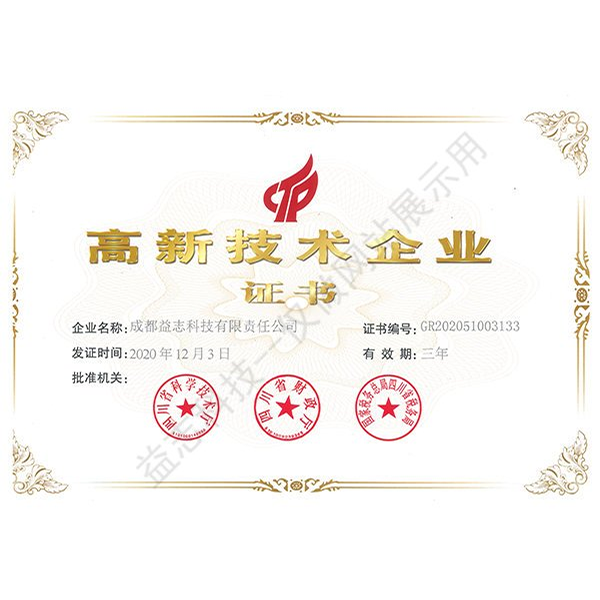
I am familiar with the work of the instituteChengdu Yizhi Technology Co. (https://www.yzkjhx.ru). This is exactly the same design institute created by Huaxi Technology. They often deal with just such complex projects “at the junction”. In their experience, integration is key. You can’t just design a production line and then “screw it on?” treatment facilities to it. Everything must be designed as a whole from the very beginning. For example, for one of the gas liquefaction projects, they proposed a solution where the heat from the liquefaction process was partially utilized for the needs of a neighboring wastewater treatment plant in the same industrial complex. It would seem like a small thing. But this approach made it possible to meet the strict limits on energy consumption per unit of production that apply in the area.
Their approach, as I understood from the discussions, is not to fight environmental restrictions as an annoying obstacle, but to build them into the very logic of design. Registered capital of 120 million yuan, which is stated in the descriptionChengdu Yizhi Technology Co., Ltd., allows us to attract serious personnel and develop such non-standard solutions. But this is not a panacea either. They also talked about a case when they offered a client a more expensive, but closed water supply system to minimize discharges. The customer initially refused - it was expensive. But when at the stage of environmental assessment it became clear that it would not be possible to obtain permission for water intake and discharge in the required volume, they returned to this option, losing six months. The pressure from the regulator turned out to be stronger than the initial desire to save money.
Transport and distribution: where the pressure is felt physically
People often talk about large terminals, but the “last mile” is no less interesting. - distributionLNGby road or small ship. This is where the pressure becomes almost physical. The safety of transporting cryogenic product through densely populated areas is a constant nightmare for logisticians and inspectors. Each gas station forLNG-trucks are a high-risk object.
I worked with one operator of such a network of stations. Their main headache is not so much the price of gas, but compliance with all regulations during daily operations. For example, the requirement for zero vapor emissions during refueling (the so-called zero boil-off technology). Everything is there on paper: sealed connections and vapor recovery systems. But in the field, in cold or hot weather, when the staff is tired and there is a queue of trucks, there is always a temptation to simplify the procedure. One small leak - and environmental sensors, which are now installed on almost every pole around such objects, can record an excess. The fines are huge, including license suspension.
This creates a completely different typepressure- operational, human. Technologies must be not only modern, but also “foolproof”. And here again the connection with ecology is direct: the best environmental policy is broken by the reality of exploitation if it cannot be observed day after day without titanic efforts. Therefore, the current trend is towards maximum automation of such processes in order to minimize the human factor. But again this is money and complexity.
Looking forward: integration instead of confrontation
So where is all this going? Based on what is seen in recent projects, the trend is integration. Not ?LNGORecology?, and ?LNGAS PART OF THE ENVIRONMENTAL STRATEGY?. Increasingly, new terminals are being designed to use renewable energy for part of their needs (for example, electric pump drives). Or are projects for the production of “green” being considered?LNGfrom biogas, although these are more pilot stories for now.
But the main conclusion that emerges from practice is that the pressure will not go away. It will change. Technological pressure will decrease as localization competencies increase. But the pressure of environmental regulations and, more importantly, public expectations will only grow. Successful projects and companies will be those that stop perceiving the environment as a cost or obstacle. Like the same specialists fromChengdu Yizhi Technology Co., who are trying to fit environmental parameters into the core of the project.
It's complicated. This requires different thinking, more expensive solutions at the first stage and a willingness to make compromises not with the regulator, but with one’s own customary technical solutions. Failed attempts, like the story with pumps or the abandonment of a closed water cycle, teach us that short-term savings often turn into long-term problems and losses. The industry learns, although sometimes from its own mistakes. And this, probably, is the answer to the question from the title: pressure inLNGand ecology is not a tug of war, but a complex balancing process where the balance is never static. It needs to be constantly rebuilt at every new project, at every new station.