China: LNG technologies - new products?
2026-02-15
When they talk about Chinese technologies in the field of LNG, many people immediately think about scale - giant terminals, long pipelines. But real ?new products? are often born not there, but in an area where engineering solutions run into specific, sometimes unobvious, operational problems. This is not about abstract “innovations”, but about how to adapt known principles to the real conditions of Chinese fields, logistics, and, importantly, to the changing market requirements for flexibility and economics. It is this application, “finishing”, that is often overlooked. layer of work.
From ?iron? to system solutions: where the novelty lies
Previously, the focus was on basic equipment - heat exchangers, compressors, tanks. Now the question has shifted. The novelty is in the integration. How to relate, for example, a gas pre-treatment module to fluctuations in its composition at a specific field in Sichuan? This requires not just the purchase of an installation, but a thorough refinement of the technological scheme. At one time, we were faced with the fact that the standard licensing scheme failed at high CO2 content. We actually had to re-design the absorption units and select reagents. This became that “new product?” - not a device, but a holistic solution for a specific type of raw material.
Another layer is miniaturization and mobility. Not everyone understands that for China, with its dispersed sources of gas (offshore fields, remote areas), it is sometimes more profitable not to build a giant plant, but to use modular, quickly deployable liquefaction plants. But this has its own headache: how to ensure the stability of the process in such a “compact” device? performance? Experience shows that the key is in the control and automation system, which compensates for the smaller stability margin of the devices. This is an area where Chinese engineering companies are now actively developing competencies.
You can also remember about energy efficiency. It would seem like a common place. However, in an environment where the cost of electricity varies greatly in different provinces, the ?new product? It becomes not just an efficient liquefaction cycle, but its adaptation to local tariffs. Sometimes it is more profitable to lose a little in specific energy consumption, but use a cheaper circuit with a different type of drive. Such calculations and recommendations are already a product for which the client is willing to pay.
Practical pitfalls: experience from projects
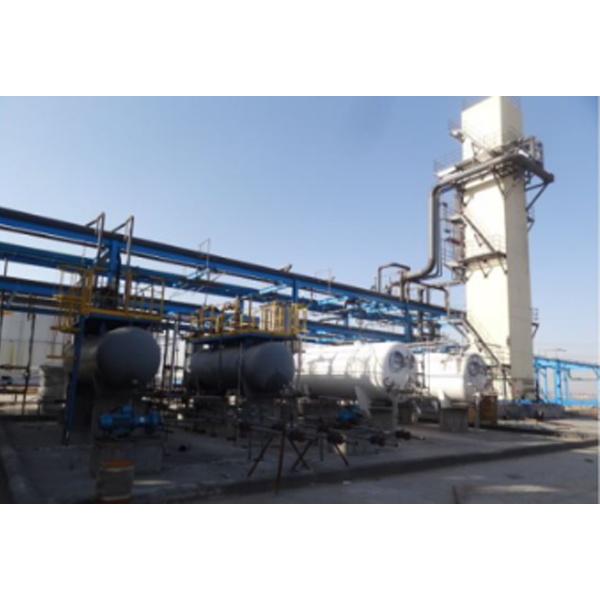
Theory is one thing, but launch is another. Let's take, for example, the story of one of the first projects to utilize associated petroleum gas (APG) using mobile LNG units in Northwestern China. The idea was beautiful: gas, which was previously flared, would be converted into LNG directly at the field and transported by road. But in practice, “little things” came out. Firstly, dust. The wind raised sand, which clogged the air coolers, efficiency dropped, and temperatures rose. We had to urgently modify the filtration system, and not the standard one, but a rougher and more reliable one. This was not the originally intended module.
Another common problem is fluctuations in pressure and composition of raw materials. On paper, designers receive average data. In reality, the pressure in the well can “jump”, and with it the dew point of hydrocarbons also changes. If the pre-drying and cleaning system does not have sufficient flexibility, this leads to freezing and stoppages in the main heat exchanger. We learned from such mistakes. Now, when designing, we make sure to include a wider range of operation for the cleaning unit, even if this makes the project a little more expensive. Reliability pays off in the end.
And of course, LNG logistics. It would seem that this is no longer liquefaction technology. But this is where new requirements for the product are born. For example, the demand for LNG with a guaranteed low nitrogen content for use as a motor fuel for long-distance trucks. This requires refinement of the fractionation process at the liquefaction stage. Not every plant can do this. And such niche requirements become the driver for new technological configurations.
The role of engineering: from drawing to commissioning
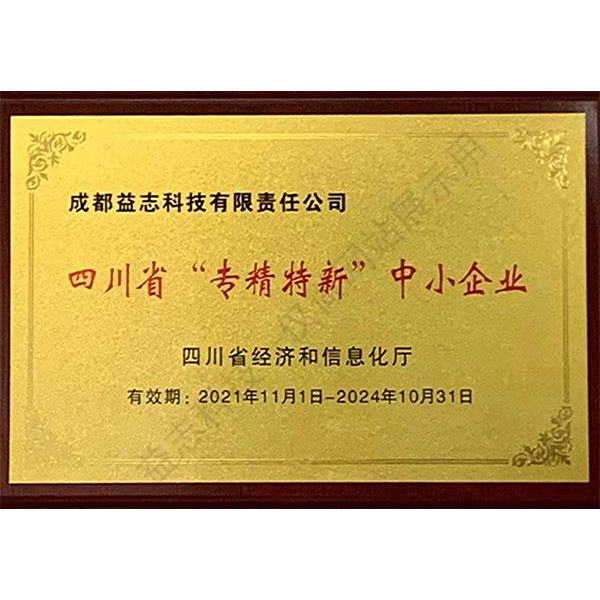
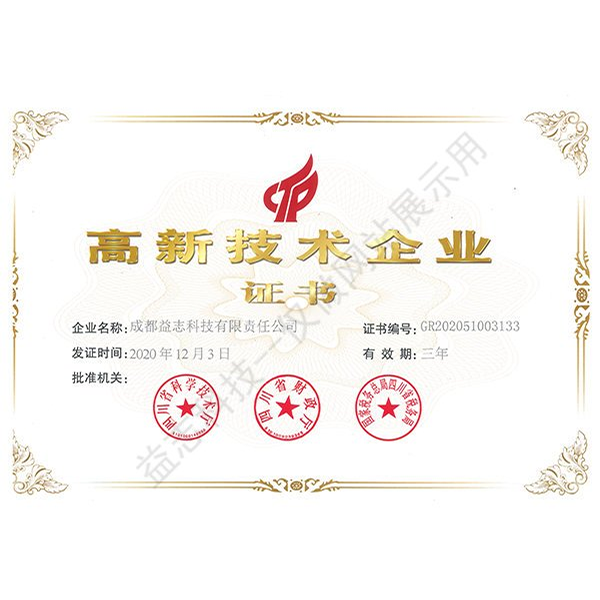
Here we cannot fail to mention the role of design institutes, which act as a link between fundamental developments and “hardware”. They are the ones who translate the requirements into working drawings and specifications. Let's take for exampleChengdu Yizhi Technology Co. (https://www.yzkjhx.ru). This company, established as a design institute of Huaxi Technology, with a registered capital of 120 million yuan, operates precisely in this plane. Their value lies not in inventing a new liquefaction cycle, but in correctly applying and adapting existing technologies to the parameters of a specific order.
From my own experience I saw what such work looks like from the inside. The client comes with gas data and performance wishes. Then an iterative process begins: choosing a basic technological scheme (for example, a nitrogen cycle or a mixed refrigerant), modeling it, and assessing the economics. But the most important thing comes later - detailed design. Where exactly should the shut-off valves be placed to enable isolation and repair? How to lay refrigerant pipelines to minimize hydraulic losses? These decisions, recorded in the drawings, determine the future reliability of the installation.
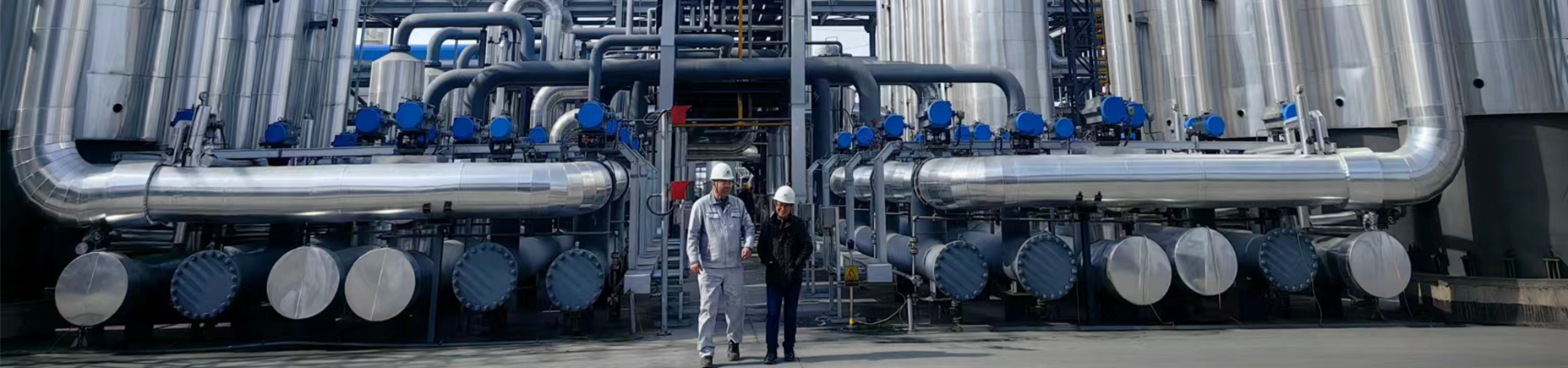
It is companies such asChengdu Yizhi Technology Co., often undertake both construction supervision and commissioning. This is critical. Because even an ideal project can be spoiled at the installation stage. The ability to spot an installer’s mistake, correct it in time, carry out a cold and hot run-in of the equipment - this is the very practical experience that distinguishes just a theory from a workable “new product”. Without this link, any technology will remain on paper.
Looking to the future: flexibility and digital
Where is the industry heading next? I see two key vectors. The first is to further increase flexibility. The gas market is becoming more and more dynamic. It may be beneficial for a plant not to operate around the clock at full capacity, but to quickly change modes depending on the spot price of gas and electricity. This requires new solutions in the field of dynamic modeling and control. LNG technologies will have to become “smarter”, capable of rapid reconfiguration. This is no longer just an engineering task, but a task for IT specialists who integrate into the team.
The second vector is digital twins. It's not just a buzzword. We are talking about creating an exact virtual copy of the entire LNG plant, which will receive data from sensors in real time. For what? For forecasting. The model will be able to predict, for example, when a heat exchanger will begin to lose efficiency due to contamination, and recommend the optimal time for cleaning, minimizing downtime. This is the next level of ?novelty? — the transition from reacting to problems to anticipating them.
But there are pitfalls here too. Digitalization requires a huge amount of high-quality data to calibrate models. And this data is often scattered or simply not available for new equipment. We will have to start small - with the digitalization of key nodes. And again, success will depend not on the beauty of the interface, but on how deeply the developers understand the physical and chemical processes inside this very heat exchanger or expander. Without an engineering basis, a number is useless.
Conclusion: the new is a well-rethought old
So are Chinese LNG technologies new products? If you expect revolutionary discoveries like a new principle of liquefaction, then perhaps not. But if you look at it from the angle of practical application, then the answer is yes. The novelty today is deep adaptation, integration, the ability to solve complex problems from the purification of raw materials to product logistics, taking into account local specifics and economics.
This is work that often remains behind the scenes. loud press releases. It lies in hundreds of small improvements, in the accumulated experience of failures and overcoming them, in the ability of the design institute, the sameChengdu Yizhi Technology Co., turn standard technology into a reliable and cost-effective solution for a specific field or consumer.
Therefore, the next time you hear about “new Chinese technologies in LNG?”, look not at the big names of the cycles, but at the details of the projects, at the experience of the team, at the list of successfully launched and stably operating units. This is where the real novelty and value lies. Everything else is just words.