China: argon purification - new technologies?
2026-03-16
When you hear “new technologies in cleaning archaeon from China?”, you immediately imagine some kind of breakthrough installations. But often behind this there are simply well-forgotten old principles, intelligently assembled into a new construct. Many people are waiting for a magic membrane or sorbent, but in fact - the same catalytic afterburning, pressure swing adsorption (PSA) and deep drying, it’s just that engineers have finally paid attention to the little things that they previously attributed to “technological losses”.
Not “new”, but “reassembled?”
Look here. Classic scheme: compression, preliminary purification from oils and moisture, then adsorption columns. The problem has always been at the entry point - if everything unnecessary is not removed at the front, the sorbent in the columns is poisoned many times faster. In China, about ten years ago, they were chasing cheapness and installing the simplest cyclone separators and carbon filters, which could not cope with aerosol fractions. The result is frequent replacement of expensive zeolite, downtime, and unstable quality of argon output. Now this seems to have been realized.
I saw several projects where the key ?know-how? called a multi-stage system of preliminary preparation. Essentially the same mechanics, but smarter. They install not one, but two or three coalescing filters of different fineness, with heating at the last stage, in order to be guaranteed to get away from the dew point. This is not a revolution, it's just adequate engineering. But for many industries, where argon is not the main product, but a by-product gas, such a “boring” optimization brings huge savings.
Or take control. Previously, they most often looked at pressure and dew point. Now new installations are required to install laser analyzers for oxygen and nitrogen, and not at the output of the final product, but between the purification stages. This allows you to adjust adsorption cycles in real time and catch the breakthrough in time. Without such an analyzer, you are working blindly. I remember that at one of the old production facilities in Sichuan province they were struggling with low product yield - it turned out that the valves on the PSA columns were not calibrated in time, and the cycle shifted. A trifle, but the losses amount to thousands of cubic meters.
Where does real progress lie?
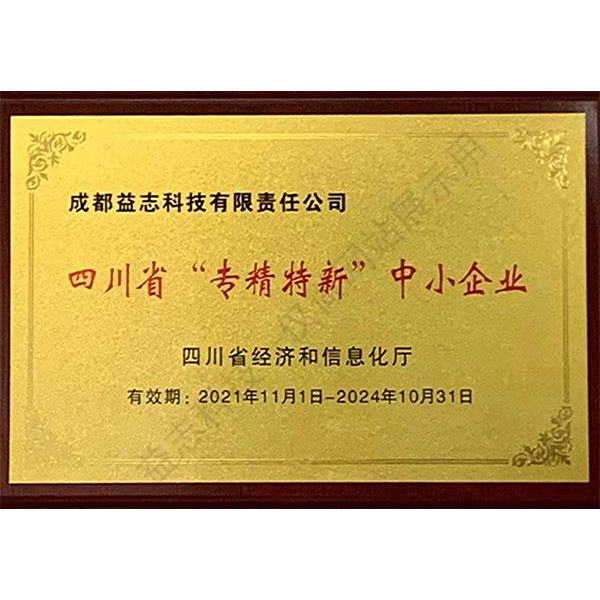
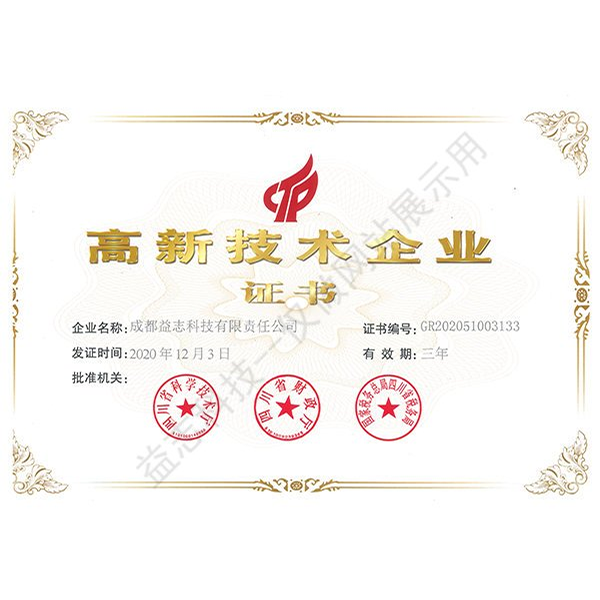
If we talk about truly new approaches, then we should look towards hybrid systems. I recently studied a project fromChengdu Yizhi Technology Co.— their engineers combine short-cycle, heat-free adsorption (SSA) followed by fine purification on metal-organic framework structures (MOFs). The idea is that the rough work - removing the bulk of O2 and N2 - is done by a fast and energy-efficient SSA unit, and the MOFs module brings purity to 99.9999% for key impurities. This is interesting because MOFs, despite their high cost, operate in a gentle mode here and deplete more slowly.
But this is not without pitfalls. MOFs materials are sensitive to residual moisture. If pre-drying fails, this entire high-tech stage can become unusable within a few cycles. BChengdu Yizhi Technology(their website, by the way,yzkjhx.ru, it’s useful to take a look) they honestly write in their materials that the key element of their system is not the MOFs module itself, but a reliable cascade of adsorber-driers in front of it. This is the professional approach: not to sell a “magic pill,” but to offer a balanced solution, where each step protects the next.
Another trend is modularity and scalability. Previously, installations were designed for a specific performance “on paper”. Now they often come from modules. If you need more, you add parallel adsorption columns or increase the size of the dryers. This seems obvious, but in China it has only been about five years since this became the standard for engineering companies, such as the mentioned design instituteChengdu Yizhi Technology Co., created by Huaxi Technology. Their approach is standard, but highly customizable blocks.
Mistakes that are still repeated
The most common is saving on materials for pipelines and shut-off valves after cleaning. Let's say the installation produces excellent 99.999% argon. But if the distribution to the consumer is made of ordinary carbon steel or leaking fittings, the gas becomes re-contaminated. I saw a case at a LED production plant: they were struggling with cleanliness, but the problem was in an old section of pipe about ten meters long that had not been completely blown through. Replacing with electropolished stainless steel pipes and soldering in an inert atmosphere resolved the issue.
Another mistake is ignoring the source of raw materials.Argon purification- this is not alchemy. If at the input we take waste gas from ammonia production with a high content of hydrogen and carbon monoxide, then the purification scheme should be completely different, with catalytic converters. They often try to connect the same installation, configured for an air separation shop, to another source. The result is disastrous.
And, of course, the human factor. Automation is good, but staff must understand what they are doing. At one of the facilities, after modernization, the system worked perfectly until the shift changed. The new operator, in order to “save energy,” turned off the heating for adsorbent regeneration. After a week, the dew point at the outlet crept up, and after another two the line had to be stopped for an unscheduled replacement of the sorbent. No new technology will save you from improper use.
Practical case: from idea to result
I would like to give an example of not a high-profile project, but a typical one. A small metallurgical plant needed its own argon for melting; buying it in cylinders was expensive. We turned to local engineers, who proposed a PSA-based scheme with cryogenic finishing cleaning. Everything is according to the textbook. But at the commissioning stage it turned out that the pressure in the raw argon network (a by-product from another process) was fluctuating greatly. The standard PSA installation started to fail.
The solution was not to replace the technology, but to add a simple large-volume buffer receiver before entering the installation. He smoothed out the pulsations. It cost pennies compared to the entire system, but without it the project would have failed. Here it is - ?new? often born from an understanding of old, conservative principles of reliability.
After the pressure stabilized, the main problem shifted to the dew point. The cryogenic unit was effective, but consumed a lot of energy. Engineers, already from another company (it seems just related toChengdu Yizhi), proposed an experiment: replacing one of the dryer stages with a more capacious new generation zeolite with improved water absorption kinetics. This made it possible to increase the cycle between regenerations and reduce the load on the cryogenic part. Energy savings - about 15%. Not a breakthrough, but significant for business.
Now this installation operates stably, producing 99.995% argon. The main conclusion that customers made for themselves: success does not depend on one super technology, but on a combination of competent basic design, high-quality execution and constant fine-grained optimization for specific conditions.
So what is the end result with “new technologies”?
To summarize, China currently does not have any one “secret weapon?” in argon purification. There is a general trend towards a systemic rather than a narrow technological approach. This means: more attention to the preparation of raw materials, more sensors for monitoring, more flexibility in design and a willingness to combine proven methods (like PSA) with promising materials (MOFs, new zeolites) where it gives a real economic effect.
Progress does not come in giant leaps, but in small but important steps. Improving the efficiency of heat exchangers by 3%, a new algorithm for controlling adsorption cycles, which extends the life of the sorbent by 20%, more corrosion-resistant alloys for the insides of devices - this is what modern “new technology” is made of.
Therefore, when you see the headline “China: new technologies for argon purification?”, you should understand it rather as “China: new, more comprehensive and thoughtful solutions in the field of argon purification?”. And this is perhaps even more important. After all, reliability and total cost of ownership ultimately decide everything. And judging by the number of projects that are now being implemented both domestically and for export, this path - through competent engineering, and not through the pursuit of sensation - is justified.