China: argon purification - new technologies?
2026-03-16
When do you hear ?argon cleaning? and ?China? in one sentence, many immediately think about cheap installations or copies of Western projects. This is an outdated view. In fact, over the past seven or eight years, the approach has changed radically - now we are talking about complex solutions, where the keyword is not just “cleaning?”, but specificallytechnology integration. I myself worked on several objects, and it is clear how the focus has shifted from a single piece of equipment to the entire chain: from raw materials to dew point control. But there are also plenty of myths, especially about “newness”. Often, well-forgotten old technology is sold under new technology, just with a different interface.
Where do the legs of “new technologies” come from?
It all started with tightening requirements within China itself. I remember ten years ago the standards for argon purity for the electronics industry were conditional; many made do with simple adsorption. Then we had to catch up - especially when our own semiconductor lines began to require stable O2 < 1 ppm. This prompted the development. I won’t say that everything was invented from scratch, but adaptation to local conditions, to specific raw materials (which could be dirtier) is a separate work. For example, the samedeep cleaningfrom nitrogen: in Europe, palladium membranes are often used, but in our country, due to the cost and complexity of maintenance, we have taken the path of combined PSA cycles with catalyst modifications. It didn't always work out the first time.
I had experience at one plant in Jiangsu - they tried to introduce cascade cryogenic distillation to remove CO. On paper, everything is perfect, but in practice, the raw argon from metallurgical production produced such hydrocarbon impurities that the columns clogged within a month. We had to supplement the catalytic pre-treatment system on the fly, which was not originally installed. This is the same “new technology”? - often it is born not in the laboratory, but on the site, from attempts to solve a specific problem that cannot be described in textbooks.
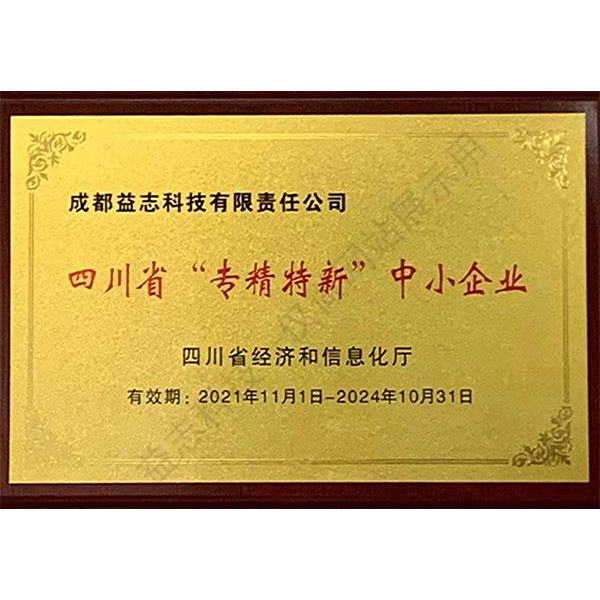
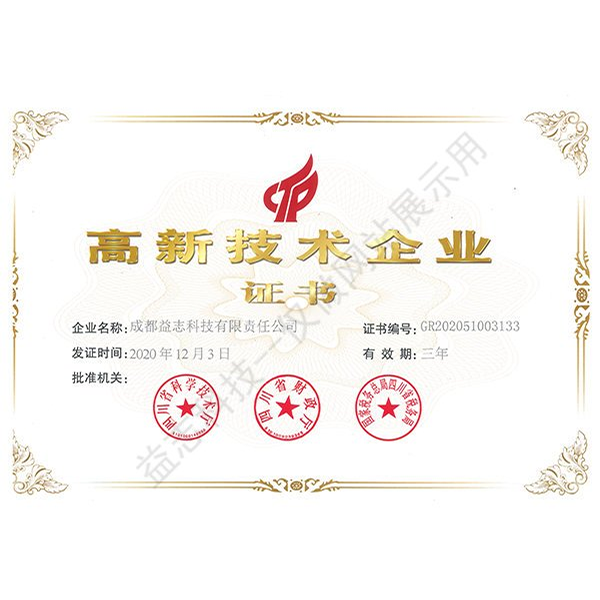
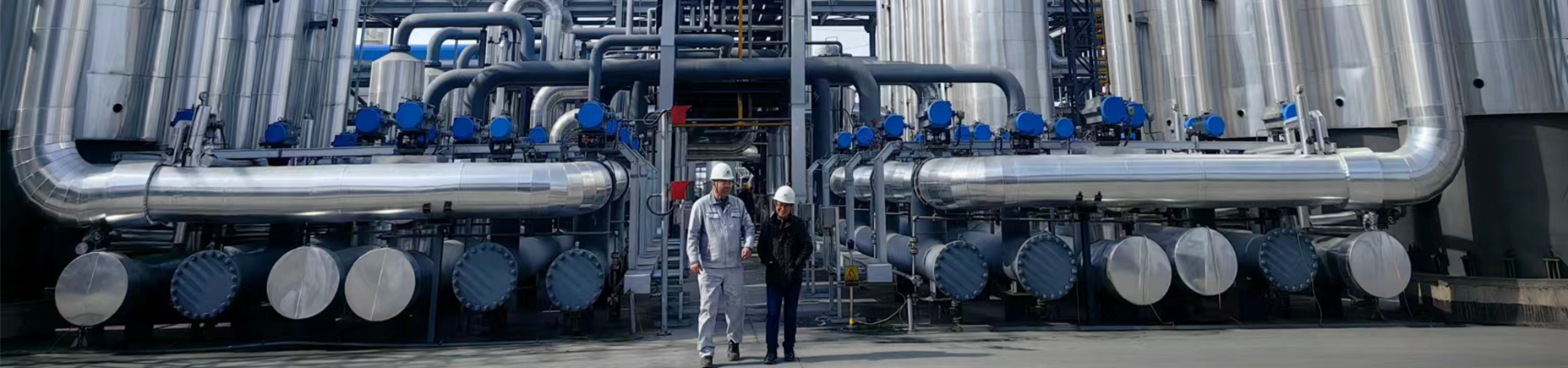
It is in such conditions that companies appear that do not just sell equipment, but lead projects from idea to launch. Like for exampleChengdu Yizhi Technology Co.(their website isyzkjhx.ru). This is not a random intermediary, but a design institute established on the basis of Chengdu Huaxi Chemical Technology. With a registered capital of 120 million yuan, they can afford not just to replicate drawings, but to engage in engineering. In their case, ?new technologies? - this is often a synonym for “adapted to contractual conditions”. I saw their installations for purifying argon for photovoltaics - there the emphasis is on energy efficiency, because the client counted every kilowatt.
What is hidden behind fashionable terms?
Nowadays everyone is talking about “intelligent control?” and “digitalization?”. In argon purification, this often comes down to banal sensors and PLCs. But that's not the point. The real change is in predictive analytics. For example, knowing the dynamics of pressure changes in adsorbers and historical data on the quality of raw materials, the system can predict when efficiency will decreaseoxygen removaland offer to adjust the cycle. This is not science fiction; such systems are already installed. But again, in China they often do this “in their own way?” — without buying expensive licensed software, but by developing algorithms based on accumulated data from dozens of objects. It works more roughly, but is several times cheaper and, most importantly, can be repaired by local engineers.
Another term is “highly efficient adsorbents”. Previously, zeolites were purchased from UOP or CECA. Now they are actively promoting their developments, for example, based on modified zeolites like LiX. The problem is stability. On one project, we suffered for six months with a Chinese analogue - the initial characteristics were excellent, but after 300 regeneration cycles the capacity dropped by 20-25%. Together with the supplier, who was one of the subsidiaries of Huaxi Technology, we had to select regeneration modes: we lowered the temperature, changed the purge profile. We found an acceptable resource. So what is ?new technology? adsorbent is often a new technology for its operation.
Assistance systems are often overlooked. Let’s say everything works perfectly, but the compressor for recirculating argon is so noisy that you can’t be on site. Or the compressed air drying system for instrumentation fails to cope, and the valves freeze. These "little things" ultimately determines whether the installation will run 8,000 hours a year or become a headache. At the design stage, it is necessary to introduce non-standard solutions - install additional receivers, change the wiring diagram of refrigerators. This is the very practice that you will not find in catalogs of “new technologies”.
Example from the field: when theory meets reality
I’ll tell you about an incident about five years ago. The customer needed argon with a purity of 99.9999% for growing crystals. According to calculations, an installation with final purification with hydrogen (hydrogenation of residual oxygen) and deep drying was needed. We chose a seemingly proven scheme. But they didn’t take into account that the hydrogen was supplied in cylinders, and its pressure “jumped”. As a result, the dosage was uneven; the reactor was either under-burning or overheating. The control system couldn't keep up. It turned out that it was necessary to install a buffer tank and calibrate the supply system for real pressure fluctuations - a trivial thing, but in the original project it was ignored, because “according to the textbook?” hydrogen flows with a stable pressure.
Or another aspect is the logistics of spent adsorbents. Not everyone realizes that some modules, especially after cleaning from heavy hydrocarbons, become hazardous waste. At one of the facilities, the issue of disposal arose. I had to look for a local contractor and separately specify the procedures in the regulations. This is also part of the technological chain, which is rarely written about in advertising brochures aboutargon purification.
Now many Chinese integrators, includingChengdu Yizhi Technology, began to offer not just delivery, but a long-term service contract with online monitoring of key parameters. For the client, this is often more reliable than the “newest” one. installation left to the mercy of fate after launch. The company, as a design institute, has the ability to conduct such full-cycle projects, which, in essence, is their key technology - the technology of support and responsibility for the result.
Where is everything going and what's the catch?
The trend is obvious - there will be more automation and a desire for unmanned production in the future. But in the case of argon purification, there is a nuance: humans cannot be completely excluded. We need control, sampling, maintenance. Therefore, ?new technologies? are now often aimed at assisting the operator rather than replacing him. Augmented reality for displaying parameters on glasses, voice prompts during regeneration - this is what they are trying to implement.
The danger lies elsewhere. The market is flooded with offers where, under the guise of innovation, they sell outdated schemes with a beautiful interface. The criterion is simple: if you are offered a ?revolutionary? installation with several times smaller dimensions and energy consumption, but are not ready to provide data from a pilot installation or links to actually working objects (preferably more than one), this is a reason to be wary. Real developments always have a history of trial and error, and are not born in an ideal form.
Another point is versatility. They often try to create a “boxed solution?” for all occasions. But the composition of impurities in raw argon can be radically different at a metallurgical plant and at a solar panel plant. Therefore, configuration flexibility, the ability to replace or add modules (say, an additional stage for hydrogen removal) is a more important feature of modern technology than a loud name.
Results without gloss
So, China and new technologies in argon purification? Yes, there is movement, and it is serious. But this is not a breakthrough “out of nowhere”, but an evolutionary path, often driven by practical problems and strict market demands. The key is the shift from copying to adaptive engineering. Companies like Chengdu Yizhi Technology Co., Ltd. here they are just indicative: their strength is not in one super technology, but in the ability to comprehensively manage a project, taking into account pitfalls that are known only from experience.
The most valuable ?technology? today it is not a patent for a sorbent or a scheme, but accumulated data and the ability to apply them. Having seen a “new control system” in the specification, it is worth asking: based on how many thousands of hours of operation of real installations was it trained? The answer to this question will say more than any advertising slogan.
Ultimately, what matters to the consumer is not how new the technology is, but how predictable, maintainable and economical it is in his or her specific conditions. And this is where Chinese suppliers, who have gone through the school of their own complex projects, become truly interesting partners. They have already passed the stage of simple copying and now offer solutions that include both an understanding of global trends and knowledge of the local, sometimes harsh, industrial reality.