China: CO2 adsorption products during high pressure pressure treatment?
2026-03-09
When you hear about CO2 adsorption under vacuum desorption conditions, many people immediately think of zeolites. This, of course, is a classic, but in reality, in Chinese installations, everything often comes down to details - what kind of zeolite, how it was activated, and most importantly - how it behaves not in an ideal laboratory, but after six months of work on a real flow with impurities. This is where the real surprises begin.
From theory to “field” conditions
We took, for example, the standard 13X. On paper the capacity is excellent. But when they started using the flow of exhaust gases from methanol production, where in addition to CO2 there are also traces of sulfur and moisture floating, after a couple of months the efficiency dropped noticeably. It’s not catastrophic, but the economics of the project have gone bad. It turned out that even trace amounts of some compounds irreversibly “clog”? part of the pores We had to think on the fly about a pre-drying and cleaning system, which increased the cost of capital costs. This is a typical mistake in the initial technical specifications - they look at pure CO2, and not at the real gas matrix.
This is where the difference between just an adsorbent and a product ready for use in the VDD cycle comes to light. The key is stability during multiple cycles of “adsorption-vacuum regeneration”. The material must not only absorb CO2 well, but also release CO2 easily and completely at reduced pressure, without being destroyed by constant changes. I saw samples that after 5000 cycles lost up to 20% of their granulometric composition - they turned into dust and clogged the lines.
Therefore, now many Chinese manufacturers, especially those who work in conjunction with engineering companies, rely on modified materials. I will not name specific brands, but the essence is a targeted change in the surface, for example, impregnation with amines or the introduction of specific cations. This is no longer just a “molecular sieve”, but a more selective “catcher?” CO2. But the price is correspondingly different. The question is always a balance: is the customer willing to pay for long service life and stability.
Case: integration with production
I had experience at one of the chemical plants in Sichuan. The task is to capture CO2 from furnace gases for subsequent carbonization in the production of soda. Classic scheme. We chose an adsorbent based on activated carbon with a special structure, since the adsorption rate was also important - the cycles should be short.
The most interesting hemorrhoids began at the commissioning stage. The vacuum pump, which was ideally suited according to the passport, in practice could not quickly reach the required residual pressure in the column, the desorption time was delayed, and the entire technological cycle was disrupted. Together with the plant engineers, we had to review the entire piping - we increased the diameter of the lines and installed additional buffer tanks. Conclusion: the adsorption product is only part of the system. Its characteristics must be strictly linked to the parameters of all other equipment - compressors, vacuum units, control systems.
By the way, about control systems. Modern VDD installations are no longer manual valves. Automation that switches valves and regulates cycles is critical to efficiency. A poorly written algorithm can ?overexpose? adsorbent under vacuum, wasting extra energy, or, conversely, not regenerating it. I saw how the purity of production CO2 dropped because of this. Moreover, the problem did not emerge immediately, but after weeks, when there was a gradual accumulation of ballast in the columns.
The role of engineering and niche solutions
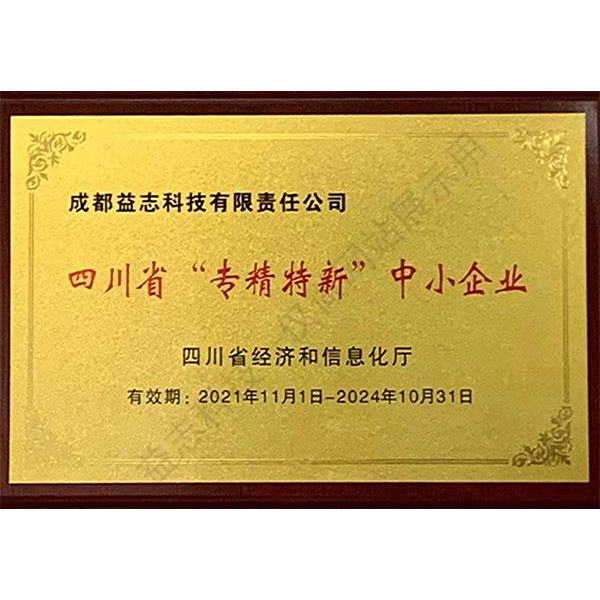
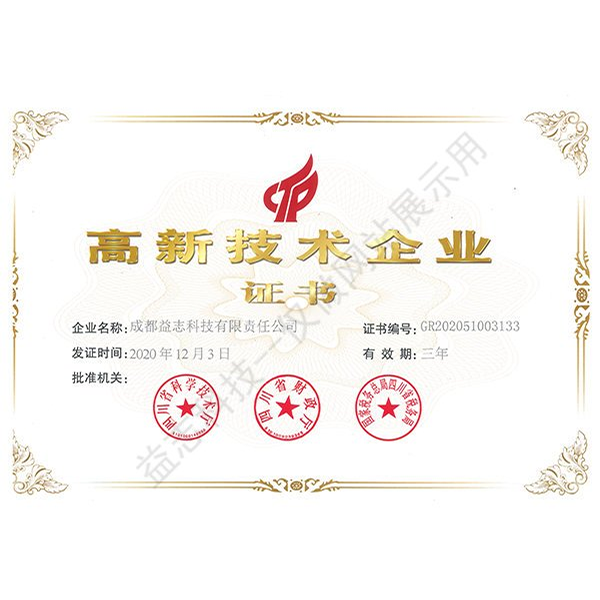
This is where it is important to mention specialized companies that are engaged not just in the sale of chemicals, but in the full cycle - from development to commissioning. Let's take, for example,Chengdu Yizhi Technology Co.. This is their website -https://www.yzkjhx.ru. They are not just a supplier, but a design institute created on the basis of chemical technologies. In their case, it is often about creating a solution for a specific customer flow. The registered capital of 120 million yuan allows for serious R&D.
I worked with their specialists on one biogas capture project. There the composition is even more varied - methane, hydrogen sulfide, water vapor. Standard products were not suitable. Yizhi Tech proposed a cascade scheme: first, sulfur removal and drying, then the main adsorption of CO2 on a modified zeolite, which they themselves developed for such conditions. An important point is that they provided not just specifications for the material, but full-fledged adsorption/desorption kinetics curves specifically for vacuum regeneration, which made it possible to accurately calculate the parameters of the devices.
This is the key difference. You can buy a bag of granules, or you can get a technological package, where the adsorption product is only one, albeit the most important, variable in the equation. This is especially true for VDD, because the process is cyclical and dynamic. Incorrect selection of material negates the effectiveness of the entire expensive vacuum system.
Trends and pitfalls
Now in China there is a lot of talk about MOFs (metal-organic frameworks) and other advanced materials for CO2 capture. The capacity data is impressive. But when you start delving into issues of stability in the presence of moisture, the cost of synthesis on an industrial scale and, again, behavior in a long VDD cycle, the enthusiasm fades a little. For now, this is more a topic for pilot installations and scientific articles. In real industry, proven zeolites and activated carbons dominate, but they are constantly being modernized.
Another practical point is logistics and replacement. Adsorbents lose activity over time. And if for a small installation this is not a problem, then for large-scale production, replacing hundreds of cubic meters of backfill means stopping production, people, equipment, and disposal of old material. Therefore, increasingly, customers are looking not at the price per ton, but at the total cost of ownership per ton of CO2 captured over the life of the backfill. This shifts the focus towards more expensive, but durable and stable solutions.
I also observe a trend towards hybrid systems. Not just VDD, but, say, a combination with membrane separation or cryogenic stages. Adsorption in such schemes often plays the role of a finishing, polishing step to achieve high purity. And here the requirements for the product are even more stringent - exceptional selectivity is needed, because at the entrance to such a column the CO2 concentration is already high, and the last percentage of impurities must be cut off.
Instead of a conclusion: thinking out loud
So, returning to the main question... CO2 adsorption products for high-pressure engines in China are no longer just about “magic”? material. This is about a deep understanding of vacuum desorption technology, about the ability to adapt the material to “dirty” ones. real gas and for specific hardware capabilities of the plant. There is no universal solution.
The success of the project lies in the triangle: the correct adsorbent (selected according to its full characteristics), competently designed and installed equipment, and smart automation that controls the cycles. The loss of any angle leads to excessive energy consumption, a drop in efficiency and, ultimately, to the economic insolvency of the entire capture unit.
Therefore, when we are now discussing new projects with colleagues, the first question is not “what adsorbent should we take?”, but “what is the complete composition of the gas, what is the pressure, what is the required purity and where will the resulting CO2 go?” And only after receiving these answers, the selection begins. Sometimes it turns out to be not the most capacious or fashionable material, but the one that is guaranteed to serve its 5-7 years without surprises. In industry, such predictability is often more valuable than records.