Chinese exporters of coal gas purification technology?
2026-03-09
When you hear this question, many people immediately imagine giant factories and large-scale installations. But in reality, the key often lies in adapting specific solutions to local conditions, and not just selling a “box” product. equipment. I have seen many times how projects stumble precisely because of this misunderstanding.
Not just equipment, but a process
The main misconception is to believe that Chinese suppliers simply sell hardware. No, most often it is a complex: a technological scheme, engineering, key equipment and, what is critical, adaptation to the composition of your particular coal gas. For example, on one of our first projects in the CIS there was a story with a high content of mercaptans, which was not taken into account in the initial design. We had to quickly modify the after-treatment unit on site and change the sorbent. It was a good lesson: even great basic technology requires deep analysis of raw materials.
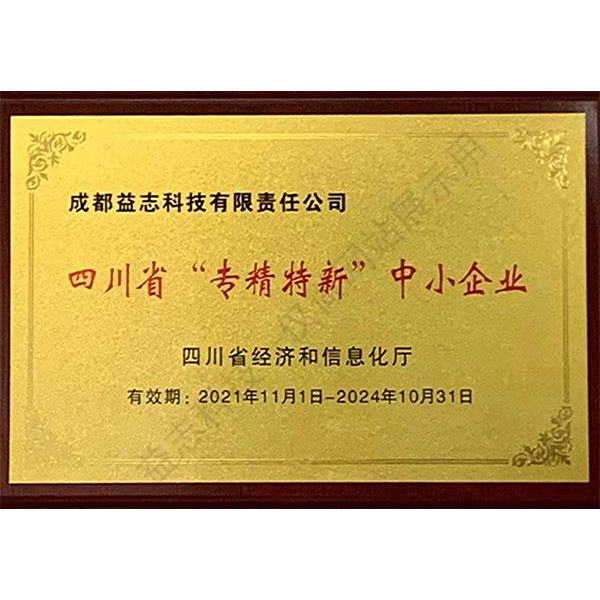
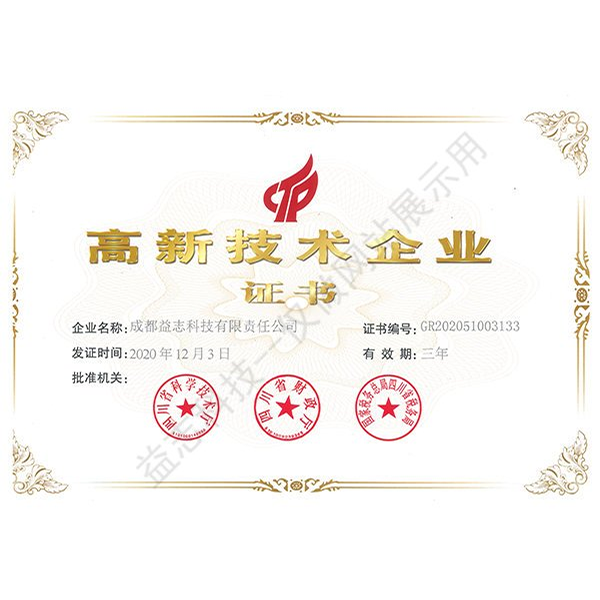
This is where the difference between a simple exporter and one who has his own design institute appears. If a company likeChengdu Yizhi Technology Co.(their website ishttps://www.yzkjhx.ru), created on the basis of a parent engineering company with experience, this immediately changes things. They are not just assemblers, they have their own scientific and technical base for developing solutions. Their institute, as stated in the description, with a registered capital of 120 million yuan, is not just for show; such resources allow R&D to be carried out for specific client tasks.
People often ask about the cost. Yes, Chinese solutions can be competitive in price, but cheapness should not be the only criterion. Sometimes savings at the procurement stage lead to huge operating costs later - due to higher consumption of reagents or energy. You need to look at the full life cycle. We once compared two hydrogen sulfide removal schemes: one with a more expensive initial installation, but with absorber regeneration, the other cheaper, but with constant replacement costs. For a large facility, the first one turned out to be more profitable already in the third year.
Key technologies and where the pitfalls lie
If we talk about specifics, then the main “workhorses” for cleaning coal gas from China - these are, of course, technologies for removing sulfur (H2S, COS) and dust. Packed column scrubbers and wet oxidation processes are very common. But there is a nuance here: efficiency strongly depends on the uniformity of gas distribution across the cross section of the apparatus. I have seen installations where poor internal design led to channeling and a sharp drop in cleaning efficiency. Good suppliers always provide detailed hydrodynamic calculations.
Another point is cleaning of resins and dust at the inlet. It would seem like a simple cyclone or electric precipitator. But if the particles are resinous, they quickly clog everything in the world. One coke plant had to combine a wet Venturi scrubber with a special washing system to deal with this sticky substance. Chinese colleagues fromChengdu Yizhi TechnologyThey just have a lot of experience in coke chemistry, which is felt in their approach to design - they lay down a higher reserve in advance for these problem areas.
Nowadays there is a lot of talk about deep purification for synthesis gas. Here, Chinese companies are actively promoting PSA (pressure-cycle adsorption) technologies for hydrogen separation or fine purification methods for removing carbon oxides. But PSA is a story not only about adsorbents, but also about the valve system. The reliability of the valves and their switching speed are critical. I have heard of cases where local analogues of replacement valves failed many times more often, disrupting the entire cycle. Therefore, it is important that the supplier provides quality long-term supplies of critical spare parts or provides a complete specification for localization.
Implementation experience and cultural context
Working in the field is always a test. Chinese engineers tend to be very hardworking and pragmatic. But sometimes there is a gap between what is drawn on the P&ID and what can be done on the installation floor under conditions of, let's say, imperfect discipline. They have experience with large-scale construction at home, so they often offer very tight, compact layouts. This is a plus for saving space, but a minus if you later need access for repairs. We have to find a balance.
The language barrier is not a cliché, but a reality. Technical documentation in English often requires double checking, especially material specifications. Something happened: the specification included “stainless steel?”, but without specifying the brand. In fact, the material arrived was resistant to corrosion, but not to high temperatures in a particular unit. I had to urgently look for a replacement on the spot. Now we always require detailed technical sheets for all critical materials.
Commissioning is a separate matter. Chinese specialists usually come for a short period of time. If something goes wrong due to the fault of a local contractor (poor welding, incorrect piping), the process can take a long time. Successful projects are always built on a triangle: a reliable Chinese technology supplier (asYizhi Technology Design Institute), a competent local general contractor and a technically savvy customer. The lack of any of the links leads to problems.
Economics and looking to the future
Is the game worth the candle? If we talk about economics, then for medium and large projects - often yes. Complete set "turnkey" from a trusted Chinese supplier can be 20-30% cheaper than its European counterpart with comparable basic indicators. But ?comparability? need to be proven with a reference sheet. It’s good if the company has completed projects outside of China, in similar climatic and raw material conditions. This reduces risks.
The trend I'm seeing is a growing demand for not just purification, but recycling of recovered components. For example, obtaining elemental sulfur from hydrogen sulfide or using CO2. Here, Chinese companies are not always leaders yet, but they are learning quickly and starting to offer combined solutions. Their strength lies in their ability to quickly scale and reduce the cost of world-tested technologies.
In the end, choosing a Chinese technology exporter is not a “cheaper” choice. This is a strategic decision that requires a thorough assessment of competencies, studying real experience (not just on paper) and a readiness for close interaction at all stages. You need to look not at pretty pictures, but at detailed technological regulations, design engineering drawings and a list of completed projects. And then cooperation with such players asChengdu Yizhi Technology Co., Ltd., created on the basis of Huaxi Technology, can provide a serious competitive advantage due to the balanced ratio of technological development and cost.