China: exporter of argon purification?
2026-03-09
This is a question that often comes up in conversations at exhibitions or in correspondence with new clients from the CIS. Many people still imagine China as a source of cheap equipment, where quality is a lottery. With argon purification, especially for the high demands of metallurgy or semiconductors, this misconception can be costly. I went through this myself when ten years ago I was looking for a replacement for an old German installation. Back then, the Chinese proposals were really scary: the blueprints were like carbon copies, the parameters were “in ideal conditions,” and there was silence about the long-term stability of the purity of the product. But now the picture, I will say this, has changed radically. Not everywhere, of course. But there are players who have grown from contractors for the domestic market into serious exporters. And the point here is not the price, but the fact that they have gained experience in real, sometimes very tough projects within the country.
Where does this export potential come from?
Everything depends on domestic demand. The Chinese steel industry, the production of polysilicon, and solar panels are all giant consumers of technical gases and their purification. About fifteen years ago, they massively purchased technology from Europe and Japan. But then localization began. Companies that were initially involved in installation or service began to understand the process more deeply. Not just assemble “from boxes,” but redesign for local raw materials, which could be more humid or with a different composition of impurities. For example, argon from air separation units at some Chinese factories had an increased content of oxygen and nitrogen - standard adsorbents did not always work effectively.
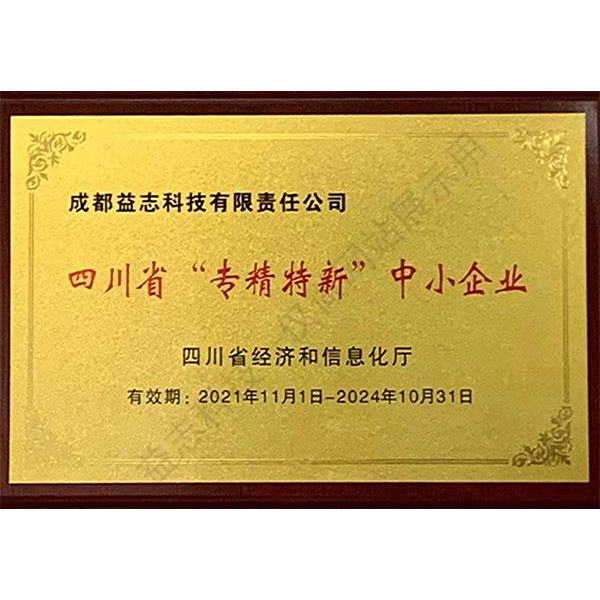
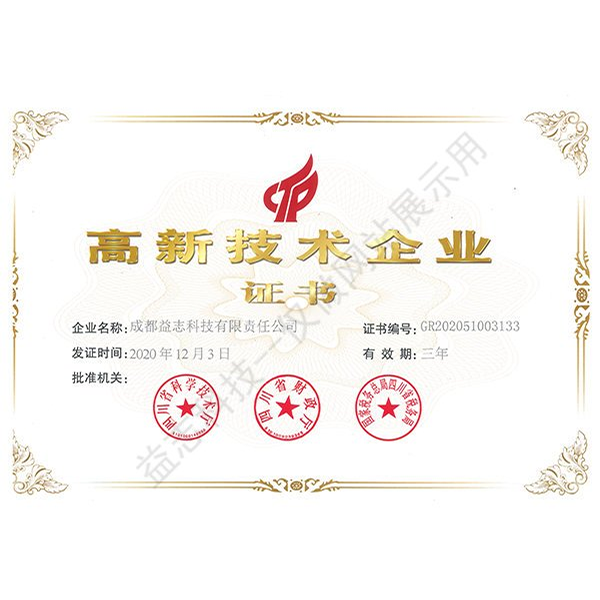
Engineering companies appeared that began to offer not just installation, but a solution for a specific problem. One of these isChengdu Yizhi Technology Co.(their website ishttps://www.yzkjhx.ru). They are not just sellers, but a design institute created on the basis of a chemical technology company. This is an important point. When you have a parent company behind you that has been working with catalysts, adsorbents and separation processes for decades (like Huaxi Technology mentioned in their description), it changes the approach. You don’t just buy columns and valves, you receive a calculation of the adsorption cycle tailored to your gas composition, and recommendations for regeneration. The registered capital of 120 million yuan is also an indicator of serious investments in R&D, and not just in the assembly shop.
This is what I look at first when evaluating a Chinese supplier forargon purification: Do they have a laboratory for gas analysis? Can they simulate the process? Did they give guarantees for the cleanliness of the output, not on paper, but with real penalties? Yizhi Technology, judging by some of their cases for the domestic market, had such agreements. They took on projects where it was necessary to achieve a stable oxygen content of less than 1 ppm, and moisture - around the dew point of -70°C. This is no longer “cheap cleaning”, this is high technology.
Pitfalls and real cases
But, of course, not everything is smooth. The biggest risk when working with a new supplier is underestimating operating costs. Chinese engineers can design an efficient installation, but sometimes they skimp on “little things”: on the quality of ball valves for sampling, on the material of pipelines after cleaning, on automation systems. There was a story when the installation showed excellent parameters at the acceptance stage, but after six months the pressure sensors began to “float”. due to cheap converters. The client was furious. The supplier, however, responded quickly - they sent an engineer and replaced everything at their own expense. This is also an indicator of the company's maturity. Previously, they could have argued.
Another point is adaptation to standards. Many Chinese manufacturers historically use GB (Chinese national standards), and exporting to Russia or Kazakhstan requires GOST, or at least an understanding of these standards. Good exporters have already noticed this. On the same website yzkjhx.ru it is clear that the information is presented in Russian, and one feels that it was prepared not just by a Google translator, but by someone familiar with the terminology. This is a detail, but it speaks of the intention to work seriously.
A specific example from practice. One of my friends at a metallurgical plant in Siberia decided to use a Chinese argon purification unit to protect the melt. The main argument was not the price (it was 20-25% lower than the European analogue), but the delivery time and the willingness to modify the scheme to fit the existing gas infrastructure of the plant. German suppliers insisted on the “complete package?” with its own compressors and drying systems, which increased the cost significantly. The Chinese sent an engineer who walked around the plant for a week, studied it, and then offered a hybrid solution: their adsorption columns with special granulation zeolite, but built into the existing network. We launched it with minor problems (we had to tweak the regeneration cycle on site), but it has been working for three years now. Argon purity is kept at 99.9995%, which is more than enough for their tasks. The key was flexible engineering, and not just selling hardware.
What does “design institute” mean? in this context?
This is the wording from the descriptionChengdu Yizhi Technology Co., Ltd.- ?design institute? - these are not just beautiful words. In the post-Soviet space, we understand well what this means: an organization that can take on a task “at the input?” - gas requirements, site conditions, restrictions - and issue ?at the exit? a complete package of documentation, calculations and turnkey equipment. This distinguishes them from hundreds of trading companies that resell equipment collected from unknown places.
Such institutes usually have their own research base. In Yizhi's case, their affiliation with Huaxi Technology, a chemical technology company, suggests they may be developing or at least deeply modifying key components such as adsorbents or catalysts to remove specific impurities. For argon, this is critical because the composition of impurities in raw argon can vary. Somewhere the main enemy is oxygen, somewhere – hydrocarbons, and somewhere – nitrous oxide. There is no universal solution.
In practice, it looks like this: you send them samples of your “dirty?” argon for chromatographic analysis. Their laboratory conducts tests on a pilot plant, selects a purification sequence (say, first catalytic hydrogenation of oxygen and hydrocarbon residues, then adsorption drying and fine purification), and only then offers a commercial solution. This is a long process, but it minimizes risks. Many European companies work this way. Now in China there are players capable of this level.
The future of the market: which way is the wind blowing?
Now China is no longer just exporting equipment. It exports technological solutions. In the areaargon purificationthis is especially noticeable in the markets of Southeast Asia, the Middle East and, what is important for us, the CIS. The competition is not based on price, but on the complexity of the offer: financing, personnel training, long-term service contract, supply of consumables (the same adsorbents).
The trend I'm seeing is modularity. There is an increasing demand for containerized plants that can be quickly delivered, installed and commissioned. This requires the manufacturer to have the highest design and assembly culture. Chinese companies have an advantage here - their industrial base allows them to quickly and efficiently produce such modules. Again, if we take Chengdu Yizhi as an example, their status as a design institute with a solid authorized capital allows them to invest in such modern production formats, rather than cook everything on their knees at a construction site.
Another point is ecology and energy efficiency. Modern argon purification plants compete for every kilowatt of energy for the regeneration of adsorbents. Here we are working on improving cycles and using heat from other processes. Chinese engineers, forced to work under strict energy saving requirements within the country, have accumulated applied experience here, which they are now sharing in export projects.
So, back to the title question. Yes, China today is full-fledged and technologically advancedargon purification exporter. But you need to choose not by country of origin, but by the specific profile of the company. Look for not just a supplier, but a technology partner with deep expertise, its own laboratory and research base, ready to share risks and responsible for the final result. Like the same “design institute” model that seems to be returning in a new, Chinese version. And this has its own logic and power.