China: CO2 adsorption products during HP?
2026-01-10
This is a question that often comes up in conversations with customers from the CIS, especially from the oil and gas sector. Many people immediately imagine some kind of universal “tablets”. or standard columns that can be bought from a catalog and everything will work. The reality, as usual, is more complicated. Adsorption of carbon dioxide at high pressure is not just about a sorbent, it is about a whole technological thread, where little things like preliminary drying of gas or fluctuations in inlet pressure can negate the work of even the most effective material. And yes, Chinese solutions here are no longer just a “budget alternative”, but quite competitive engineering products, but with their own specifics.
Not a sorbent, but a system
When starting a project to purify associated or natural gas from CO2, the first thing people ask about is the type of adsorbent. Molecular sieves, zeolites, activated carbon... The list is known. But the key point that is missed at the start is the needindividual technological calculation. The pressure in the system is not abstract “high”, but specific 30, 50 or 80 bar. Gas composition – percentage of CO2, presence of hydrogen sulfide, mercaptans, heavy hydrocarbons. All this dictates not only the choice of sorbent brand, but also the design of adsorbers, the regeneration scheme (hot gas purge, vacuum, TSA), and valve configuration.
I remember one early project in Central Asia. The customer bought what is called a “boxed solution?” – standard columns with zeolite. But they didn’t take into account that the gas had an increased percentage of C7+. The result is rapid coking of the bed, a drop in productivity, frequent regeneration cycles and, ultimately, replacement of the entire load in less than a year. Dear lesson. After this you understand that you don’t need to sell tons of granules, but a guaranteed result at the output - the required CO2 content.
This is where the difference between just a sorbent manufacturer and a technology company manifests itself. We need someone who will take responsibility for the entire chain: analysis of raw materials, process modeling, design of devices, supply and loading of materials, commissioning. There are such complex players in China, and they often grow out of large chemical holdings with a serious scientific base.
The Chinese approach: from chemistry to engineering
If previously China was associated mainly with cheap zeolite substitutes, now the situation is different. Local research institutes and applied laboratories are working on very specific compounds. For example, modified zeolites with increased capacity specifically for CO2 in the presence of methane, or composite materials that are resistant to the presence of moisture. But again, their effectiveness is revealed only in a properly designed system.
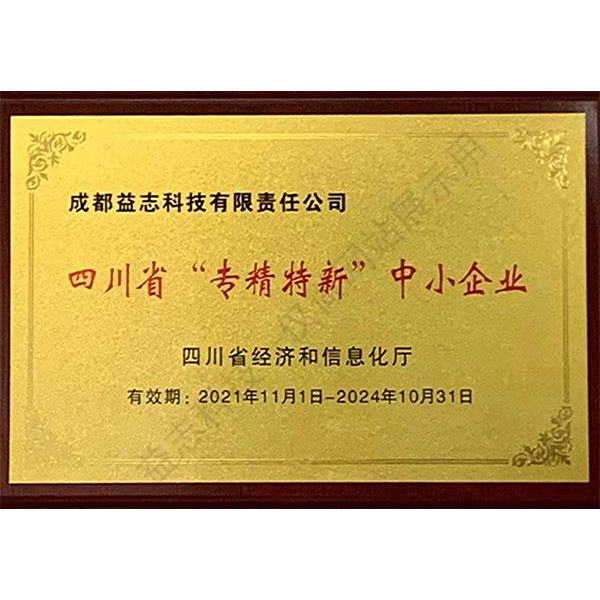
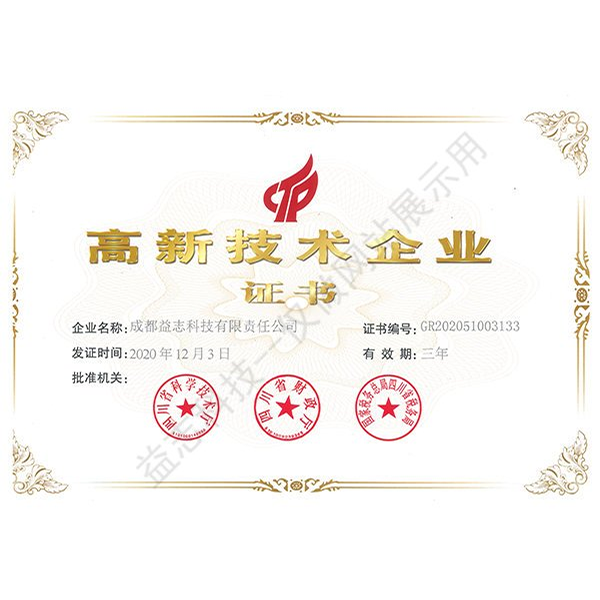
One of the striking examples of such a full cycle is the companyChengdu Yizhi Technology Co.. This is not just a trading house, but a design institute created on the basis of Chengdu Huaxi Chemical Technology. Their websiteyzkjhx.ruis focused on the Russian-speaking market, which already indicates a strategic interest in our region. They have a registered capital of 120 million yuan - this is a serious investment in infrastructure and development. The important thing is that they position themselves as an engineering company that grew out of chemical production. In practice, this means that they can select/produce a sorbent for the task and calculate how it will work in specific devices for a specific gas.
While working with them on one of the projects for preparing gas for underground storage facilities, I noticed their scrupulousness in matters of preliminary drying. They insisted on a two-stage system, although the customer was trying to save money. Their argument was simple: residual moisture at high pressure not only competes with CO2 for the active sites of the sorbent, but also causes irreversible degradation of some types of zeolites. As a result, we went according to their scheme - the installation has been operating stably for the third year, load degradation is within the forecast.
Pitfalls and “non-obvious evidence”
Even with a good contractor and high-quality materials, there are nuances that only emerge during operation. One of the main ones is dust formation. A high-quality adsorbent must have high mechanical strength in order to withstand repeated adsorption-desorption cycles and pressure drops. Cheap analogues begin to “gather dust”, the fine fraction clogs the fine filters at the outlet and can get into the compressor equipment. Control of this parameter is a must.
Another point is logistics and loading. It would seem like a small thing. But if there is no special equipment at the site for dense, uniform filling of high columns (and this often happens in remote fields), channels are formed, gas “shoots through”, and efficiency decreases. Some suppliers, including the aforementioned Yizhi Technology, offer in-house installation supervision and loading services. This is more expensive at the contract stage, but saves you from a lot of problems later.
And, of course, regeneration. The hot dry gas purge scheme is a classic, but it requires precise temperature control. Overheating - and the sorbent “sinters”, underheating - and CO2 is not completely removed, the capacity of the next cycle drops. At one of the facilities, it was necessary to modify the heater control system after the fact, because the design temperatures did not ensure complete desorption in the allotted time. This is about the importance of flexibility in design solutions and the supplier’s experience in commissioning.
Economics of the issue: not only the price per ton
When you compare offers, especially European and Chinese, the first thing that catches your eye is the difference in the cost of equipment and materials. But you need to count according to the full life cycle. A cheaper sorbent with low capacity or strength will require more frequent replacement. A simpler (and cheaper) process design may result in increased energy costs for regeneration or loss of methane with the purge gas.
Chinese companies often offer an interesting compromise here. Their capital costs (CAPEX) can be 20-30% lower than those of recognized Western leaders. But to prevent this plus from turning into a minus during operation (OPEX), you need to look very carefully at the technical and commercial proposal (TCP). Do they guarantee specific energy consumption for regeneration? What is the service life of the sorbent? Do they have a reference list with installations operating for more than 3-5 years? For example, studying an offer fromChengdu Yizhi Technology, it is worth requesting data specifically on long-term projects, and not just on successful launches.
In my opinion, their strength lies precisely in the ability to optimize CAPEX without fatal damage to OPEX through their own development of sorbents and adaptation of technology to specific, often non-ideal, customer conditions. They do not hesitate to offer hybrid solutions, for example, the first stage uses activated carbon to capture heavy components, the second stage uses “sharpened” carbon. under CO2 zeolite. This is flexibility.
Looking to the future: what else does China have to offer?
There's a lot of talk these days about CCUS (carbon capture, utilization and storage). Adsorption during HP is one of the key stages of capture. And here Chinese companies are starting to look beyond simply purifying gas to standards. We are talking about obtaining a relatively clean stream of CO2 for subsequent use - for example, for injection into a reservoir for enhanced oil recovery (EOR) or for the production of dry ice, carbonates.
This requires a different degree of purification and, most importantly, a different configuration of the desorption process. You need to get CO2 with minimal impurities. I see that some engineering centers, including Chengdu Yizhi, are developing in this direction - experimenting with multi-stage regeneration, vacuum cycles to increase the concentration of extracted carbon dioxide. For now, these are rather pilot projects, but the trend is obvious.
The result is this. High pressure CO2 adsorption products from China are today not primarily “boxes of granules”, but complex “turnkey” technological solutions. Their attractiveness lies in the balance of price, technological adequacy and willingness to work with difficult conditions. The key to success is choosing not just a supplier, but a technology partner who can be responsible for the entire cycle, from laboratory analysis to commissioning. And there are already such partners on the market. All that remains is to very carefully study their real experience, and not just beautiful presentations.