Chinese exporters of CO2 adsorption technology?
2026-01-10
When you hear this question, the first thing that comes to mind is the huge pressurized adsorbers in large refineries or ammonia production plants. But the market is much wider and more capricious. For some reason, many people think that Chinese suppliers are just cheap cases stuffed with molecular sieves. In fact, the key now is not so much the adsorbent as a product, but the design of the entire cycle: preliminary gas purification, valve configuration, PLC control logic, and most importantly, the energy efficiency of regeneration. This is where the difference lies between a successful long-term project and a headache for years.
From sieve to system: evolution of the approach
Previously, about ten years ago, the focus was really on the supply of adsorbents - zeolites, activated carbons. Chinese factories have learned to make fairly high-quality analogs of, say, the same 13X or 4A, and the price was very competitive. But a problem emerged: the client buys bags of granules, pours them into his column, and then complaints begin about a short cycle, high pressure drop, or rapid destruction of the granules. Why? Because the entire system was not calculated. For example, the dew point of the incoming gas or the presence of heavy hydrocarbon vapors, which irreversibly poison the zeolite, are not taken into account.
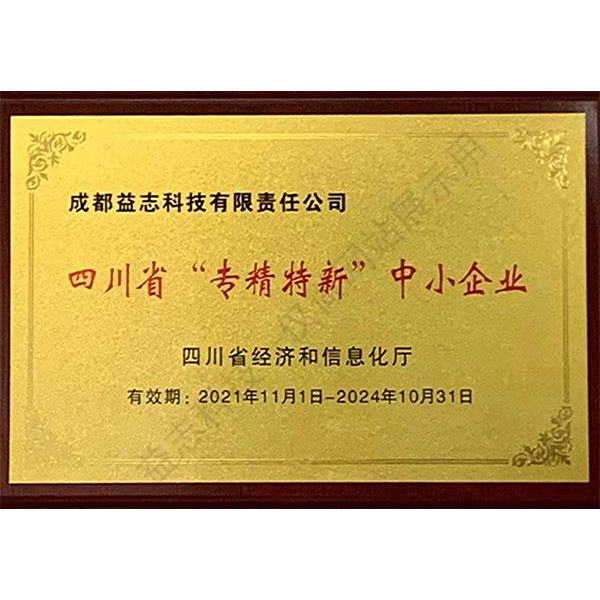
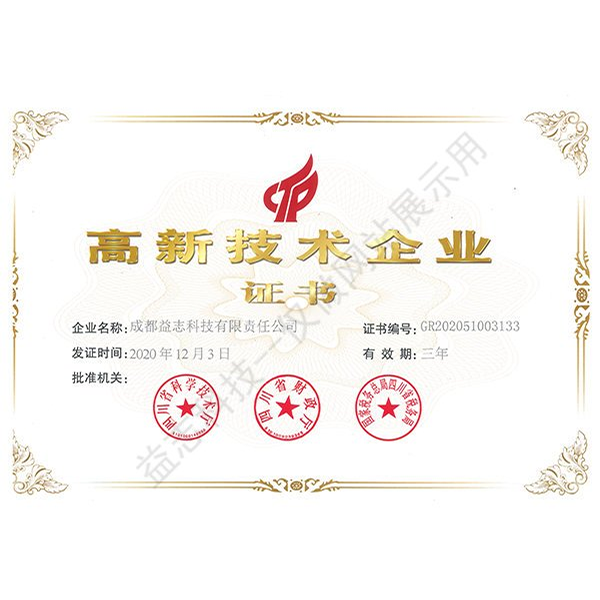
Now the leading players, the very ones who actually export, sell not the adsorbent, but the technological scheme. This is a whole package: engineering, equipment (columns, heat exchangers, separators), control automation, the sorbents themselves and, critically, commissioning and personnel training. Take, for example,Chengdu Yizhi Technology Co.. They were originally created as a design institute at a chemical company, and you can feel it. Their websiteyzkjhx.ru- this is not just a product catalog, it shows that they think in blocks and settings. For them, CO2 removal is a node in the overall scheme for purifying or producing hydrogen.
In practice, it looks like this: they are approached with raw gas parameters (composition, pressure, temperature, required purity at the outlet). They simulate the process, selecting not just one, but often a layer cake from different adsorbents to capture not only CO2, but also possible impurities. The regeneration cycle is then calculated - whether it will be TSA (temperature regeneration) or PSA (pressure differential regeneration). For biogas, for example, they are often combined. And this ability to offer a non-standard, but working solution is their main trump card in the foreign market, especially in the CIS, where there are many old industries that need modernization.
Pitfalls on the export route
Working with foreign customers, especially from countries with harsh climates, makes its own adjustments. One of the most painful lessons we learned a few years ago was the cold resistance of steels. We sent a PSA unit to purify associated petroleum gas to a region with winter temperatures of -40°C. According to the drawings, everything was fine, the steel was ordinary structural steel. But they did not take into account that when the pressure is released during regeneration, intensive cooling of the column walls occurs. The result is microcracks in the welds after the first winter. We had to urgently modify it and switch to steel with a lower threshold of cold brittleness. This is now a mandatory item on the questionnaire for any northern project.
Another common problem is ?local peculiarities? raw materials. Chinese technological calculations are often based on fairly pure laboratory data or the conditions of Chinese deposits. And, for example, in Central Asia, gas may have a high content of hydrogen sulfide or mercaptans. If you don’t do a deep analysis in advance and don’t install a pre-purification stage (say, a scrubber with alkali or adsorption on iron oxide), then expensive zeolite will very quickly become unusable. We have to insist on a comprehensive analysis of raw materials, sometimes even sending our technologist to the site to take samples. Not all clients understand this and want to pay for the “extra” ones. services until they come face to face with the problem.
Logistics and service are a different story. Installing the installation is half the battle. It is critical to have either a trained local integration partner or be ready to dispatch a specialist quickly. A delay of two to three weeks due to a visa can stop all production at the customer. Therefore, many, including Yizhi Technology, are now developing a network of service engineers in key regions or entering into agreements with local engineering companies that receive training from them. It’s expensive, but without it you can’t go into serious export.
Case: non-obvious application and flexibility
Often the most interesting projects are born from seemingly atypical requests. We had a project not for oil and gas, but for a large brewery. They needed to capture CO2 from the fermentation tanks, remove traces of alcohols and esters, and return it to carbonate the beer. The task is specific: the pressure is low, the requirements for organoleptics (smell, taste) are the highest. Standard schemes were not suitable.
Together with technologistsChengdu Yizhideveloped a cascade adsorption system. At the first stage there is a special modified activated carbon to capture heavy organic compounds. On the second - zeolite for fine drying and removal of residual impurities. The key was the regeneration stage: so as not to “bake” organic matter in the pores of coal, we used soft vacuum regeneration with purging with pure CO2. It didn’t work out right away; it took several months to select the cycle parameters and granulometry of the sorbents. But in the end, the system works, and the client saves on the purchase of food-grade CO2. This example shows well that modern Chinese companies are capable of unconventional solutions if there is a dialogue with the customer.
Another area that is gaining momentum is small modular plants for cleaning biogas before feeding it into cogeneration plants. Here the price requirements are stricter, but the approach is different. Cheaper adsorbents are often used, but with an increased volume, and regeneration is done by partially heating the exhaust gases of the engine itself. This results in a closed energy circuit. So “boxed”? solutions are now in great demand in Europe and are gradually entering the Eastern European market. The competition here is fierce, and the one who offers the optimal balance of “capital costs - operating costs” wins.
About adsorbents: yours vs. stranger
The question that is always asked is: “Do you have your own adsorbents or do you buy them too?” The truth is somewhere in the middle. Large technology companies, as a rule, have long-term contracts with several sorbent manufacturing plants, and often have their own research laboratories for their testing and modification. Full vertical integration is rare. The task of a technology company is not so much to produce a granule, but to precisely know its characteristics and behavior in a dynamic cycle in a specific gas mixture.
Yizhi being a partHuaxi Chemical Technology, has an advantage here. They can ?order? The parent company has batches of sorbents with certain properties: for example, with increased abrasion resistance for gases with dust or with the addition of a promoter for selective capture of CO2 in the presence of large amounts of nitrogen. This is deep customization, which creates added value. For the customer, this means that he will not have to urgently look for a replacement in six months or a year if something goes wrong. The sorbent will be “sharpened” for its installation.
However, there is a downside. Sometimes for simple tasks it is more profitable to use a standard, “market” one. a sorbent that can be purchased locally anywhere in the world. Therefore, a good supplier should be flexible: offer its own, expensive, but optimal solution for complex conditions, and have in mind a couple of proven brands of sorbent manufacturers for simpler cases. And honestly explain to the client the difference in the long term, and not just sell the most expensive.
What's the result? Not the price, but the cost of the cycle
So, back to the original question. Yes, Chinese exporters of CO2 removal technology by adsorption are no longer just traders of chemical filling. These are engineering companies that have gone from copying to adapting, and now to creating complex solutions. Their strength lies in flexibility, speed of response to requests and the ability to work with the non-ideal, the “real?” raw materials.
The main trend that I see is a shift in focus from the price of equipment to the total cost of ownership (Total Cost of Ownership). Clients have become smarter. They are interested in how much regeneration will cost (energy, steam), how often the adsorbent needs to be changed, what is the reliability of the rotary valve or control unit. And here, Chinese companies are actively increasing their competencies, inviting Western specialists in automation and metalworking, opening R&D centers.
The future, it seems to me, lies in hybrid systems, where adsorption is only one of the steps, integrated, for example, with membrane separation or catalytic processes. And those exporters who are already thinking in this direction will set the tone in the global gas purification market. The field for work is huge: from traditional energy to new hydrogen projects. And Chinese players, with their experience in scaling and project approach, have every chance to take very serious positions in this field.