China: new technologies for acid regeneration?
2026-01-10
When you hear this, the first thought is marketing again. Everyone talks about breakthroughs, but in reality you often run into old problems: corrosion, energy consumption, purity of the regenerated product. There is indeed a lot of noise around this topic in China, but if you dig deeper, loud headlines sometimes hide quite workable, albeit not ideal, solutions. Not new in the sense of a world sensation, but new for specific, often very dirty, local production conditions. This is what I want to talk about, without gloss.
Not a revolution, but evolution under pressure
The main driver here is not even technology itself, but environmental legislation, which has really become stricter over the past five to seven years. Disposing of spent acid anywhere is now fraught with huge fines and a shutdown of production. Therefore, many enterprises, especially in chemical clusters like Shandong or Jiangsu, were forced to look for options. Initially, they simply tried to neutralize it, but this generated mountains of sludge. Then we followed the path of the simplest regeneration - thermal, for example, for sulfuric acid. But the question of profitability immediately arose: if the acid is weak or contaminated with organic matter, the costs of evaporation and pyrolysis eat up all the benefits.
This is where that very evolution began. Classical methods began to acquire modifications. Let's say for regenerationhydrochloric acidWith a high iron content, membrane electrolysis began to be more actively used, not in its pure form, but in combination with preliminary oxidation and stripping. This is not a discovery, but competent engineering for a specific task. Often a technological chain is assembled as a construction kit from components available on the market. Efficiency? Sometimes 70-80% in acid recovery, but the main thing is that it is possible to recycle 95% of the waste, turning it into a secondary, albeit low-grade, product (for example, ferric chloride for wastewater treatment). This is a local victory.
One technologist I know from a metal pickling plant once said: Our new installation is not about getting acid out of a barrel. It's about not having to pay for disposal and not having problems with inspections. Its installation, by the way, after a year of operation has not reached its rated capacity due to fluctuations in the composition of the initial wastewater, but it performs its main - environmental - function. And this is a typical story.
Where to look for specifics? Experience of design institutes
To understand the real state of affairs, it is better to look not at the press releases of large corporations, but at the work of design and engineering companies that implement these solutions in the field. They are forced to balance between customer requirements, budget and the physico-chemistry of the process. Their websites and cases are often a more honest source.
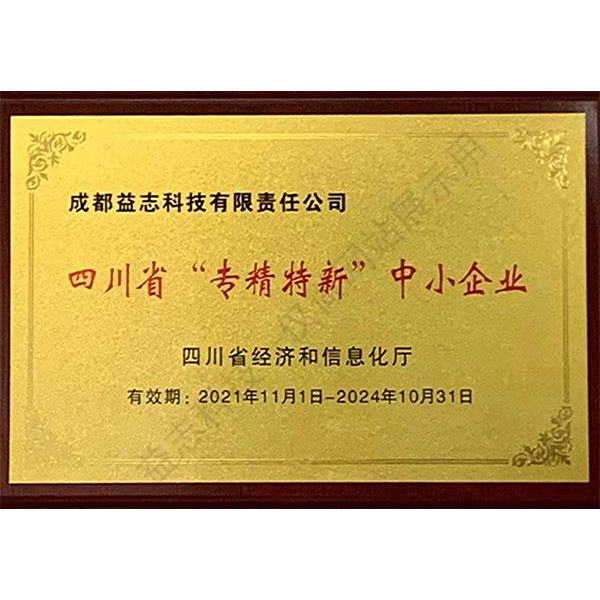
Here, for example,Chengdu Yizhi Technology Co.(their website isyzkjhx.ru). This is a design institute created by a chemical company. Their description directly states that the registered capital of 120 million yuan is a signal of serious intentions in engineering. They don't just sell equipment, they design complexes. Looking through their materials (not without marketing, of course), you see an emphasis on complex solutions: not only acid regeneration, but also metal recovery from waste etching solutions. This is an important point. Pure acid regeneration may be economically marginal, but if nickel or copper is extracted from the same wastewater, even in the form of salts or oxides, the economics of the project change dramatically.
Such companies often have pilot installations where they test the technology on real samples brought by the customer. It's expensive, but it avoids scaling disaster. I heard a story about one project for the regeneration of phosphoric acid after etching of aluminum: everything worked at the pilot plant, but at the full-scale plant, problems began with the deposition of aluminum phosphates in the heat exchangers. I had to modify the flushing system on the fly. Such nuances never make it into brochures, but they are the ones that determine success or failure.
Case Study: Mixed Acids
A special task is the regeneration of mixtures of, say, nitric and hydrofluoric acids for pickling stainless steel. Here classical methods are often powerless. In China, in recent years they have been actively trying to combine distillation with extraction. I saw one experimental line where they tried to separate acids through selective amine extractants. Theoretically it’s beautiful, but in practice there are emulsions, loss of extractant, and difficulty in control. The project was eventually frozen because the cost of regenerated acids exceeded the market price of new ones. But the very fact of such experiments is indicative: they are looking for ways, albeit dead-end ones.
A more viable approach for such mixtures has proven to be not to completely regenerate, but to condition the solution: removing the main contaminants (metal ions) through ion exchange resins or membrane methods, and then returning the acidified solution back to the process, with a dosage of fresh acid to adjust the concentration. This is not regeneration in the strict sense, but it extends the life of the etching bath significantly. For a plant, this is often the optimal solution.
The role of materials: you can’t live without new materials
Any acid regeneration is a battle with corrosion and temperature. Progress here often comes down to materials. Chinese manufacturers have recently made great progress in the production of engineering polymers (PVDF, ECTFE) and special steels (alloys with high molybdenum and nickel content). This made it possible to make more compact and durable heat exchangers, pump housings, and membrane modules.
I remember at one regeneration installationsulfuric acidAs a result of alkylation, the condenser tubes made of ordinary stainless steel constantly failed. We tried ceramics - they were fragile. As a result, we switched to Hastelloy alloy tubes, which, although more expensive, have worked for three years without replacement. The customer was unhappy with the initial costs, but now believes it was worth it. Such solutions are not the new technologies in the headlines, but they are what make the entire system work.
The same with membranes for diffusion dialysis (one of the most energy-efficient methods for the regeneration of mineral acids). Previously, we were heavily dependent on imported goods, mainly Japanese ones. Now several Chinese companies (like Shandong Tianwei) have achieved quite acceptable quality for a number of standard applications (for example, for sulfuric or hydrochloric acids with not the most complex impurities). The price is lower, the service life, however, is also a little shorter, but for many projects this is a good compromise.
Economy as the main limiter
Ultimately, any technology comes down to money. The novelty here often lies not in the physicochemical principle, but in the financing scheme or business model. Companies have appeared that offer not the sale of the installation, but a regeneration service: they install their equipment on the plant site, service it and sell the regenerated acid to the plant at a negotiated price, which is lower than the market price, but guarantees them a profit. This removes capital costs and risks from the enterprise.
Reliability and simplicity of the technology are critical to this approach. Often these are exactly the same evolutionary, proven methods, but packaged in a format convenient for the client. I saw such a project at a textile mill for the regeneration of acetic acid. The installation is simple, almost old-fashioned rectification, but with good automation and telemetry. It works stably, there are savings for the plant, and the service company is also in the black. No sensation, just competent engineering and adequate business logic.
It is in this plane - the search for an economically justified configuration for specific waste from a specific production - that the main field for work lies. Sometimes a new technology turns out to be an old method applied to a new type of drain, or a successful combination of two classic processes. The race for absolute purity and 100% recovery often loses out to a more pragmatic approach: we recycle as much as possible to meet the standards, and, if possible, return something to the cycle.
Conclusion? View from the workshop
So are there new acid regeneration technologies in China? If you wait for fundamental discoveries, then perhaps not. But if we talk about new engineering solutions for a given plant, for a given waste stream, within a given economic and environmental framework, then there are a lot of them. This is a living, quickly adapting market for engineering services, where they experiment, make mistakes, find compromises and sometimes get truly effective systems.
The key word is adaptation. Technologies are borrowed, combined, and improved. Success depends not so much on novelty as on the depth of understanding of the problem: accurate analysis of the composition, realistic economic modeling, correct choice of materials and, importantly, the willingness to maintain this system after launch. As the same technologist said: Any, even the smartest, installation is just hardware. It will only work when you tame it. This process of domestication to suit local conditions is, in my opinion, the main technological achievement in this area in China today.
Therefore, when you see a headline about new technologies, you should ask not what kind of miracle method?, but for what specific case? and how does it work in reality, and not on paper?. The answers to these questions are much more interesting and informative.