China: acid regeneration – prospects?
2026-01-11
When do you hear ?acid regeneration? in China, many people immediately think of giant metallurgical or titanium factories. But reality, as often happens, is more complex and interesting. The main potential now lies not so much in scale, but in the adaptability of technologies to different, often “non-ideal” ones. conditions of small and medium-sized industries. And here lies the main challenge and at the same time an opportunity.
From theory to "dirty" practice
Everything in the textbooks is beautiful: a certain concentration, purity, a stable flow. In fact, especially in chemical plants in the provinces of Sichuan or Shandong, you have to deal with cocktails. Not just sulfuric acid, but with impurities of organic matter, heavy metal ions, and suspended matter. Standard membranes or ion exchangers shrink quickly. The first thing you learn is to analyze not an average sample, but the entire technological cycle of the client. Where exactly does the peak surge occur? Can it be smoothed out during production? Often the solution begins not with installation, but with an audit of the customer’s process.
There was a project at a pharmaceutical intermediates plant. The problem is the regeneration of hydrochloric acid with residual organic solvents. Theoretically - distillation. Practically - the formation of azeotropes and stratification, which clogged everything in the third week of work. I had to experiment with preliminary purging with an inert gas and selecting a nozzle for the distillation column, which cokes less. It worked, but the economic effect became positive only after a year and a half, and not after eight months, as in the initial feasibility study. The client was happy because they solved the disposal problem, but for us it was a lesson in ROI planning.
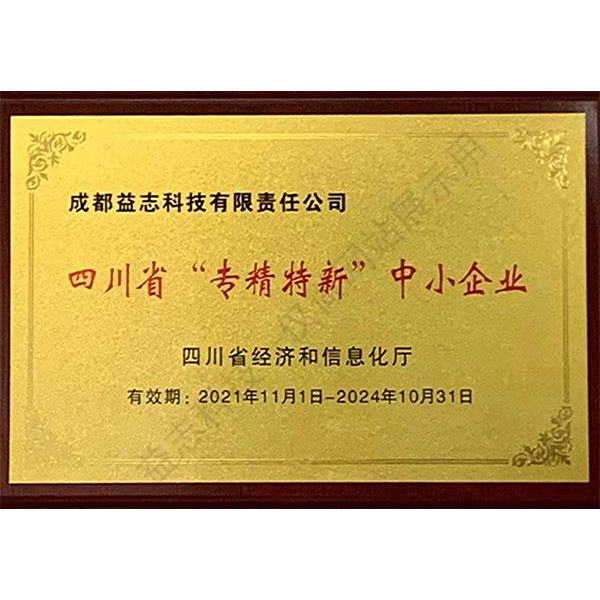
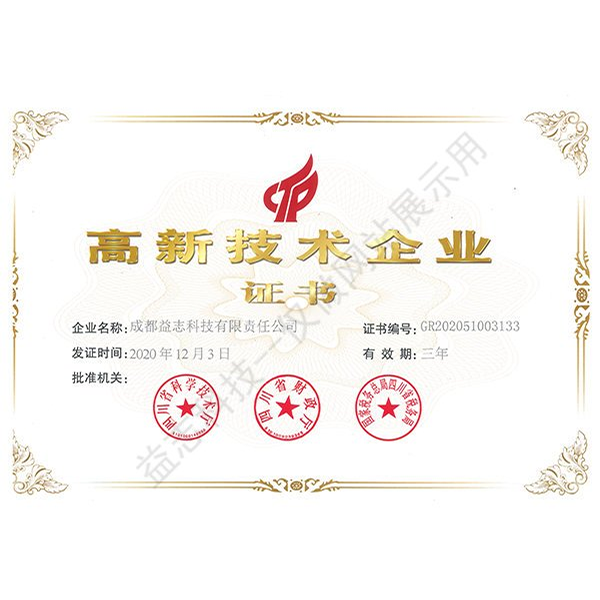
That is why companies that have survived in this market, likeChengdu Yizhi Technology Co., they are not betting on selling “boxed” ones. solutions, but on a project approach. Their websiteyzkjhx.ruIt is interesting precisely because of the description of the cases, and not just a list of equipment. It can be seen that the institute, created on the basis of Huaxi Technology, works precisely at the intersection of engineering and applied chemistry. Capital of 120 million yuan is not only about money, but about the opportunity to maintain a serious laboratory and test benches. Without this, there is nothing to do in the regeneration market in China today.
Equipment: import substitution in Chinese
Just 5-7 years ago, key components - high-precision pumps, corrosion-resistant alloys for heat exchangers, sensors - were predominantly German or Japanese. Now the situation is changing. Chinese manufacturers have learned to make decent membrane modules and columns from special polymers. The service life is not always equal to the European one, but the price/quality/delivery time ratio often outweighs.
But there is a nuance here. A completely localized installation is a risk. We still combine for critical components: Chinese frame, Chinese harness, but the “heart?” – for example, automatic control systems or high-pressure pumps – from trusted brands. This gives the customer confidence and allows for a longer warranty. A complete transition to domestic components is probably another 3-5 years away for complex systems.
An interesting trend is modularity. Instead of monolithic giant installations, compact, almost container solutions are offered. They can be tested at the customer’s site and capacity can be increased. This reduces initial risks for the client. OnYizhi Technology websiteit is clear that they are actively promoting exactly this approach - “turnkey”, but with the possibility of an upgrade. This is a smart move for medium-sized businesses that are not ready for huge capital investments right away.
Economics vs. Ecology: where is the real driver?
It is generally accepted that in China everything is decided by the economy. With the regeneration of acids, not everything is so simple. Yes, the cost of concentrated sulfuric acid has increased, and its recovery has become profitable. But increasingly, the strongest driver is pressure from local environmental inspectors. Fines for unauthorized discharges or difficulties in obtaining quotas for waste neutralization and disposal make the regeneration project not just profitable, but strategically necessary for the continued operation of the plant.
We worked with a textile mill in Jiangsu. Their main motive was not even to return the acid (they have a highly diluted process), but to reduce the concentration of salts in the wastewater to acceptable standards. The regeneration installation essentially became an entry ticket for them to renew their operating license. The economics of the project were on the brink, but “ecologically” the component completely justified him.
Government subsidies for "green" Technology also plays a role, but it is not easy to obtain. It is necessary to meet strict efficiency criteria, and this is where a serious design institute with good reporting is needed to guide the project through all bureaucratic procedures. Companies like Chengdu Yizhi Technology Co., Ltd., judging by their authorized capital and status, were created, among other things, to solve such problems - they act as a technology partner that can take on both engineering and issues of interaction with regulators.
Growth points and dead-end branches
The most promising niches now are electroplating and the production of rare earth elements. Electroplating involves large amounts of relatively weak acids with metals. Traditional neutralization results in a mountain of sludge that is now classified as hazardous waste. Membrane electrolysis and specific ion exchange resins allow both the acid to be returned to the process and metals (nickel, copper, zinc) to be concentrated for disposal. The technology is not new, but its adaptation to each specific bath composition is know-how.
Rare earth elements are even more interesting. There, leaching processes often use acids, and the cost of the elements themselves is such that even the slightest loss is unacceptable. Regeneration systems here must be integrated into the main process with the highest recovery rates. This is a premium segment where only a few players compete.
But with phosphoric acid, oddly enough, no big breakthroughs are visible in China. Large fertilizer manufacturers prefer proven schemes. The market for concentrated and pure acid is stable, and the adoption of new recovery methods from waste has been slow. The investments are huge, but the returns are not obvious. We participated in tenders a couple of times, but the projects were frozen at the pilot testing stage. Apparently the time has not come yet.
What's the result? View from the workshop
There are prospects, and they are associated not with revolution, but with evolution. With the ability to “sharpen” well-known methods - membrane, extraction, thermal - under the realities of Chinese production: under unstable raw materials, under the need to save space, under growing environmental requirements. Successful players are those who do not sit in a beautiful office, but regularly travel to sites, look at real wastewater, talk with plant technologists and know that there will never be ideal conditions.
The key word is flexibility. Not only technological, but also business models. Sometimes it is more profitable to sell not the installation, but the regeneration service. Or work according to a scheme where payment comes from saved resources. This requires a different level of trust with the client.
Therefore, to the question “prospects”? I would answer this way: the market will grow, but the winners will not be manufacturers of standard equipment, but engineering companies that can solve complex problems. Those who likeChengdu Yizhi Technology, can study the process, offer a non-obvious solution, take on the risks of the pilot stage and prove the economics not on paper, but in a real workshop that smells of chemicals. It is precisely such design institutes that now set the tone in this area in China.