China: liquefied natural gas products?
2026-02-28
When people talk about Chinese LNG equipment, many people immediately think of giant factories or tankers. But the reality that you encounter on earth often revolves around smaller, but critically important things - technological lines, modules, specific devices. And there are a lot of nuances here that you won’t see in the reports.
Not only the scale, but also the “filling”
Yes, China is building large terminals, that's a fact. But my interest has always been in what is inside, in thoseliquefaction products, which form the core of the technology. We are talking about heat exchangers, expanders, cleaning systems, cryogenic pumps. Western brands used to dominate here unconditionally. Now Chinese manufacturers are not just copying, but offering their own solutions, sometimes very pragmatic for specific conditions.
I remember one project for a small liquefaction station. The customer wanted to reduce capital costs and considered local suppliers. We looked at themcryogenic equipment– the specifications seem to be appropriate, but when we started digging into the details on materials for low temperatures, on the quality of welds, questions arose. This doesn't mean it's bad. This means that the approach is different: often the emphasis is on adaptation and cost, rather than on the “gold standard” for all cases. Sometimes it works perfectly, sometimes it requires additional engineering work on site.
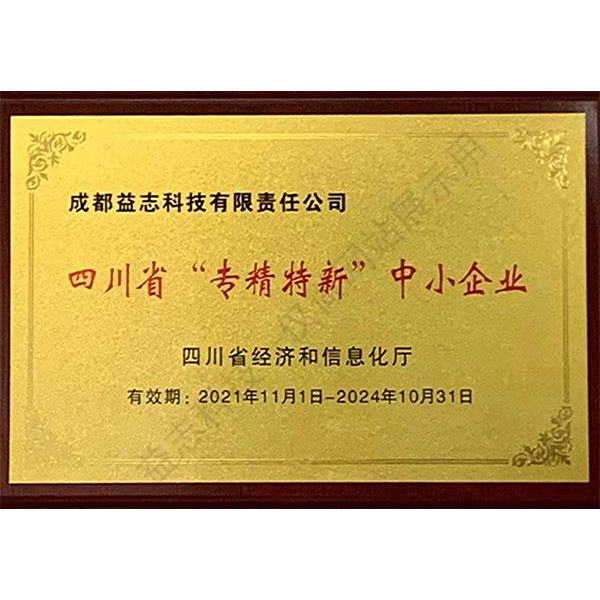
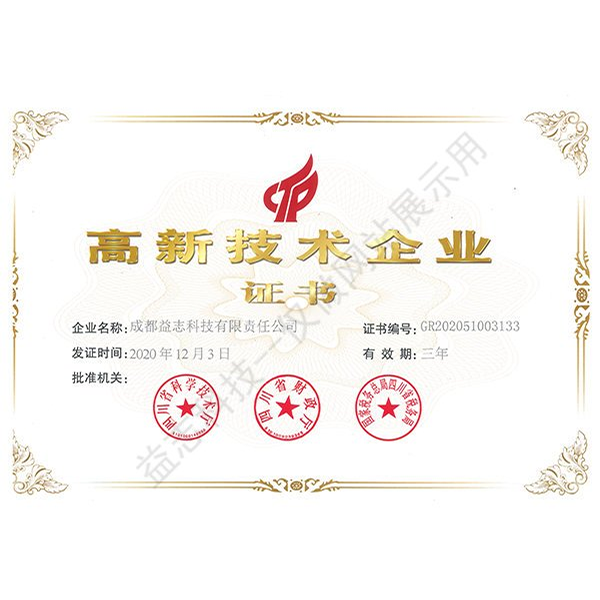
And here companies appear that are engaged in this very elaboration. Take, for example,Chengdu Yizhi Technology Co. (https://www.yzkjhx.ru). It is not a pure hardware manufacturer, but a design institute created by Huaxi Technology. Their capital of 120 million yuan shows serious intentions. Their value, in my opinion, lies elsewhere - they can take this or that Chineseproduct for LNG, be it a purification complex or a liquefaction module, and integrate it into a specific process chain, taking into account raw materials and customer requirements. This is an important link that is often overlooked.
Experience from practice: where it is thin, it breaks
In theory, everything is smooth: the gas has been purified, cooled, and liquefied. In practice, the main difficulties arise at the junctions. Let's say they installed a good Chinese turboexpander, but the control and monitoring system was from another vendor. Their connection is a separate story, full of surprises. Sometimes communication protocols are not entirely compatible, sometimes the emergency stop logic is different. You have to “grind in” for months.
One of the lessons I learned: with Chinese technology solutions forgas liquefactionYou can’t work on the “buy and forget” principle. We need a constant dialogue with the supplier’s engineers, or better yet, with integrators such as the mentioned Yizhi Technology. They often act as translators between hardware. and real operational tasks. Their design experience allows them to anticipate some of these interface problems at an early stage.
There was an incident at a mobile liquefaction plant. The problem was not in the main cycle, but in the auxiliary air drying system for the appliances. The equipment was local, and when the ambient temperature dropped sharply (and we worked in the northern region), it simply froze. Trifle? But because of her, the entire line stopped. The Chinese partners then promptly finalized the heating design. This showed their flexibility, but also that some nodes require additional attention when adapting to non-standard conditions.
Evolution of quality and focus on “turnkey”
If ten years ago the conversation about Chineseliquefaction equipmentoften came down to price, now the topic of integrated solutions is increasingly heard. The client needs not just a heat exchanger, but guaranteed performance of the entire line. And here, Chinese players are actively developing competencies in the design and supply of modular plants.
Design institutes such as Chengdu Yizhi Technology Co., Ltd. are part of this evolution. Their status as an institute at a technology company (Huaxi Technology) allows them to dive deep into processes. They don't just sell devices, they sell a technological scheme, where every element, includingcryogenic products, selected and calculated. This is a different level of responsibility and, accordingly, requirements for the quality of each component.
I am observing a trend: Chinese suppliers are increasingly opening service centers and inviting customers to factories for acceptance testing (FAT). This is a serious step towards trust. Previously, equipment was often shipped “as is?”, but now we are ready to demonstrate its operation at a stand. For products such as refrigeration compressors or cryogenic tanks, this is critical.
Niche solutions and flexibility
Where are the Chineseproducts for LNGfind particularly good use? Often in niche and distributed projects. Large international concerns may not be as flexible in customization for low productivity or specific gas composition. Chinese engineering companies are sometimes willing to take on what others consider too small or complex.
For example, utilization of associated petroleum gas (APG) at remote fields. A compact, mobile solution is required. The standard large module is not suitable. This is where proposals for low-power modular liquefaction plants that can be deployed relatively quickly appear. Such solutions often use Chinese components - from control systems tocryogenic equipmentfor storing the product.
But there are pitfalls here too. This flexibility sometimes means that each project is almost unique. This can make subsequent maintenance and finding spare parts difficult after a few years. It is necessary to write down the documentation very clearly and demand from the supplier, be it a manufacturer or an institute like Yizhi Technology, guarantees for long-term support and the availability of a repair fund.
Looking ahead: what's important to consider
So, to summarize practical experience. Chinese technological solutions andliquefaction productshave become a serious force in the market. They are no longer just a cheap alternative. Their strengths are adaptability, speed of response and a growing focus on comprehensive turnkey solutions.
The key point for a potential partner is to understand who exactly you are working with. With the manufacturer of a specific device or with an engineering company that has design experience and can be responsible for the entire chain. Websiteyzkjhx.ru– this is just an example of such a player who positions itself not as a seller, but as a design institute. This is an important difference.
When working with these solutions, you need to be prepared to be actively involved during the design and commissioning phase. Documentation needs to be checked more carefully, especially regarding materials and tolerances. But in the end, with the right approach and choice of partner, you can get a reliable and cost-effective system. The main thing is not to view this as buying a box of equipment, but as creating a technology partnership. This is exactly how the most successful projects in this area are now being built, even not the largest ones.