Will China introduce Russian LNG technology?
2026-02-27
The question is not “whether there will be?”, but “where, how and under what conditions?”. Many people immediately imagine large-scale purchases of liquefaction licenses on a turnkey basis. from Novatek or Gazprom LNG technologies. The reality is much more mundane and interesting.
Where is this conversation even coming from?
The story stretches back to the mid-2010s, when China began its “gas transition”. There were our own liquefaction technologies, but mainly for ground-based installations of medium power. And here is the Arctic, Yamal LNG. Russian engineers, under the most severe conditions, have proven the viability of their solutions, including the famous technologyliquefactionbased on a turboexpander. For the Chinese, who are actively developing their northern regions and sea terminals, this has become the subject of close study.
But here’s a mistake in perception: China is not looking for a ready-made “box”. Their approach is adaptation, assimilation, improvement. They look at the Russian experience as a testing ground of extreme conditions from which specific components or engineering practices can be isolated. For example, working with equipment at low temperatures or logistics in difficult climatic zones.
I personally encountered discussions at technical seminars where Chinese specialists meticulously asked not about operating principles, but about specific cases of failure of cold box pumps in Yamal and how Russian colleagues modified the monitoring system. This is the level of “dirty hands”, not high-level memoranda.
Where are the possible points of contact?
Here we need to separate ?technology? like software package and patents and ?technology? like know-how, experience. The first is unlikely for widespread implementation for political and economic reasons (protection of intellectual property, desire to preserve technological sovereignty). But the second one is already happening.
Let's takesmall-scale liquefaction(small-scale LNG). In Russia there are interesting developments in mobile and modular installations for gasification of remote villages or refueling vehicles. China, with its gigantic territory and program to replace coal with gas, is extremely interested in this. I know of several pilot projects where Russian engineering companies, not the most popular ones, advised Chinese partners on adapting such solutions to local conditions and component base.
Another layer is cryogenic equipment and materials. Russian manufacturers of, say, heat exchangers or insulation for cryogenic pipelines could find a niche in the Chinese market, especially if they offer solutions proven in the Arctic. But here the barrier is certification and fierce competition with local manufacturers who learn quickly.
Case Study: Unexpected Difficulties
I'll tell you about a case that well illustrates the difference in approaches. One Russian company with a good reputation in the field of designLNG infrastructuretried to enter the Chinese market with security consulting services. Their case was brilliant - calculations for icing tanks. But we were faced with the fact that Chinese standards (GB) in some aspects are even stricter than Russian ones and are completely unfamiliar. The project got bogged down in agreeing on calculation methods.
I had to create a joint working group with a local design institute for the “translation?” regulatory framework. It's long and expensive. So much for the ?introduction of technology? — it starts with the introduction of engineering language and standards. Sometimes it is easier to buy a license from the French or Americans, whose standards have already been globalized.
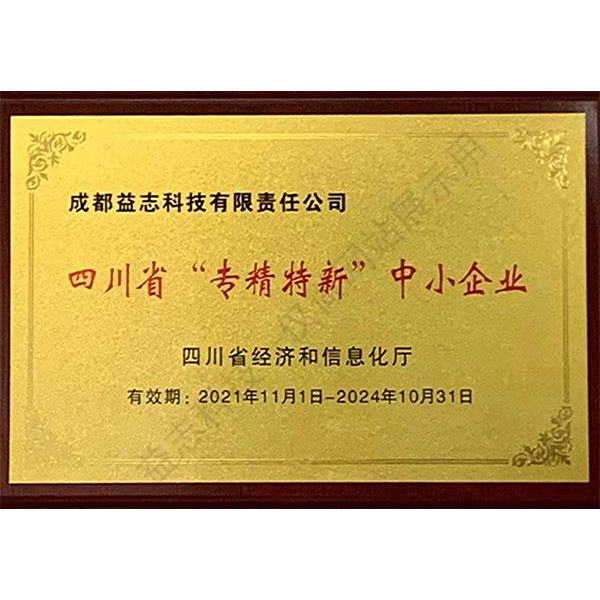
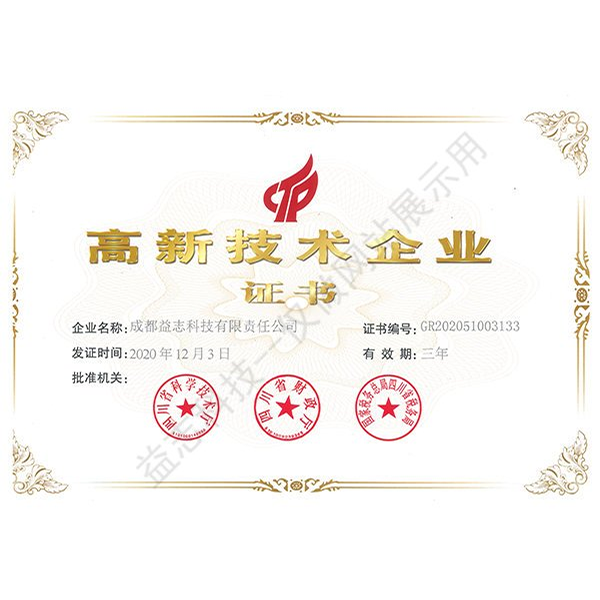
By the way, about design institutes. In China, they play a colossal role as a link between foreign technologies and local implementation. Let's take, for example,Chengdu Yizhi Technology Co.(their website isyzkjhx.ru). It is a subsidiary of Chengdu Huaxi Chemical Technology, with a registered capital of 1.2 billion yuan. Such institutes are not just designers, they are often integrators who can take a foreign idea, rework it to suit Chinese materials and standards, and only then put it into operation. For Russian technologies, cooperation with players such as Yizhi Technology could be a more realistic path than direct sales to state-owned companies.
What's stopping you? Not only politics
Of course, there are geopolitics and sanctions that complicate financial calculations and the supply of critical equipment. But there are also less obvious barriers.
Firstly, the “engineering culture” is different. The Russian school is strong in fundamental calculations and work in conditions of uncertainty (when “you have to make something out of what you have?”). Chinese - speed of replication, cost optimization and strict control of deadlines. The Russian approach may seem too “custom” to Chinese partners. and slow.
Secondly,supply chain. Russian LNG technology is often tied to specific equipment manufacturers (turbines, compressors), which may be under sanctions or simply do not have production capacity for Chinese volumes. It is easier for a Chinese to order a similar unit from Siemens or from a local factory that already works according to familiar patterns.
Thirdly, the problem of the “demonstration effect”. China already has successful projects with other technologies. Why take a risk with a new one, albeit potentially more suitable for cold weather, if there is a proven option? To sell Russian technology, you need not just a good passport, but a pilot project in China that has proven savings of 15-20%. And these are huge investments and risks for the first party.
So will there be implementation?
There will be, but point and hybrid. Don't expect headlines about "China buying Russian LNG technology". Instead there will be quiet stories.
For example, that a Chinese company at one of its northern fields used a Russian method for calculating the stability of foundations under cryogenic reservoirs in permafrost soils. Or that the joint venture purchased a batch of Russian cryogenic valves of a special design for its terminal because they showed better resistance to cyclic loads.
Or that such an institute as the one mentionedChengdu Yizhi Technology Co., as part of a research contract, analyzed Russian developments in energy efficiency in the liquefaction cycle and integrated individual control algorithms into its automation system.
The result? RussianLNG technologywill not be ?implemented? in China in the form of a monolith. It will be disassembled into bricks, the strongest and most viable of which - experience in working in extreme conditions, specific engineering solutions for reliability, and not for cheapness - will be built into the Chinese industrial machine. This is the highest form of flattery and practical benefit in our business. And loud statements about cooperation will remain at the level of press releases, behind which there is a long, unhurried and often invisible work of engineers and technologists.