Name of LNG technology from China?
2026-02-27
- From ?iron? before the process: what is hidden behind the general term
- The role of design institutes: the link between R&D and the construction site
- Cases and “big shots”: without this experience there is no such thing
- The future: integration and digital
- Instead of a conclusion: what is worth remembering
When you hear about “Chinese LNG technologies,” something monolithic often pops up in your head, as if it were a single product from an assembly line. In fact, this is a whole range of solutions, approaches and, more importantly, practical developments that grew out of specific projects, and not just from laboratories. And the key here is not an abstract “name”, but an understanding of exactly what technological niche is behind what, and where Chinese engineers really learned to avoid pitfalls that are not in textbooks.
From ?iron? before the process: what is hidden behind the general term
If we take large-capacity lines, then, of course, we hear about licenses for basic processes - for example, the same liquefaction technologies. But my interest has always been in adaptation, in what happens at the level of specific nodes. Chinese companies, especially those that grew out of heavy engineering, often followed the path of deep localization and optimization for local conditions. Not just buy drawings, but rethink, for example, heat exchangers for working with unstable gas composition, which occurs in fields in Central Asia. This gave birth to its own, “non-canonical” ones. solutions.
I remember one small LNG project about seven years ago. The task there was to simplify and reduce the cost of installation for a remote field as much as possible. Standard schemes were not suitable for capital costs. And then the Chinese partners proposed a hybrid pre-cleaning scheme and their own, rather ingenious, compact refrigeration cycle. Not without problems, of course: the first launches showed sensitivity to fluctuations in raw material pressure. We had to modify the control system on the go. But the approach itself is not to blindly copy, but to look for cost reduction through integration and simplification - this is the very “technology?” in a practical sense.
It is in such “non-ideal” conditions and the difference between the doxology in the brochure and real know-how is revealed. Often the true value lies not in a high-profile patent, but in the accumulated data bank on operation, in the knowledge of which valve is best installed for a specific service, how to modify the adsorbent for a more humid gas. This knowledge is rarely advertised, but is passed on within engineering teams.
The role of design institutes: the link between R&D and the construction site
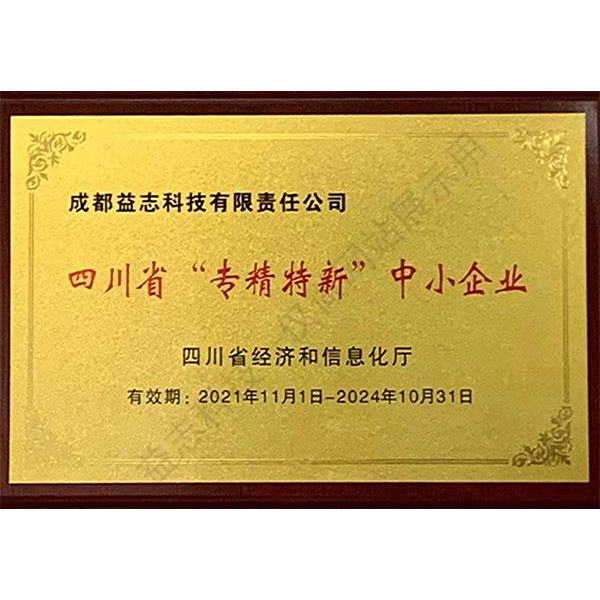
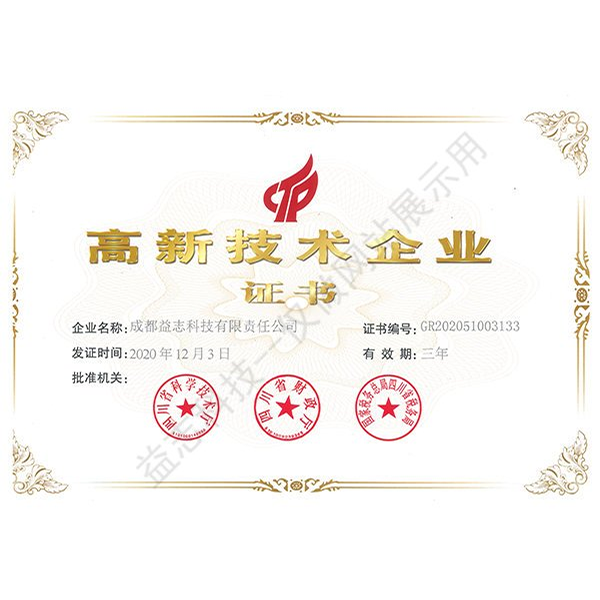
Here we cannot fail to mention structures likeChengdu Yizhi Technology Co.. This is not just a “sales office”. When you look at their portfolio (information can be found athttps://www.yzkjhx.ru), you see that they position themselves as a design institute created on the basis of a chemical technology company. This is an important point. Such an institute is often the very translator that takes fundamental or licensing processes and “tests” them. them in detailed design according to customer requirements, adding those same adaptation solutions.
The registered capital of 120 million yuan announced for Chengdu Yizhi Technology Co., Ltd. indicates serious intentions and, presumably, the ability to take on financial risks for large projects. In our field, this is an argument for the customer. But from my own experience I will say: the numbers in the charter are one thing, but the real competence of the engineering staff who sits on the calculations and P&ID is quite another. It is this composition that determines whether the technology will turn into a reliably operating plant.
When working with such partners, you always look at their project history. Not on big names, but on details: how they solved problems at the commissioning stage, how they reacted to inconsistencies in the initial data, whether they provided full support after commissioning. Sometimes a small but experienced team at such an institute provides more practical benefits than a giant with a big name but a formulaic approach.
Cases and “big shots”: without this experience there is no such thing
I'll tell you about an incident that taught me a lot. This was the supply of a block-modular nitrogen separation unit for gas preparation before liquefaction. The technology seems to be standard, membrane. The Chinese supplier (I will not name) gave excellent passport data on selectivity and productivity. But at the site, in the conditions of Siberia, problems began in winter - a drop in productivity by 20% compared to the declared one. It took a long time to figure it out.
It turned out that the designers did not fully take into account the effect of low temperatures on the seals of the modules and the rheology of the gas after preliminary purification. Not fatal, but some modification was required - installation of additional heaters at the inlet. The Chinese side promptly sent engineers, the problem was solved. But for me this episode became indicative: even in the seemingly worked outtechnologyDeep integration between the technologists who created the membrane modules and the designers who integrate them into the overall plant layout is critical. After this incident, I always ask questions not only about the peak characteristics of the equipment, but also about its behavior in abnormal and boundary modes, and demand that real, rather than calculated, performance curves be provided.
On the other hand, there was also a positive experience with a catalytic oxygen removal system at one of the terminals. Chinese development, quite elegant in design. It was attractive because it offered a longer catalyst operating cycle between regenerations compared to common analogues. They took a risk, but they delivered. The result exceeded expectations - the inter-regeneration mileage was even higher than stated. The secret, as it later turned out in a personal conversation with the chief technologist, was in the nuances of preparing the carrier for the active component - a small modification that gives a big effect. This is the real technological value.
The future: integration and digital
Now the vector is seen differently. ?Name of technology? everything is less tied to a single process. Deep integration comes to the fore - for example, linking a liquefaction plant with the energy complex, using waste cold for other needs, optimizing the entire chain from well to tanker. And here, Chinese players are actively developing their competencies in the field of digital twins and predictive analytics.
I saw a pilot project to digitalize the operation of main cryogenic heat exchanger heat exchangers. The Chinese side (again, through its design institute) proposed not just a monitoring system, but an algorithm that, based on temperature and pressure fluctuations, predicted the onset of hydrate formation in the preliminary cooling stages. This is the next level - the transition from selling hardware. to the sale of guaranteed technological results and uptime.
Of course, this is not a widespread story yet. But the trend is obvious. Soon it will not be enough to say “we have the best liquefaction technology”. The buyer will ask: “How will you provide me with the minimum cost of a ton of LNG for the entire life cycle, taking into account my specific conditions?” And the answer to this question will lie not in one patent, but in the totality of experience in design, construction, commissioning and smart operation. This is where the true maturity of any technological school, including the Chinese one, will be tested.
Instead of a conclusion: what is worth remembering
So, getting back to the original question... ? - this is not a shortcut. Rather, it is a pointer to a huge and diverse layer of practical solutions that are in constant development. Some of them are successful localization and reduction in cost of Western processes. Others are their own innovations at the level of hardware design or process control.
When evaluating, you need to look deeper than the advertising brochures. Look at the specific engineering team that will lead the project, demand references with contacts for verification, be interested not only in successes, but also in how problems that arose were solved. And always remember that even the most perfecttechnologyon paper it is dead without competent and responsible design work that takes into account thousands of little things.
It is for such tasks that institutes like the mentioned Chengdu Yizhi Technology are created. Their strength lies in their ability to connect scientific or licensed development with the harsh realities of construction site and operation. It is this connection that ultimately gives birth to the very reliable and cost-effective technology that the customer is looking for. Everything else is just words.