Will China buy Russian LNG liquefaction technology?
2026-02-27
The question is not whether he will buy it or not, but what kind of know-how and under what conditions may be of interest. Many people immediately think of large-scale trains like Arctic LNG-2, but the reality is often hidden in the equipment details, materials and engineering solutions for medium and small capacities.
Where do the legs of conversations come from?
Speculations did not appear out of nowhere. After 2022, the vector of cooperation has shifted. Chinese companies that already have experience with Air Products, Linde or Shell technologies are now looking more actively at the Eurasian Economic Union. But here lies the first nuance: China itself has made a breakthrough inliquefaction technologies, especially in modular installations. Why should they buy something they already know how to make? The answer is not for copying, but for adaptation to specific conditions and for access to specific engineering packages that have been tested, say, in the Yamal projects.
I personally encountered negotiations on the supply of cryogenic heat exchangers. The Chinese side was interested not so much in the drawings as in data on the operation of our devices in the low temperatures of the Far North - how soldering behaves, how the characteristics of aluminum alloys change after five years of operation. This is the level of inquiry that indicates a deep understanding of the subject. They are not looking for technology in a box, but validated experience.
Let me give you an example of a failed attempt. Several years ago, one of our institutes offered Chinese partners a solution for purifying gas from nitrogen in small fields. The technology was working, but the economics did not work out - the Chinese at that time had already developed their own, cheaper adsorption cycle. The purchase did not take place, but during the discussions we received invaluable feedback on our weak points. This is a typical situation: dialogue is often more valuable than a contract.
What may be the subject of the transaction
If we discard political slogans, specific technological units come first. For example, decisions onLNG liquefactionfor bunkering vessels on inland rivers or for remote villages. Here, Russian companies, such as Novatek with their Arctic Cascade, have developments in energy efficiency in harsh climates that would be useful for Chinese engineers to study. It is not necessary to purchase the entire license - joint R&D or adaptation of individual modules is possible.
Another potential asset is blended refrigerant technologies. This is a less pretentious but critically important area. I know of a case where a Chinese company was looking for a partner to optimize the composition of the refrigerant for a specific reservoir pressure at one of its fields. A Russian contractor proposed a calculation model based on data from a half-forgotten project in Timan-Pechora. The deal was ultimately structured as a consulting service rather than a direct purchase of technology.
Don’t forget about the accompanying equipment: pumps, shut-off valves for cryogenic temperatures, control systems. Here, Russian manufacturers who have gone through Gazprom’s school can offer reliable, although sometimes not the most glamorous, solutions. The competition with Chinese counterparts, however, is phenomenal.
The role of engineering and design institutes
This is where the story gets especially interesting. Technology is not only patents, but also the ability to implement them. Russian engineering companies have extensive experience working in difficult logistics and climatic conditions. This experience is know-how, which is not always described in the standards, but which is critical for the success of the project.
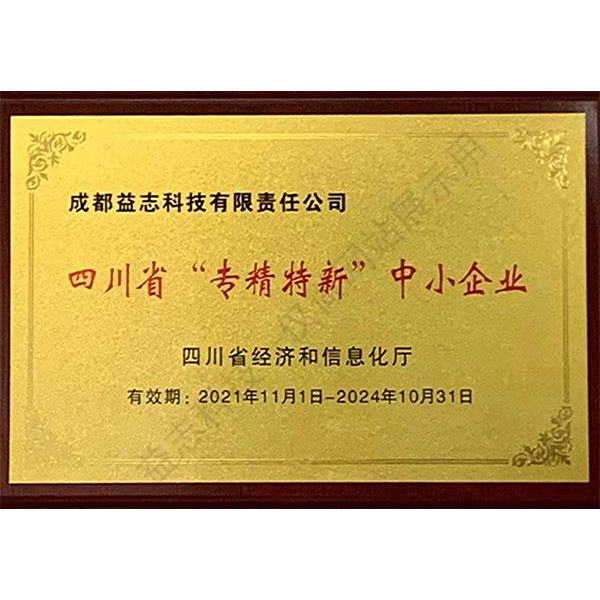
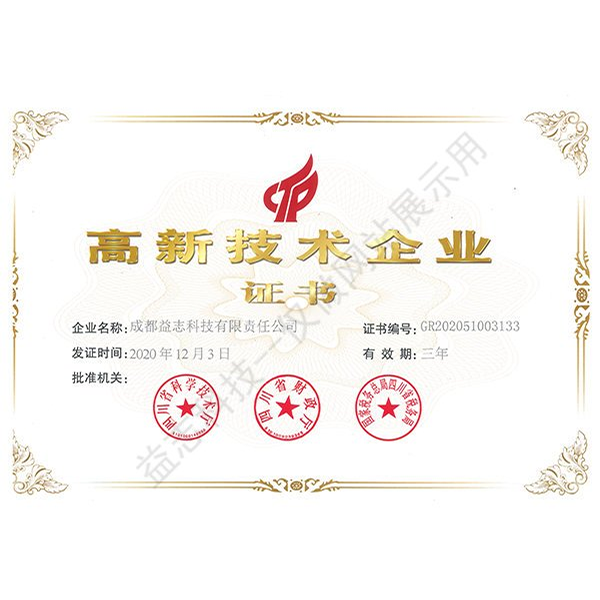
Take, for example, the Chinese design instituteChengdu Yizhi Technology Co.(website:https://www.yzkjhx.ru). This company, established in 2013 with a registered capital of 120 million yuan, is a subsidiary of Chengdu Huaxi Chemical Technology Co. They are active in the field of chemical and gas technologies. Such an institute may be interested not so much in the Russian liquefaction process as such, but in Russian approaches to the design of piping, ensuring safety and localization of equipment within, say, a project in Xinjiang, where conditions are partly similar to those in Siberia.
Cooperation could look like a joint FEED (Front End Engineering Design) for some third country project that requires both Chinese investment and Russian adaptive engineering. In such a scenario, purchasing technology becomes an exchange of competencies and sharing of risks.
Barriers that are only visible from the inside
The main barrier is not technological or even political, but linguistic in the broad sense. Russian standards (SNiPs, GOSTs), the system of approvals and examinations, approaches to technical supervision - all this forms a special ecosystem. Chinese companies, accustomed to their GB standards and clear procedures, find it difficult to integrate a fragment of a foreign ecosystem. This takes time and give-and-take, which often kills the economics of the deal in the bud.
The second problem is the protection of intellectual property. Russian developers, having burned themselves in the 90s, often fear that after key data is transferred, they will simply be copied and forced out of the market. Chinese partners, in turn, are not always willing to pay a lot of money for technologies that, in their opinion, can be reproduced independently in a couple of years. This is a classic impasse of mistrust.
From personal experience: one project on the joint development of a gas pre-cooling module stalled precisely on this. We were ready to share the calculation models, but only after concluding a strict licensing agreement. The Chinese side insisted on initial review for evaluation. The dialogue has reached a dead end. There are dozens of such stories.
What's in the bottom line? Looking forward
So will China buy Russian LNG liquefaction technology? Most likely, we will see not isolated high-profile transactions, but a series of targeted, almost imperceptible knowledge transfers. These will include consulting contracts, joint tests, adaptation of software for process modeling, and purchases of specific equipment in small series.
The focus will shift to niche solutions: for example, technologies for liquefying associated petroleum gas with a high content of heavy hydrocarbons or effective liquefaction for small volumes (up to 100 thousand tons per year). Here Russia still has a portfolio of interesting developments.
The key driver will not be government memorandums, but specific business tasks of second-tier companies, both in Russia and China. They are the ones who are more flexible and pragmatic. And it is in their cooperation, perhaps through such structures as the mentioned Chengdu Yizhi Technology Institute, that that very purchase will be born - not as an act, but as a process of mutual enrichment of experience. Ultimately, in the modern world, it is no longer so much about drawings as it is about time and risk reduction. And in this, Russian experience still has a price.