China: domestic LNG - innovation and ecology?
2026-02-27
When people talk about domestic LNG in China, many people immediately imagine huge factories and main pipelines. But the real revolution, in my opinion, is happening elsewhere - in the small-scale segment, where gas should come to every home, to every boiler room in a remote village. And here everything depends not so much on production, but on logistics, storage and safety of final consumption. Often it is these “last kilometers” turn out to be the most difficult.
Where does the real challenge lie?
The main problem we encountered in practice was a lack of understanding of the scale of infrastructure tasks. Building a large terminal is one thing. But organizing a network of small cryogenic CNG filling stations or ensuring stable supplies of liquefied gas in tank containers to a mountainous region is a completely different story. There are roads, temperature changes, and issues with the qualifications of local personnel. Innovation here is born from necessity, not from abstract ideas.
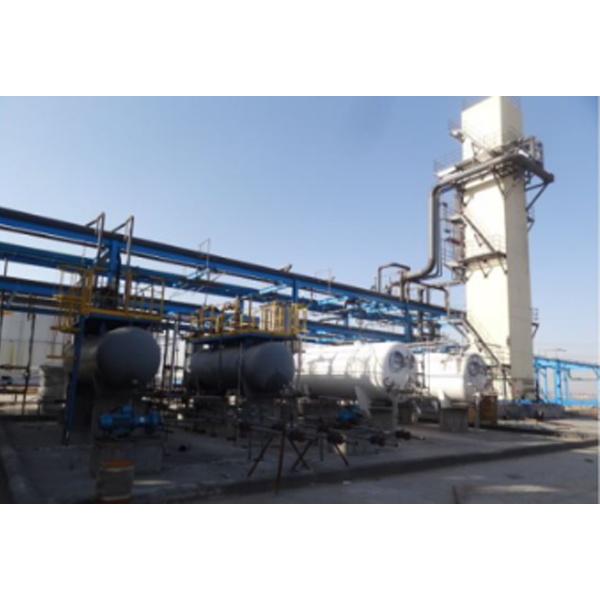
For example, one of the projects where we participated as a design institute concerned the supply of a group of villages in Sichuan. Traditional gas supply was unprofitable. The solution was found in modular LNG gasification plants and the use of mobile tankers. But the key was not the fact of using LNG itself, but the development of a simplified and most reliable pressure and leakage monitoring system that could be serviced by a local technician after a short training. It wasn't a high-tech "smart" one. system, but a set of redundant mechanical valves and understandable sensors. Sometimes reliability is more important than complexity.
There was also a bad experience with an attempt to implement something that was too “advanced”? solution for heating evaporators using solar collectors in the same region. The idea is environmentally friendly, but for places with frequent clouds and the need for a stable round-the-clock gas supply, it is a failure. The equipment was idle, and we had to urgently return to electric heaters. This is a lesson: ecology must be practical and not compromise energy security.
Ecology as a driver, not just a slogan
The environmental issue in the context of household LNG is often reduced to the fact that gas is cleaner than coal. Yes, but this is just the tip of the iceberg. The true environmental impact is considered throughout the entire chain: from reducing emissions during transportation (LNG truck vs. diesel) to minimizing storage losses (boilover) and increasing the efficiency of boilers at the end points. This is where the field for real innovation lies.
We worked hard to optimize logistics. For example, the use of isothermal containers with improved vacuum insulation, which allows you to increase the “cold” time. loss-free storage. This seems like a small thing, but for a remote consumer, where the car travels for two days, it is critical. The losses are not only economics, but also the direct release of methane, which has a higher greenhouse potential than CO2. Therefore, the struggle for every percent of evaporation is environmental work.
Another aspect is cold utilization. This is already used in large facilities, but on a small scale it is often considered unprofitable. However, there are pilot projects, for example, at CNG filling stations, where the cold from the evaporation of LNG is used to cool adjacent food warehouses. This is no longer a theory, but specific cases that show how the puzzle of energy efficiency and economics can be put together.
The role of technological institutes and a specific example
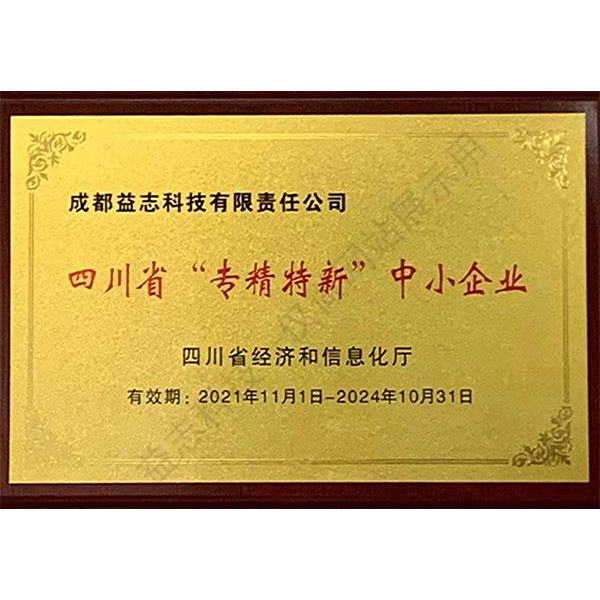
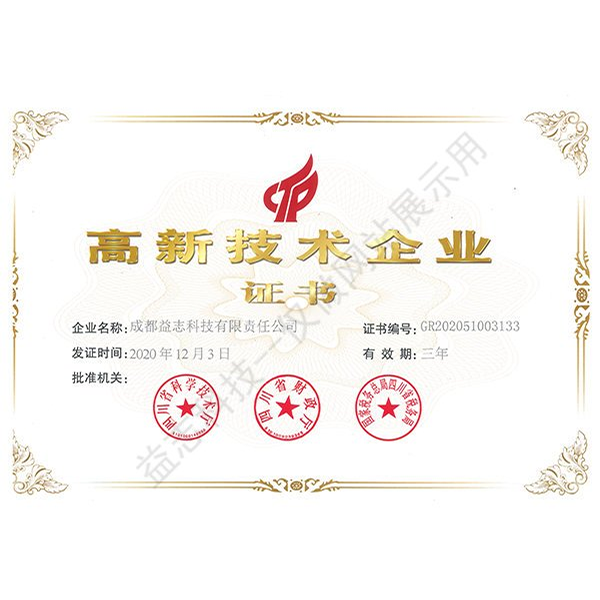
The implementation of such solutions is impossible without serious design and engineering work. It is the institutions that are constantly “in the field” that see these bottlenecks and can offer tailored solutions. Let's take, for example,Chengdu Yizhi Technology Co. (https://www.yzkjhx.ru). This is a design institute created on the basis of a technology company. Their profile is precisely integrated solutions in the field of chemical technologies and gas infrastructure.
What's important here? Not just to sell equipment, but to design a system that will work in specific conditions. Yizhi Technology, as a design institute with a registered capital of 120 million yuan, established by Huaxi Technology in 2013, often operates at the interface. They need to take into account the geology of the site for the mini-storage facility, climatic features, and even the social factor - the readiness of the local population for the new technology. Their work is the same “translation” from the language of big technology to the language of practical implementation.
From our interaction experience: they do not offer ready-made catalog solutions for everyone. There was a case regarding a gas supply project for a small resort. The standard scheme was not suitable due to peak seasonal consumption. Together we worked on an option with a small-volume underground buffer storage facility, which made it possible to smooth out peaks and reduce logistics costs. This is painstaking work with calculations and models, and not just construction according to a standard project.
Innovation in detail: safety and user acceptance
Any innovation in the household segment breaks down on two stones: safety and ease of use. You can make the most efficient gasification system, but if it requires a doctor of science to maintain, it will not take root in the village. Therefore, now a lot of attention is paid to “protection from fools”. and remote monitoring.
For example, systems with automatic shutdown of gas supply when a leak or abnormal pressure drop is detected are becoming standard. But there are nuances here too. A system that is too sensitive will generate false positives and irritate users. We found a compromise in a multi-level warning system: first, a signal to the dispatcher’s console (which can check the data remotely), and only then, if a malfunction is confirmed, an automatic shutdown and notification of the user. This is not as impressive as the full autonomy of a “smart home”, but it works without failures.
Another detail is the design of household gas tanks. The shift is toward integrating heating and evaporation systems into one compact module that can be serviced by unit replacement rather than on-site repair. This reduces the qualification requirements for the local service team. Such seemingly small improvements are the engine of real implementation.
Looking ahead: what's next?
Where is everything going? I think the main trend is further decentralization and hybridization. Residential LNG use will not exist in a vacuum. We are seeing experiments with micro-LNG plants combined with solar panels or biogas plants for redundancy. This is no longer just gasification, but the creation of local energy hubs.
The second is digitalization. But not the one they shout about at conferences, but the applied one. We are talking about simple and reliable telemetry systems that allow one service team to monitor dozens of remote objects, predict the need for refueling or maintenance based on real consumption data, and not according to a schedule. This dramatically increases efficiency and reduces cost of ownership.
And finally, standardization. Now there is a lot of equipment of different standards on the market. The success of the mass introduction of household LNG will depend on the development of uniform, albeit minimal, safety and compatibility standards for equipment, especially in terms of fittings and control systems. It's boring, routine work, but it's what clears the way for widespread adoption of the technology. So the future lies not in one loud breakthrough technology, but in a well-functioning system where innovation, ecology and practical reliability will find their balance.