China: LNG liquefaction process, product, innovation?
2026-02-26
When people talk about gas liquefaction in China, many people immediately imagine giant factories on the coast and imported technologies. But the real picture in workshops and on sites is often more complex and “dirtier”. Innovation here is not always breakthrough patents, but sometimes the ability to adapt something else, make it work in local conditions and solve a problem that is not written about in textbooks. I’ll try to break down what it looks like from the inside, what you encounter in practice, and where real, not declarative, progress lies.
Process: not just C3-MR or AP-X
Yes, the basic technological lines are mostly licensed. But a key point that is often missed in general reviews is the depth of localization and adaptation of support systems. For example, a pre-cooling system or fine-tuning turboexpanders to the parameters of a specific gas from fields in Xinjiang or Shaanxi. The gas is different, but the technology is standard. So the engineers on the ground have to do some magic.
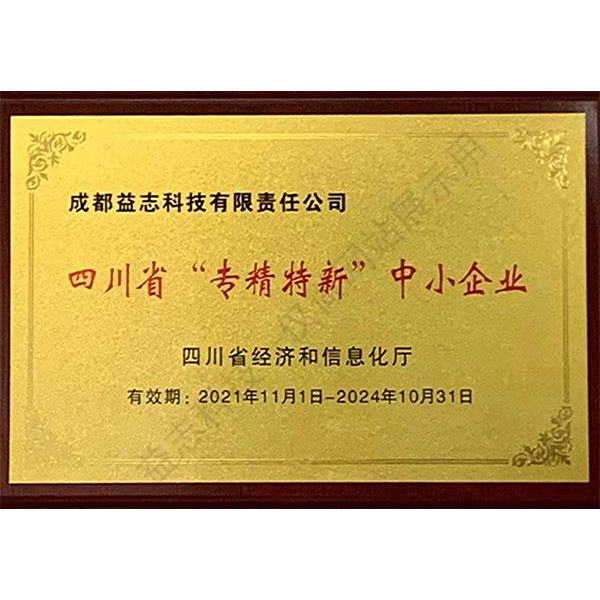
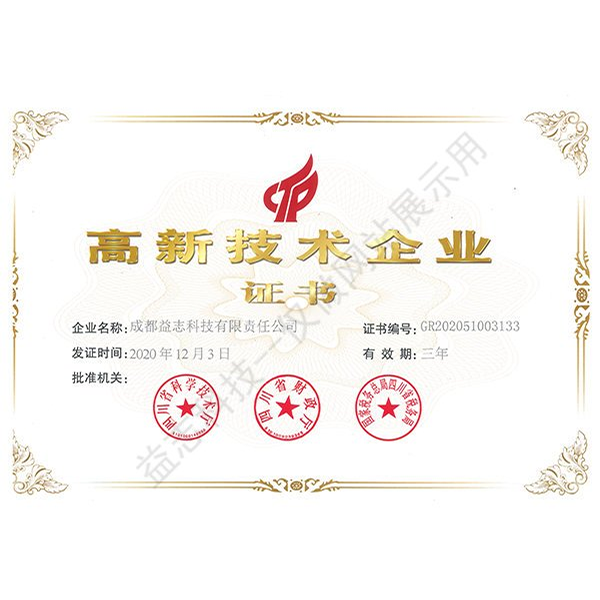
Here it is worth mentioning the role of such design institutes asChengdu Yizhi Technology Co.(their website ishttps://www.yzkjhx.ru). It's not just ?another company?. This is a structure created on the basis of Huaxi Technology, which is precisely dedicated to turning the licensing scheme into a project operating on Chinese soil. Their capital of 120 million yuan is not just a number, it is a resource for long-term engineering solutions, not for quick assembly. They are part of the very ecosystem that is engaged in “fine-tuning?” process.
At one of the projects where we were working on a purification module, we encountered an increased content of mercury in the raw materials. Standard palladium adsorbents “clog?” faster than the estimated time. The solution was not to replace the entire technology, but to customize the adsorbent layers and adjust the regeneration cycles. This is the Chinese ?process? at the micro level, painstaking optimization that rarely makes headlines.
Product: What's behind the metric ton?
The quality of LNG is not only about its calorific value. These are the stability of the composition, the minimum content of impurities after liquefaction and, what is critically important, the behavior of the product during regasification. We had a case at the receiving terminal: the LNG formally met the specifications, but when the regasification rate was sharply increased, microcrystals of hydrates formed in the evaporators, creating problems.
It turned out that the problem was trace amounts of certain heavy hydrocarbons that were not captured by a standard chromatograph when leaving the plant. Their presence was associated with the operating mode of the demethanization column at the stage of raw material preparation. I had to ?climb? deeper into the upstream process. This experience makes you look at the ?product? not as a commodity unit, but as a chain of interconnected parameters, going far back along the technological chain.
Product innovation often lies in this type of system control. The introduction of more frequent and detailed analysis is not due to regulations, but for preventive reasons. This increases operating costs but prevents major disruption to the end customer. Many new plants are now building these advanced quality monitoring programs right into the design, and this is a big step forward.
Innovation: where to look for it?
Here we need to separate. There is fundamental research - for example, on new refrigerants with low GWP (global warming potential). It is long, expensive, and the results are not immediately visible. And there are applied innovations that are born in the field. A striking example is solutions for small-scale and mobile liquefaction.
China, with its dispersed fields and growing demand for gas in remote areas, is an ideal testing ground for such solutions. We are not talking about mini-factories in the classical sense, but about highly integrated modules that can be quickly deployed. The problem was efficiency: small scale killed the economy due to high energy costs. The breakthrough was not the invention of a new cycle, but the optimization of heat transfer in the main devices under variable load.
We tested one such module in Sichuan province. The innovation was not the liquefaction technology itself, but an intelligent control system that balanced the load on the compressors in real time depending on the pressure and composition of the incoming gas from a nearby well. This saved about 15% energy. But there was also a setback: the system was too sensitive to the quality of the power supply in the area, which led to failures. I had to modify it on the spot, adding buffer elements. The innovation turned out to be “crude” without taking into account actual operating conditions.
Equipment and materials: quiet revolution
When talking about innovation, we cannot ignore the topic of equipment. Just 10 years ago, key elements - heat exchangers of the main cryogenic cycle, high-pressure LNG pumps, special valves - were almost exclusively imported. Today the situation is changing. Chinese manufacturers have learned to make, for example, spiral wound heat exchangers of acceptable quality for some stages of the process.
But there is a nuance here. Let's say the heat exchanger is made in China and passes all tests. However, aluminum tape for winding it or special polyamide insulation for pipelines can still be supplied from abroad. Therefore, true independence and innovation in equipment lies in the material supply chain. They are actively working on this now, but there is still a long way to go.
ExperienceChengdu Yizhi Technology Co., Ltd.as a design institute is very indicative here. Their task is not just to copy a drawing, but to design a system that will work as efficiently as possible with the set of equipment and materials that is available on the market and matches the project budget. It is a constant search for a compromise between the ideal technological scheme and the actual industrial base.
Challenges and the future: energy efficiency and ?green? trace
The biggest challenge now is not even in increasing capacity, but in reducing energy intensity. The liquefaction process is extremely energy-intensive. Every percentage saved is worth millions of dollars and tons of CO2. The main reserves are seen in heat recovery, optimization of cascade cooling cycles and the use of renewable energy to power facilities.
At one of the new terminals they tried to integrate solar panels to cover part of the needs of auxiliary systems (lighting, ventilation, part of the pumps). Technically it worked, but the economic impact was negligible due to the high capital cost and the need for redundancy. Conclusion: for such an energy-intensive industry asLNG liquefaction, ?green? solutions must be large-scale - for example, connecting a plant to a wind farm or hydroelectric power station, rather than point solar panels on the roof.
The future, in my opinion, belongs to hybrid models. When a large plant combines traditional sources, nuclear energy (for base load) and large renewable energy units in its energy basket. And innovation will lie not so much in a new liquefaction process, but in the ability to flexibly manage this complex energy system to maintain continuous and economical operation of cryogenic plants. This is the next frontier, and Chinese engineers are already actively thinking about it, learning from past mistakes and successes.